Ringside
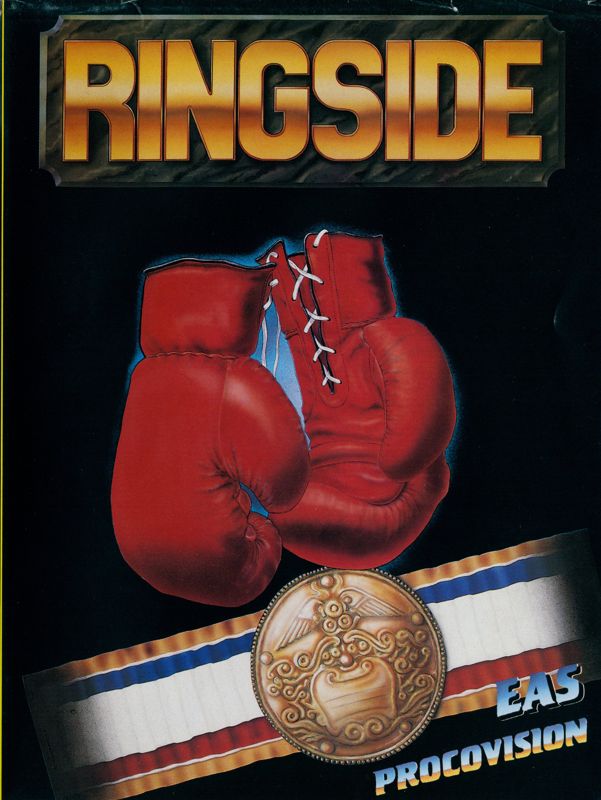
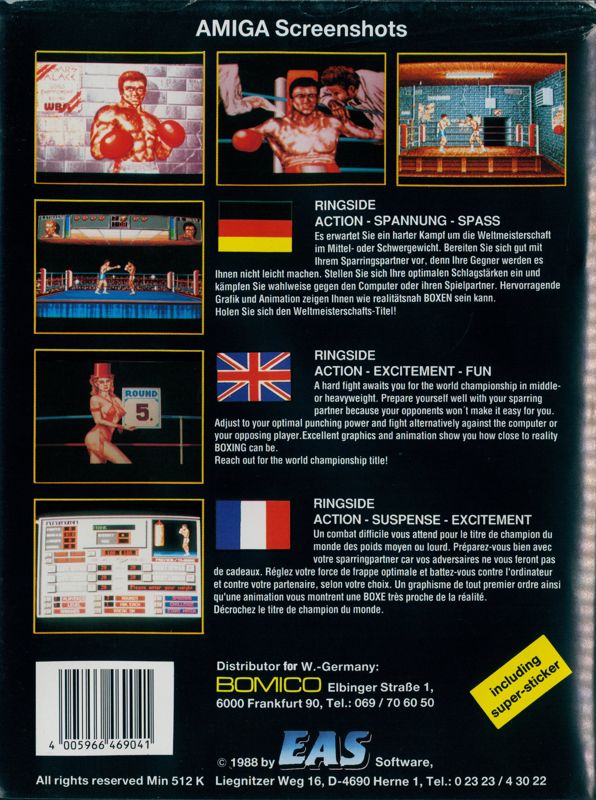
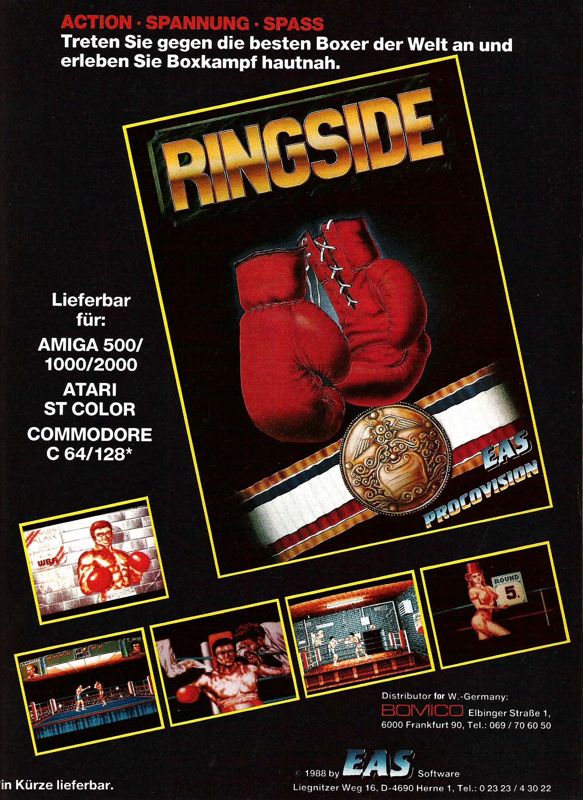
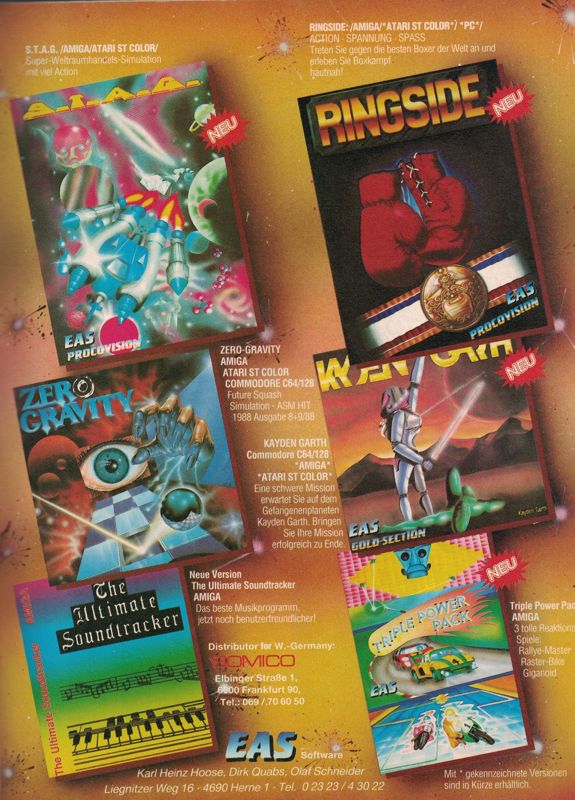
Ringside is a boxing game that was developed in 1989 on Amiga by the Swiss developers of the Golden Gate Crew. It was ported to Atari ST and C64 and published on all three platforms by EAS Software.
The Golden Gate Crew was the name Heinz Lüem, Orlando Petermann and Christian Weber used for their game development in the late 1980s. The Golden Gate Crew developed the game Ball Raider (1987), the game Leonardo (1989) and Ringside (1989). For Ringside, the three game developers from the canton of Argovia worked with Thomas Lopatic who created the music.
EAS, or EAS Software GbR—also known as EAS Computertechnik or EAS-Hard- u. Software—was a German game company that developed games for home computer systems, primarily for the Amiga, but also for the C64, Atari ST, and PC (DOS). They distributed their games themselves under the EAS Procovision label.
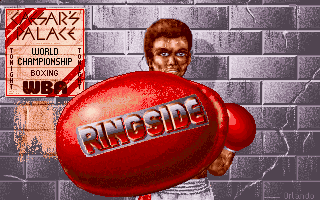
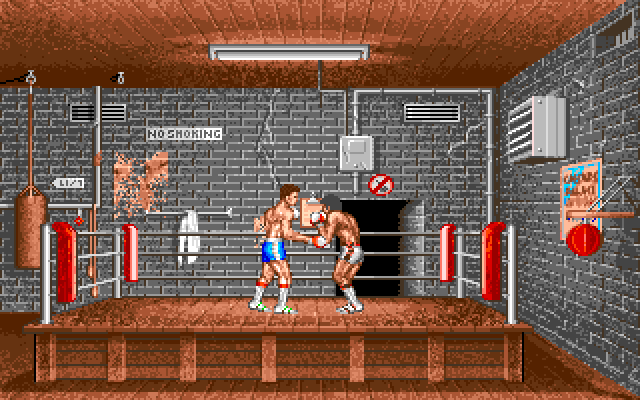
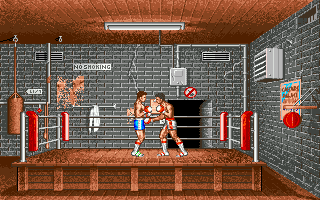
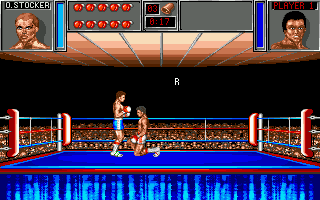
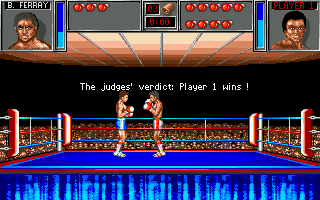
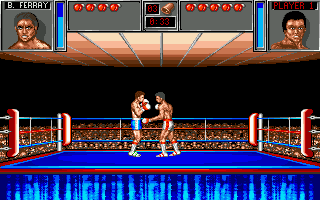
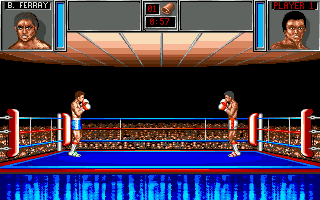
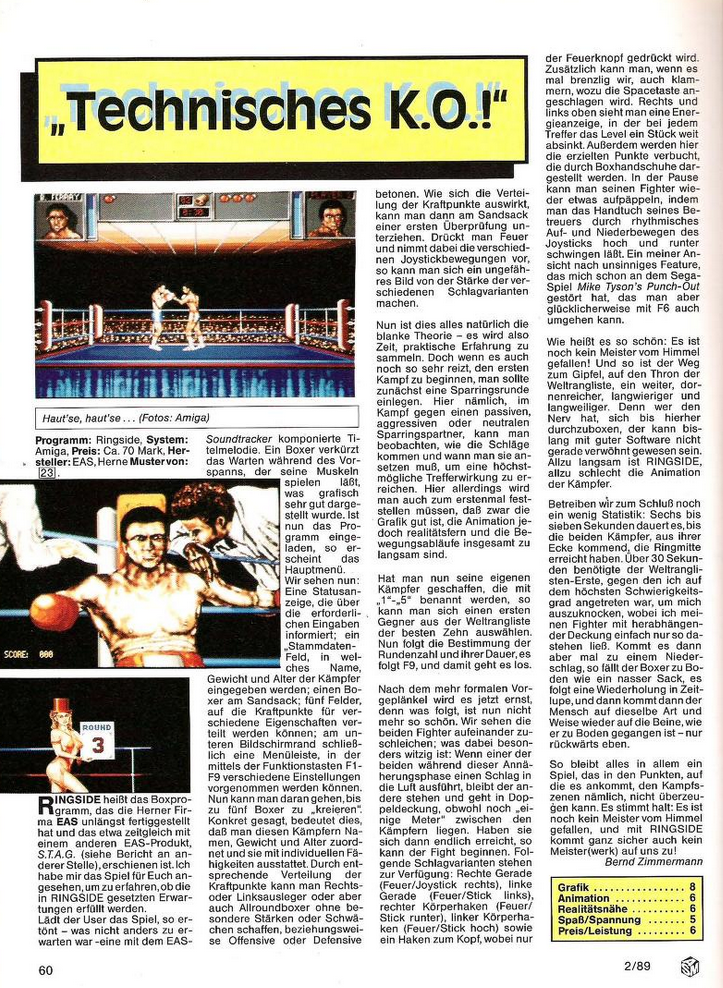
The game Ringside (1989) is viewed from the side, as in traditional 2D fighting games. In the boxing simulator, the player follows the career of a boxer, who starts at the bottom rank and works his way to the top for a WBA-showdown in the Caesar's Palace in Las Vegas.
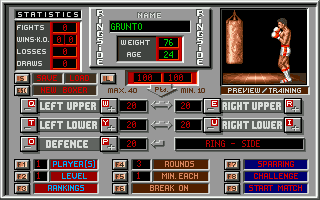
The boxer's attributes affect the power of their left and right upper and lower punches, as well as the effectiveness of their defence. The player starts with a fixed set of one hundred points to distribute freely across these attributes. Defeating a higher-ranking boxer awards additional points, enabling the player to gradually increase the boxer's stats.
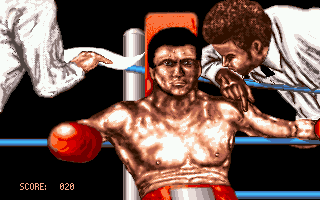
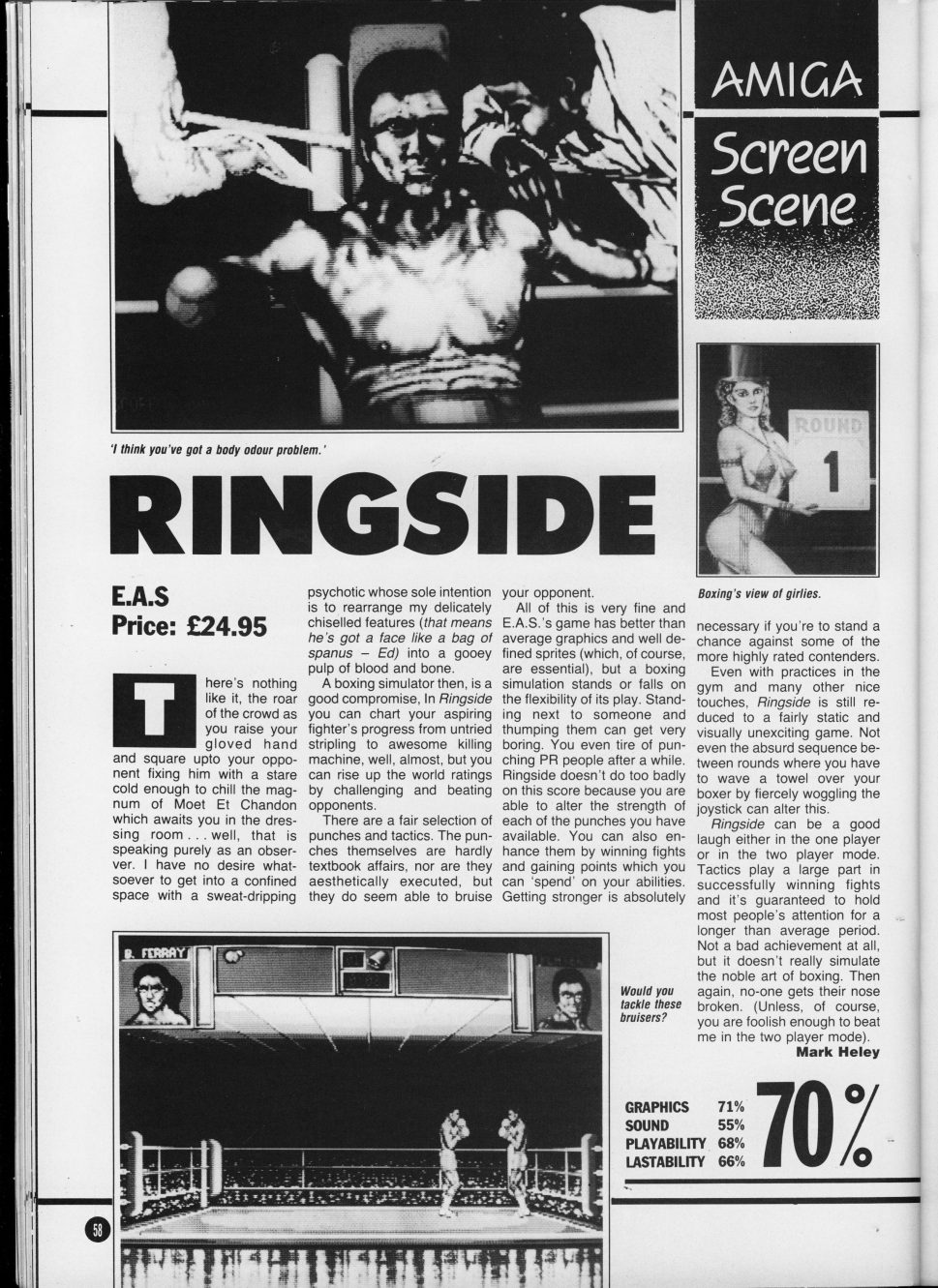
The number of rounds (three to 15) and their duration can be customised. A bit weird for today’s standards and a glimpse back into morals and behaviors of society in the 80s, is offered by the sparsely clad woman that announces each round. Strong point is the tactics that you have in your hands. During a match, players can select a specific type of punch by moving in a certain direction while holding the fire button. Defensive positions can be adopted when the fire button is not held down; however, the boxer will automatically guard if the player stands still. A minigame between rounds enables the player to restore some of the boxer's energy.
The game features a two-player versus mode for single matches, as well as a training mode with a sparring partner. There is also a load/save option for the player's stats.
Reviews in the magazines were not too favorable. The best was Mark Heley’s assessment in CU Amiga in May 1989 on page 58 of overall 70%, where he emulates the atmosphere in the boxing arena, when he starts with: «There is nothing like it, the roar of the crowd as you raise your gloved hand and square up to your opponent fixing him with a stare cold enough to chill the Magnum of Moët & Chandon which awaits you in the dressing room.»
After lauding som of the graphics, he points out a rather monotone gameplay: «Even with practice in the gym and many other nice touches, Ringside is still reduced to a fairly static and visually unexciting game. Not even the absurd sequence between rounds, where you have to wave a towel over your boxer by vigorously waggling the joystick, can alter this.» But overall, Keley was a rather happy player: «Ringside can be good fun, either in one-player mode or two-player mode. Tactics play a large part in successfully winning fights, and it's guaranteed to hold most people's attention for longer than average. This is no mean feat, but it doesn't really simulate the noble art of boxing. Then again, no one gets their nose broken.»