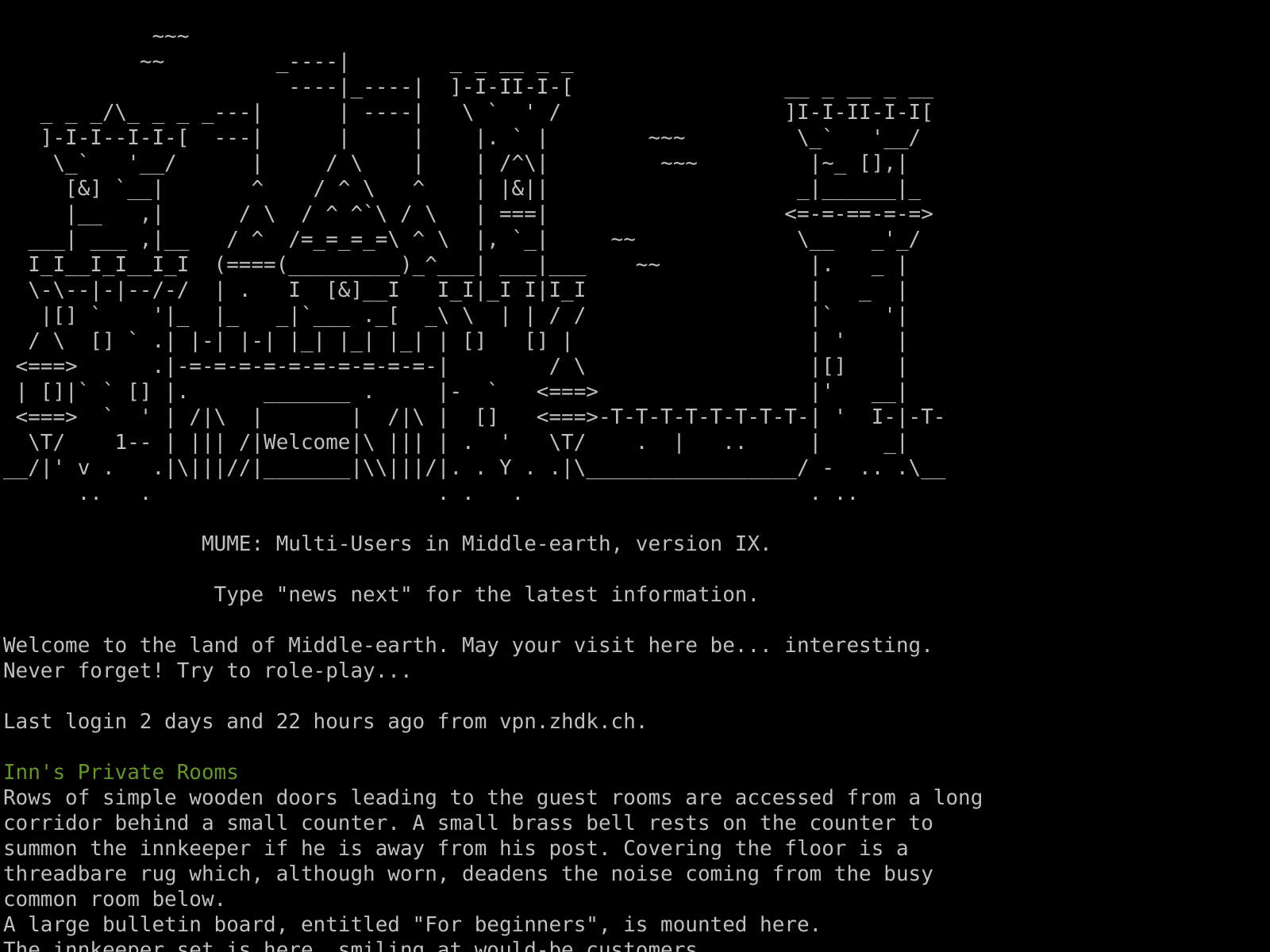
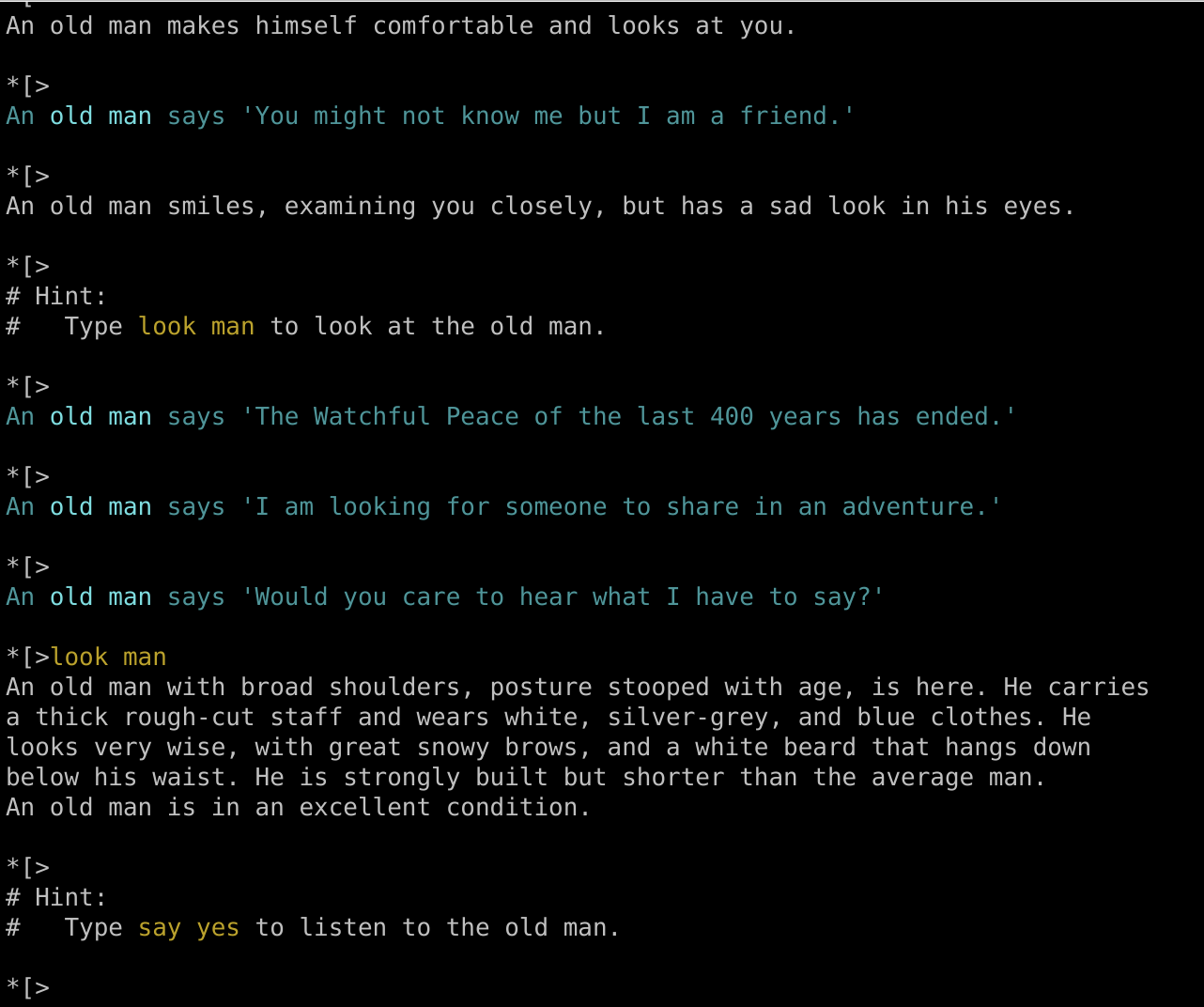
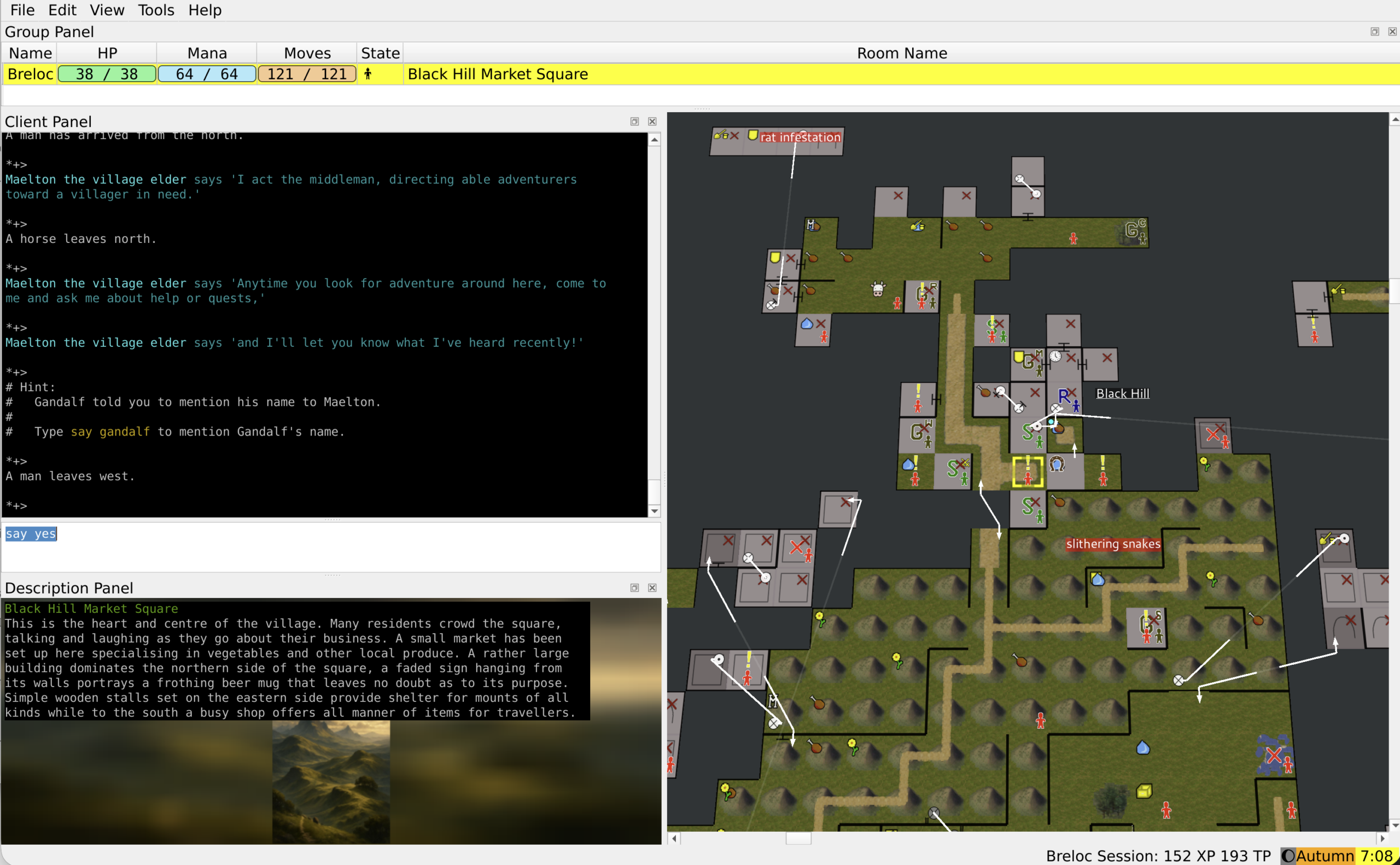
MUME is a MUD, or multi-user dungeon, set in J.R.R. Tolkien's Middle-earth in the years before the War of the Ring. The EPFL students Philippe "Eru" Rochat, Pier "Manwë" Donini, Eric Moreau, Claude "CryHavoc" Indermitte and others developed MUME and opened it to players in January 1992. The game was elected
MUD of the Month in April 1998, as one of only 21 MUDs worldwide to ever be granted this honor.
MUME made it easy for players to feel at home. Following Moreau’s idea, MUME was to have a consistent world, and they decided to build on Tolkien’s well-known fantasy universe. This meant that players were familiar with the concepts of the world from the get-go. Players choose a race, and thereby a side in the war between the free peoples and the servants of the Dark Lord; the geography, languages and laws of the world are designed around this division. The simulation of a world in conflict with players of both sides being protagonists was novel at the time, as was their stance on killing other players. Raph Koster, lead designer of Ultima Online (1997), later
praised MUME for “doing such interesting things with player conflict”, perhaps because he had
struggled with the same problem for years in his own game.
At the beginning of MUME was a Swedish DikuMUD instance called Sejnet. It was—or rather, its shortcomings were—the inspiration for MUME’s intention to increase the role-play aspects of the game, and to force players to explore and collaborate more, Rochat says in an interview conducted by CH-Ludens researcher Johan Cuda in 2023. For example, he wanted to avoid an often-seen behaviour where players would stay close to a monster, slay it, and wait for the server to restart to slay it again, and gain a lot of experience points without ever interacting with the world—today known as “camping”. Instead, in MUME objects and NPCs were spread over the world in such a way that players had to move, and the game rewarded moving by preserving the location of player characters during the regular resets of the server.
Like its inspiration Sejnet MUME belongs to the family of DikuMUDs, a MUD software and rules framework developed by Danish students, which ran out of the box but could also be modified. When they started development on MUME, none of the team knew how to program. “We all learned C on the back of this poor MUD engine”, they write on the game’s
history page. DikuMUD’s system also meant that changing the world always required the server to be recompiled and restarted—an approach that soon caused problems because any small error could lead to server crashes. Therefore, in 1993 David "Nada" Gay addressed this by developing mudlle, a scripting language in which content and behaviour could be written separately from the server code, giving MUME an architecture comparable to that of an LPMud, stabilizing the game and simplifying the community development process.
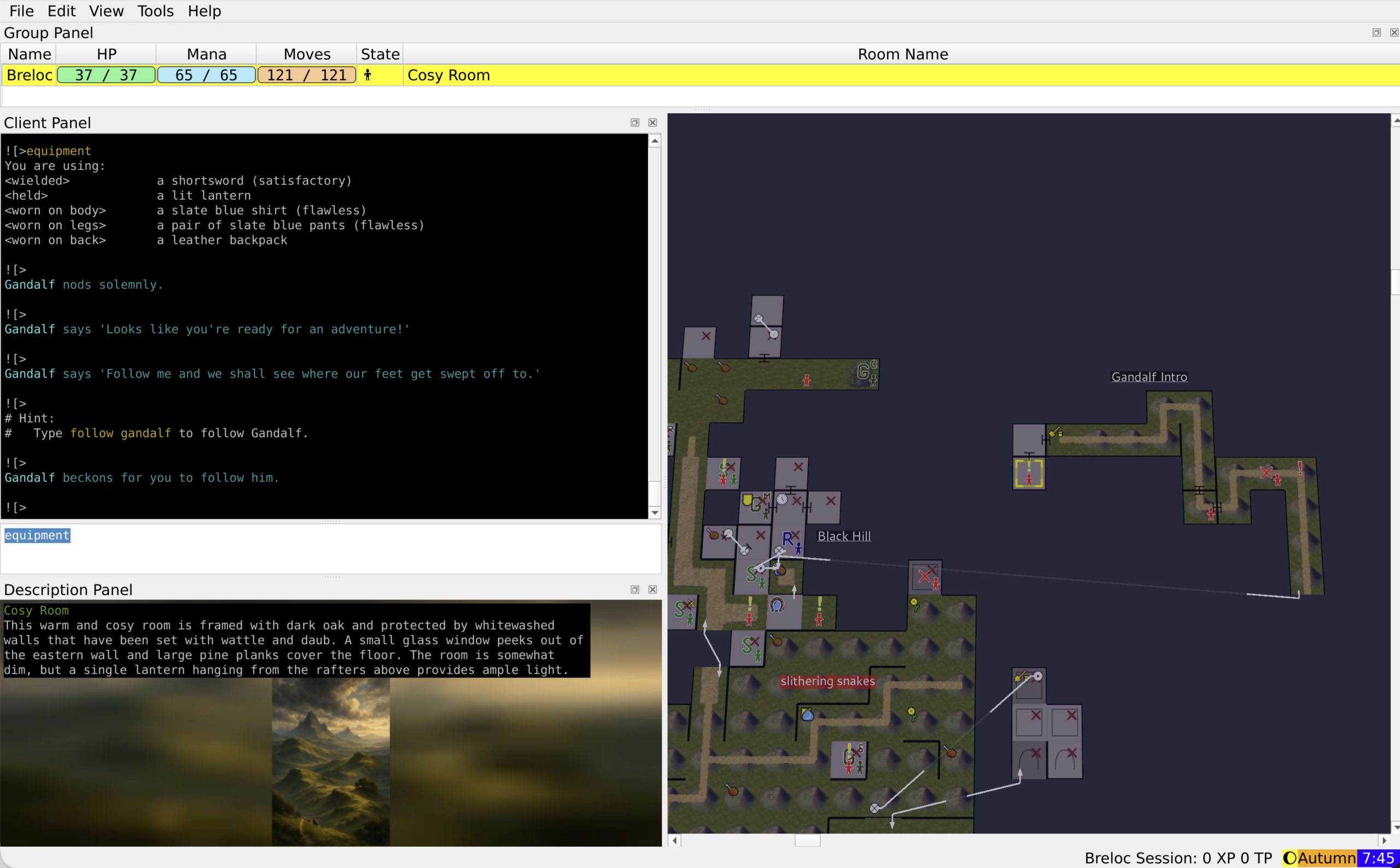
Today, 34 years after its launch, MUME is still being played and feels modern thanks to regular updates by an active community. The game’s makers cultivated the community from the start, putting processes in place to allow players that had proven their reliability to climb the ranks of the immortal Ainu. This allowed them to add to and alter the world, program extensions or help with administration and marketing. Among the later additions to the game, the most visible was the mapper in 2003. While the game action is still only in text, there is now also a map window, making navigation in the vast world substantially easier.
EPFL hosted MUME’s server for a relatively long time, despite the traffic it generated. According to Rochat, in 1994 it accounted for 98.9% of EPFL's night-time internet traffic. In 1998 EPFL finally pulled the plug, forcing the game to move to a server in Norway. It only returned to Switzerland in 2009, where it now runs at the engineering school of the canton of Vaud (HEIG-VD) in Yverdon-les-Bains, where one of MUME’s initiators, Pier Donini, is currently a professor. The game can be played at
mume.org.