Kreml
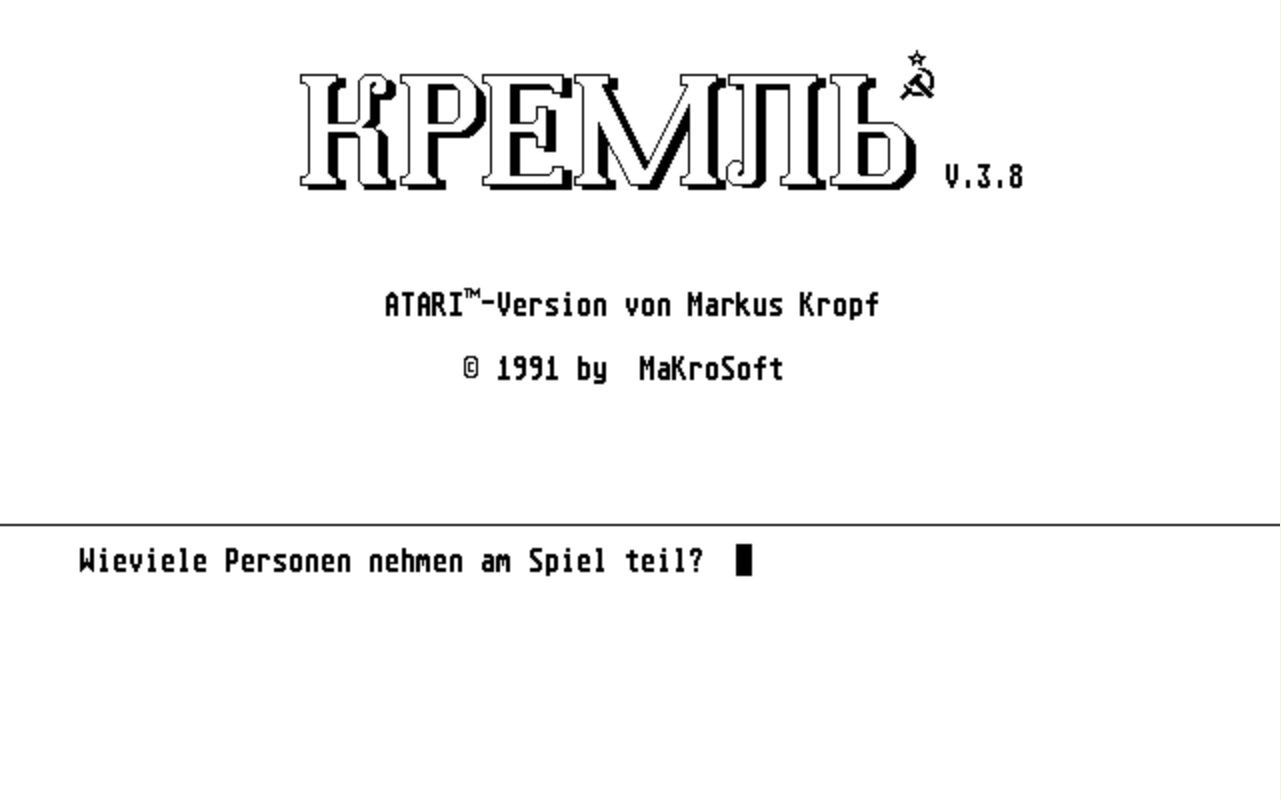
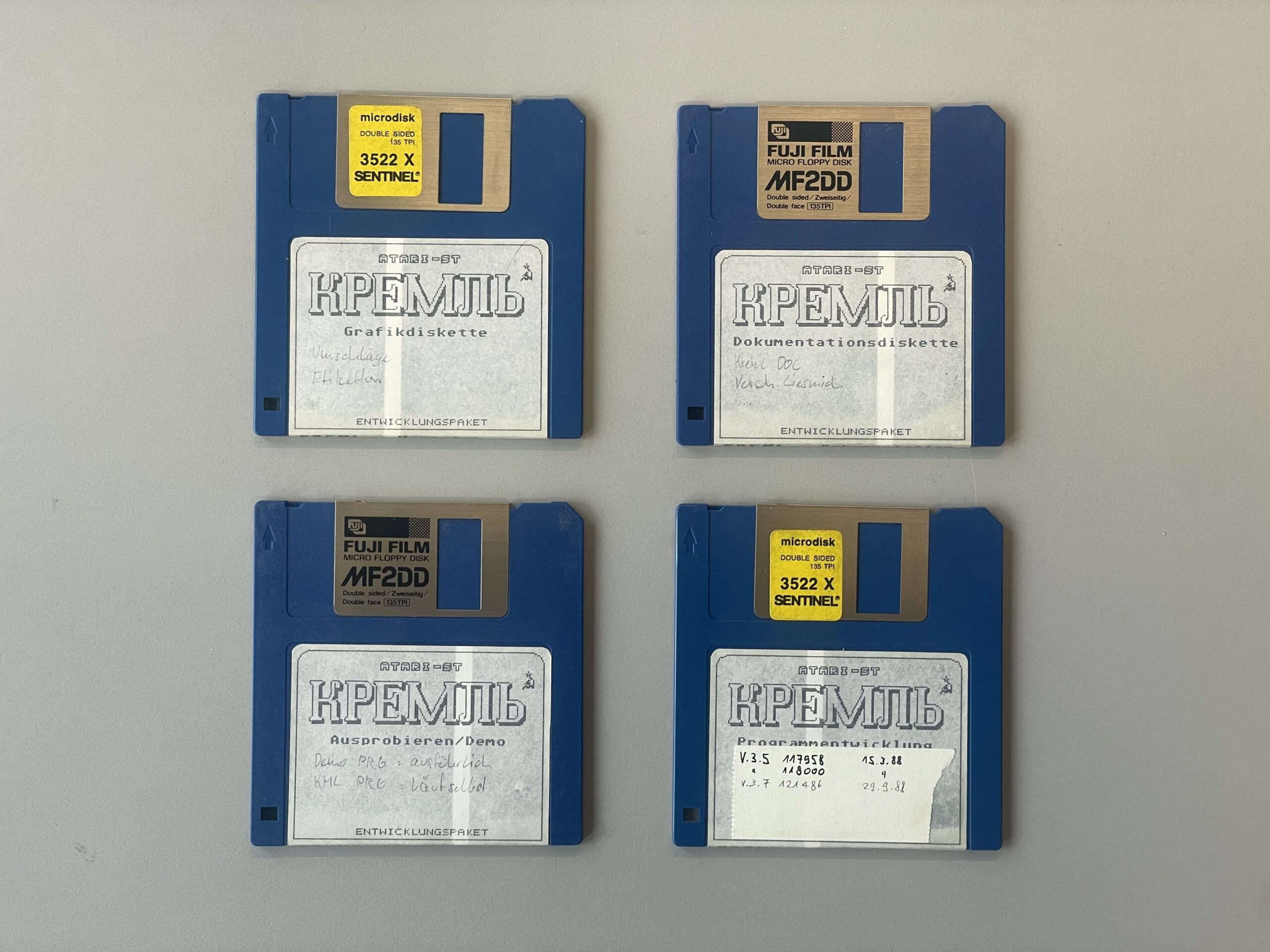
The game Kreml by Markus Kropf is the digital adaptation of the board game of the same name by Swiss game designer Urs Hostettler. It was released in 1988, just two years after the board game’s release, on the Atari ST.
Urs Hostettler began working on the board game ‘Kreml’ in 1985. He conceived the game as a parody of the Soviet Union and its gerontocracy, “in which the eldest person repeatedly slips into office, [and] which thereby reduces itself to absurdity” [1].This parodic tone led the GDR to ban the import of both the board game and the computer game on the grounds of anti-Soviet statements [2]. Nevertheless, at least the digital version still found its way into computer clubs across the GDR [3].
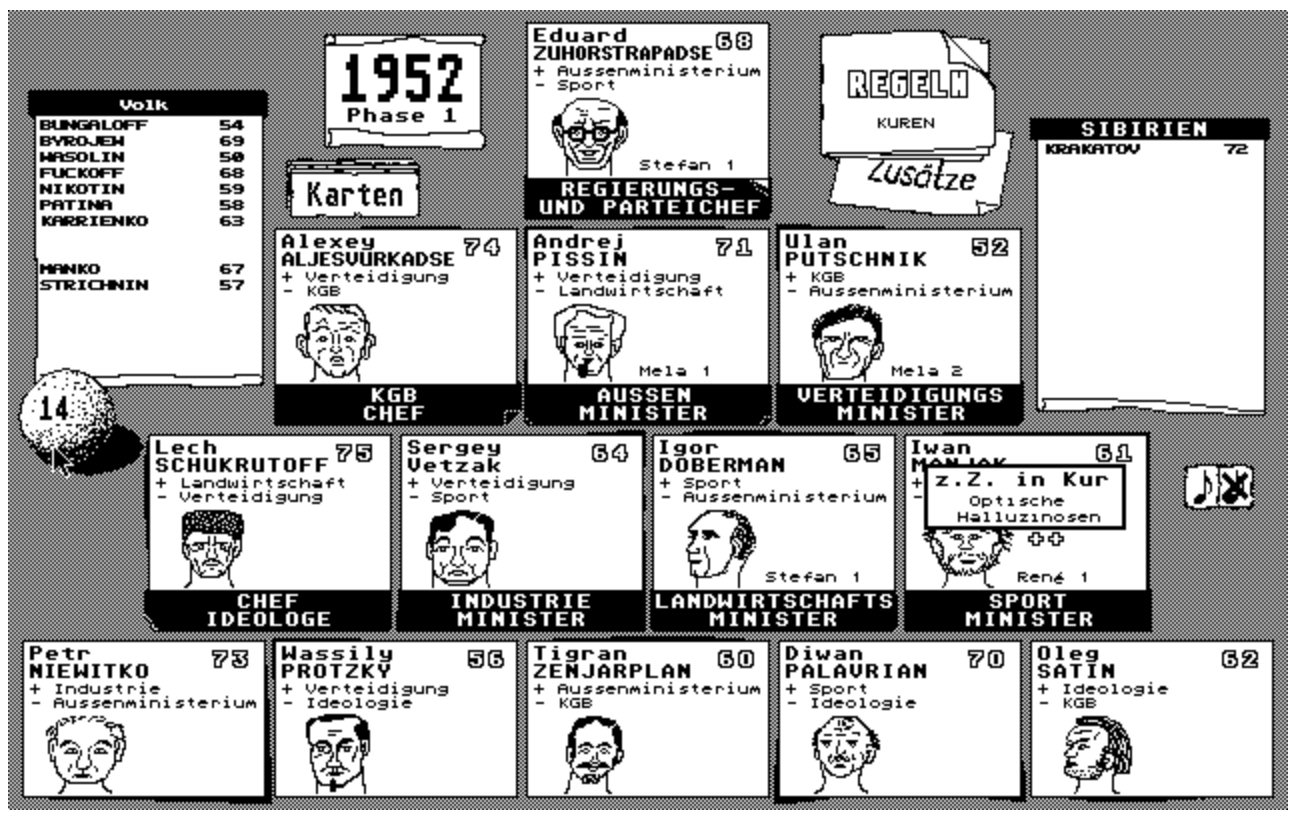
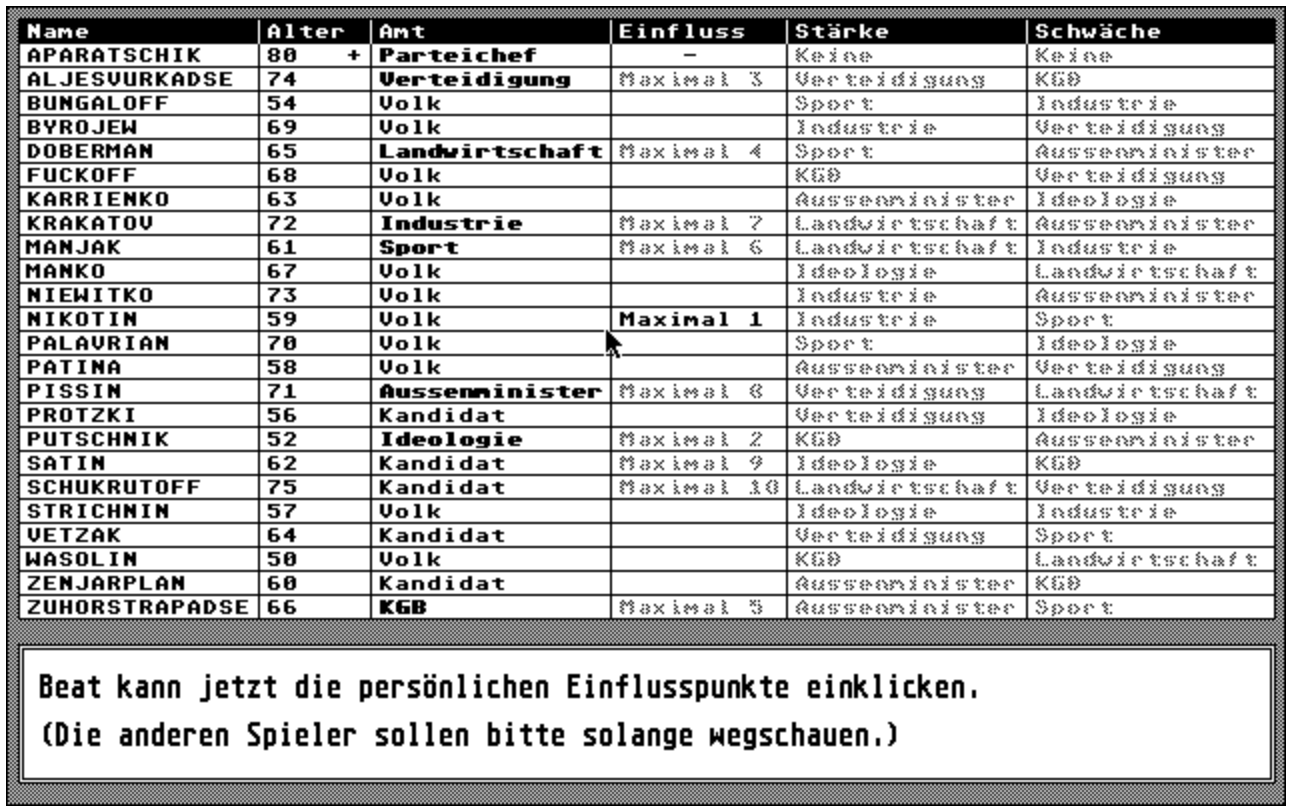
At the time of its release, the board game’s mechanics were as novel as they were complex: the gameplay was divided into up to eleven rounds, each comprising up to eight phases, and a large number of tokens were used to track age, health and other game states. ‘There was quite a lot of administrative overhead in the game,’ says Markus Kropf, who played Kreml frequently in his share qd flat. He saw the potential for the game to run more smoothly if it were converted to digital form. Whilst studying computer science at the University of Bern, he therefore simply set about programming the game. “I saw it as an exciting programming challenge,” through which he could gain experience using GFA Basic on his Atari ST 520, said Kropf in an interview with the author in June 2026 (unpublished).
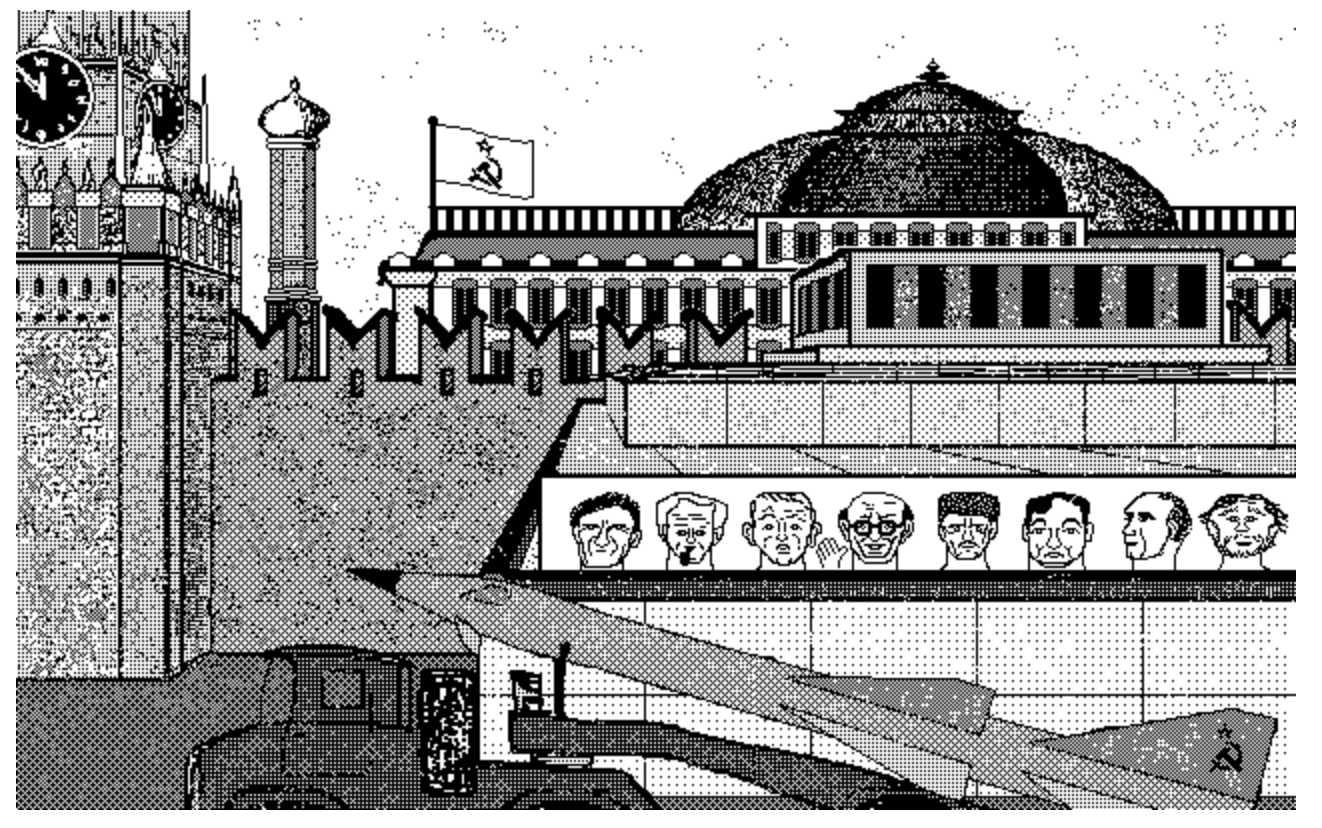
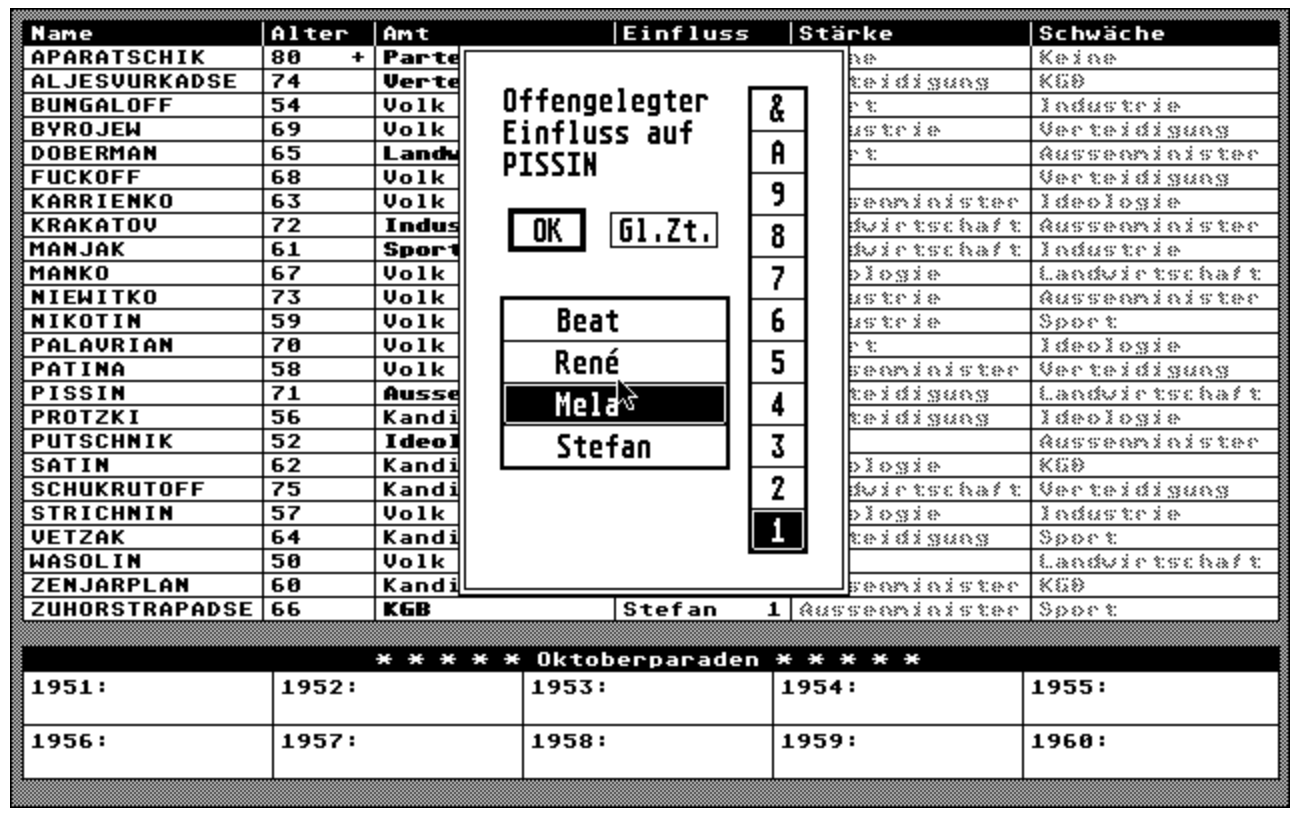
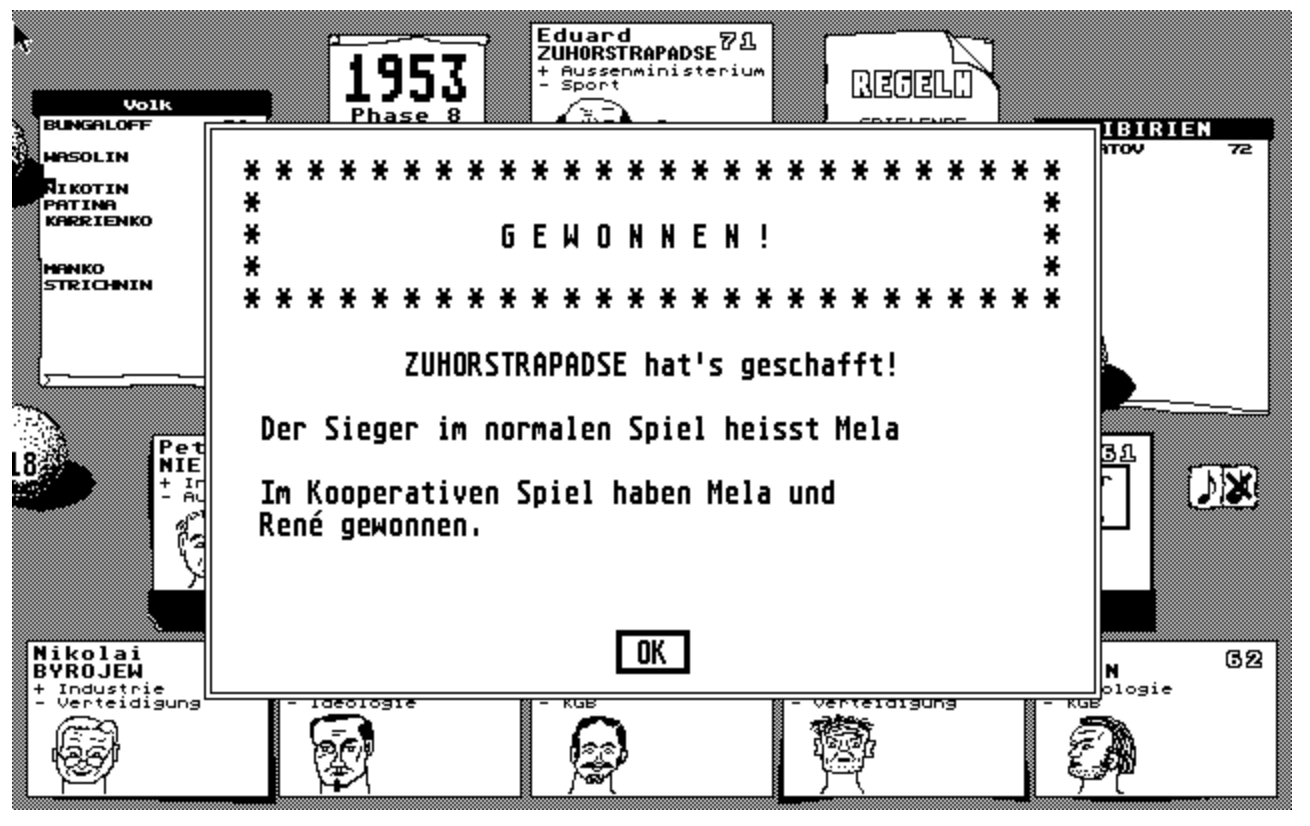
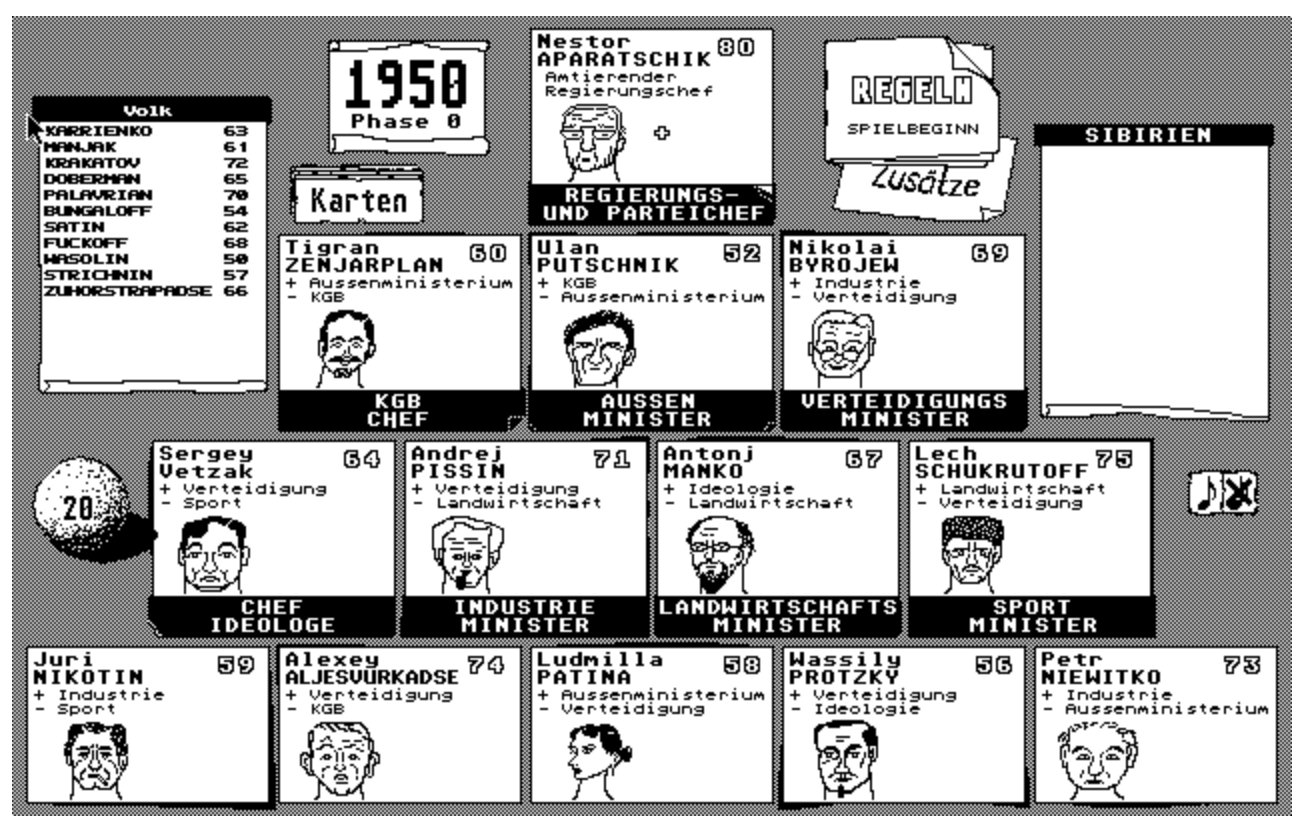
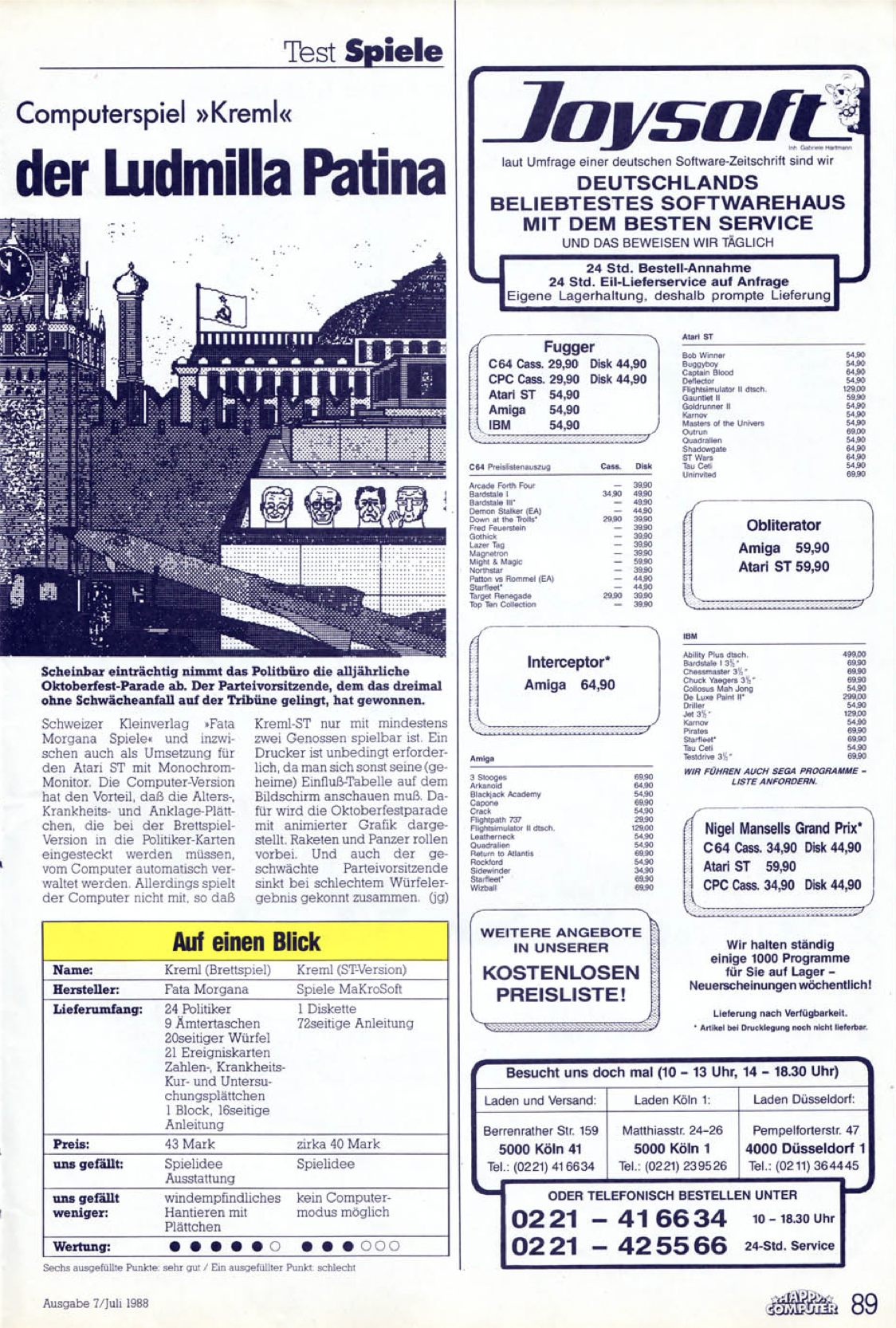
Kropf developed Kreml as a solo project within a few months in 1988, and it was the only game released under the Ma Kro Soft label. Kropf himself converted all the board game’s graphics into monochrome pixel art and expanded them to include a depiction of the October Parade – which exists only as a concept in the board game but is not depicted graphically – and included various pieces of music and eulogies for deceased politicians. There was no formal agreement between Markus Kropf and Urs Hostettler. However, in a written interview with the author in June 2026, for Hostettler, the digital version was a ‘pleasant surprise’, which is why, upon the release of the American version of Kreml, he asked Kropf to translate the game and adapt it to the modified American rules. However, the project did not materialise.
A review of Kreml appeared in the Happy Computer issue 7/1988 [Review 1], but according to Kropf, it did not generate the desired response. Consequently, only a few copies were produced, which were dispatched in a cardboard case along with an instruction booklet printed on red paper. Unfortunately, no production copy could be surfaced during research. However, a browser version can be played on Urs Hostettler’s website.