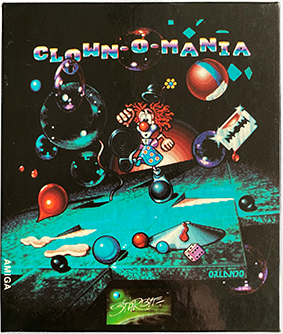
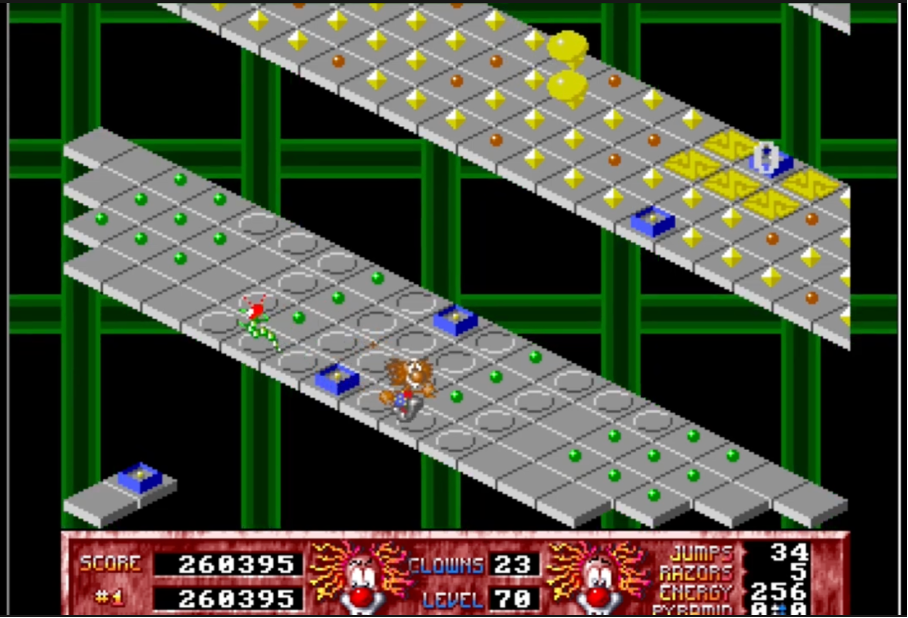
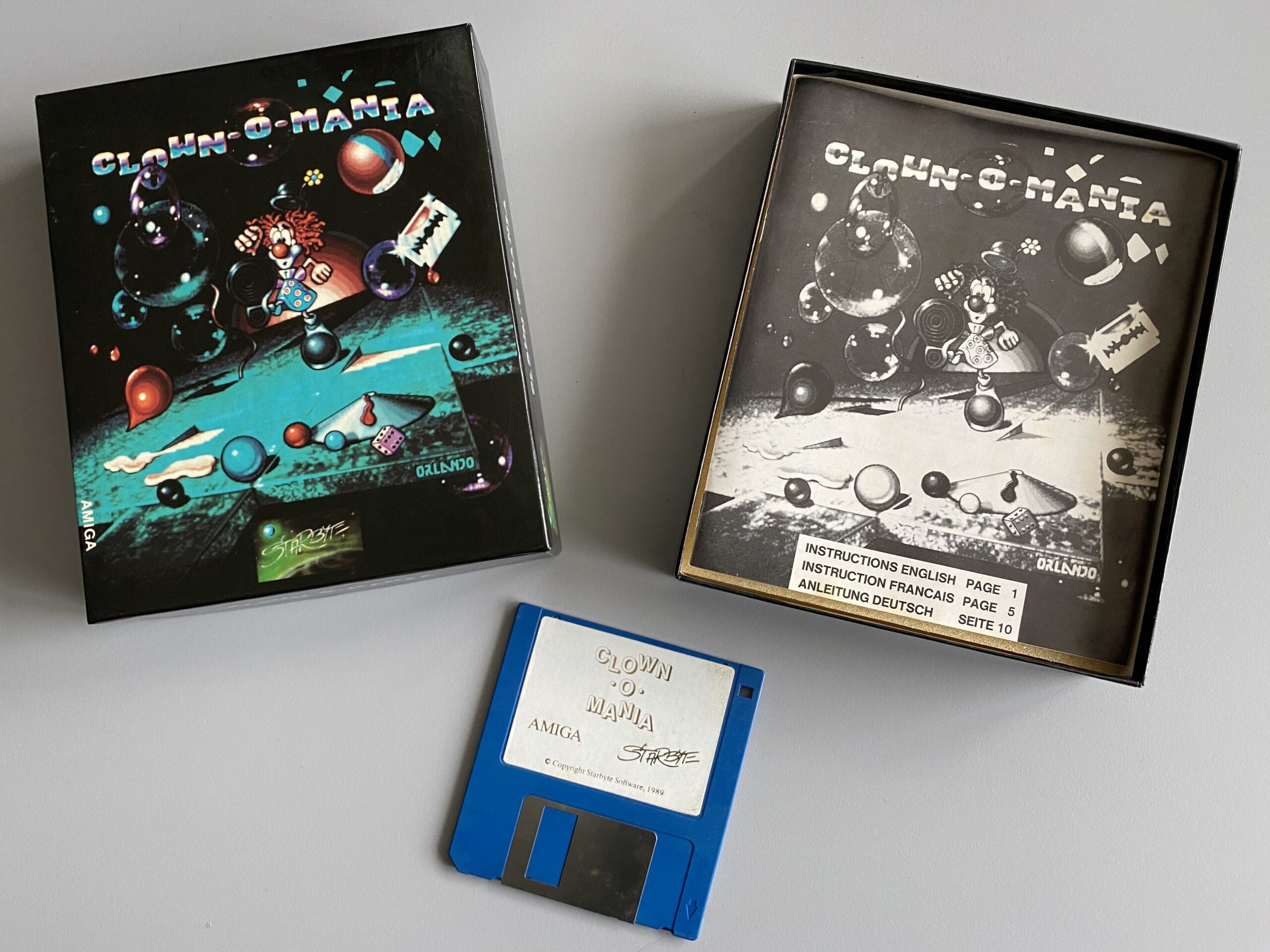
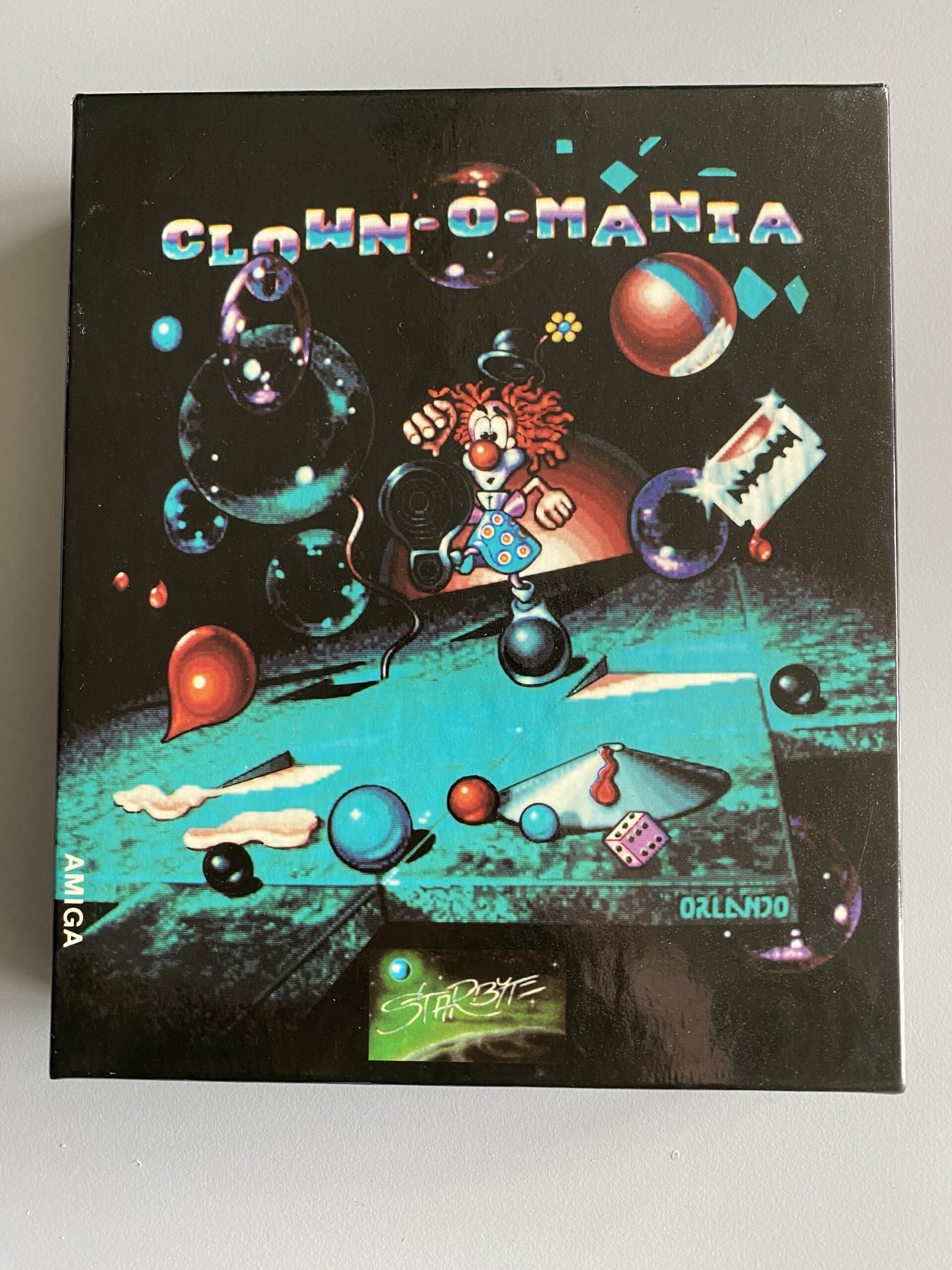
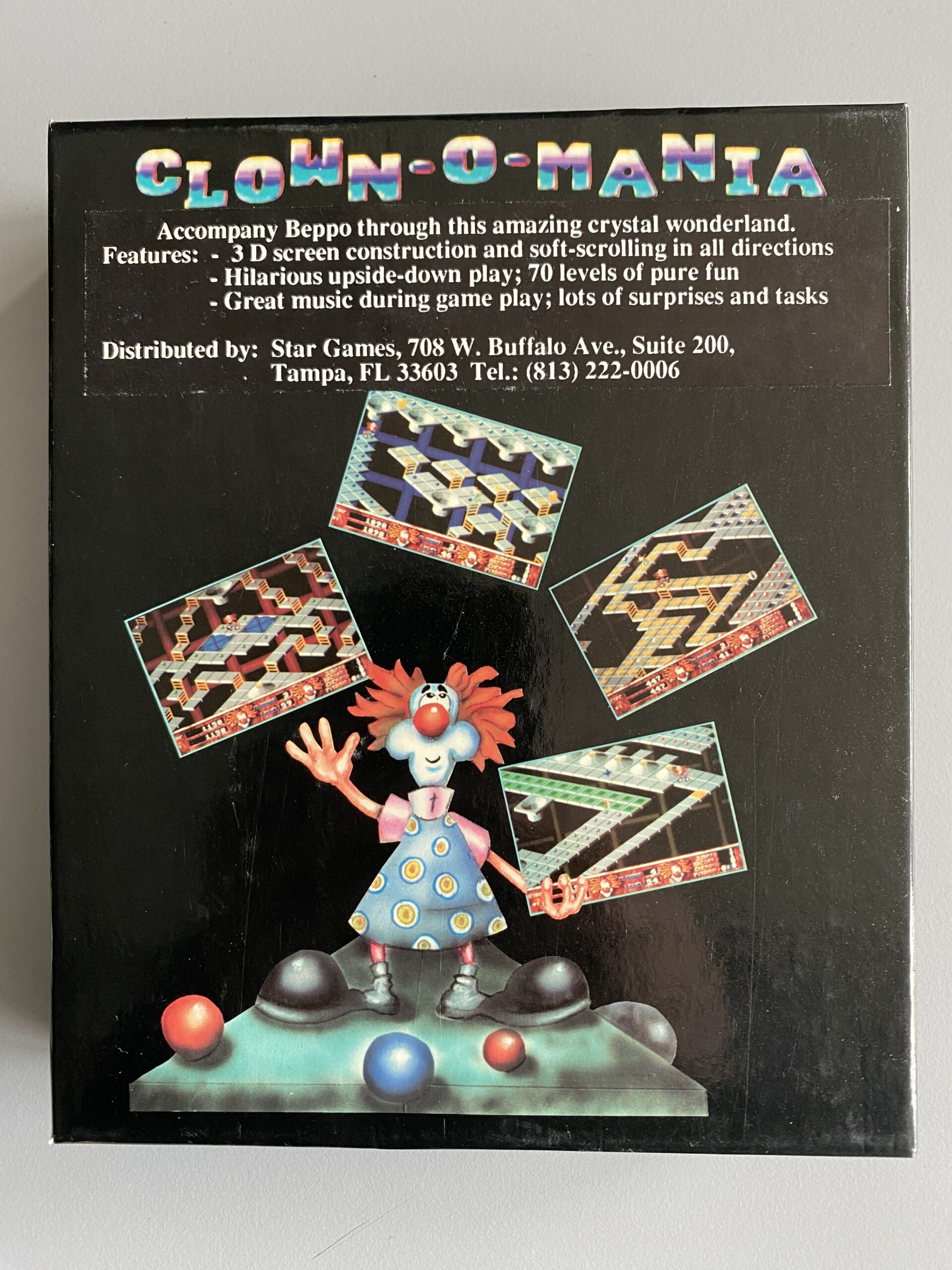
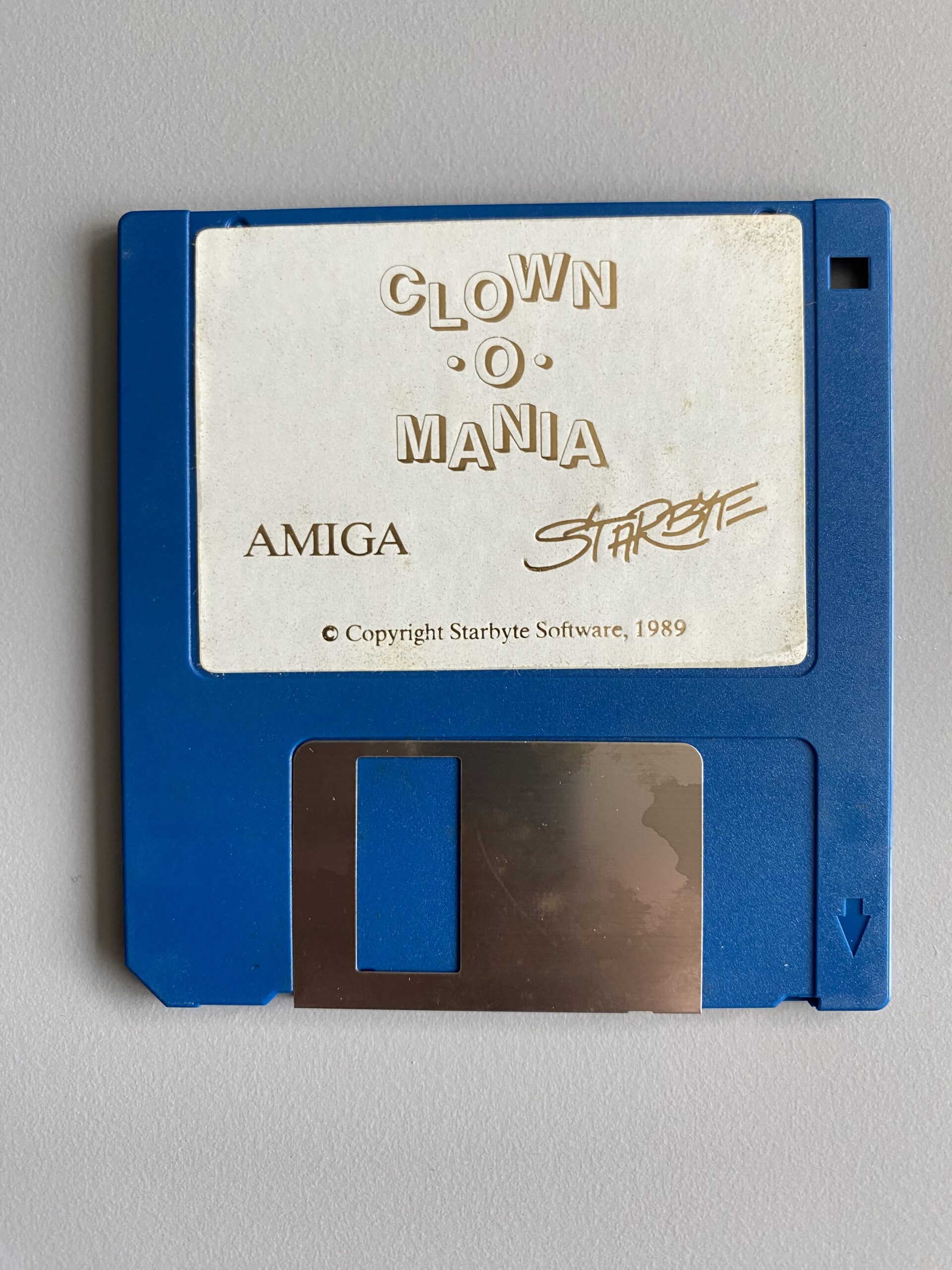
Clown-O-Mania is a maze platformer created by Roman Bossart for the Commodore Amiga and released by Starbyte Software in 1989. The artwork was done by Roland Petermann, and the original music was composed by Roman Werner. In the same year, the game was ported for Atari ST by German developers Carsten Mohr and Matthias Krenzel as well as Adrian Daleck for sound design.
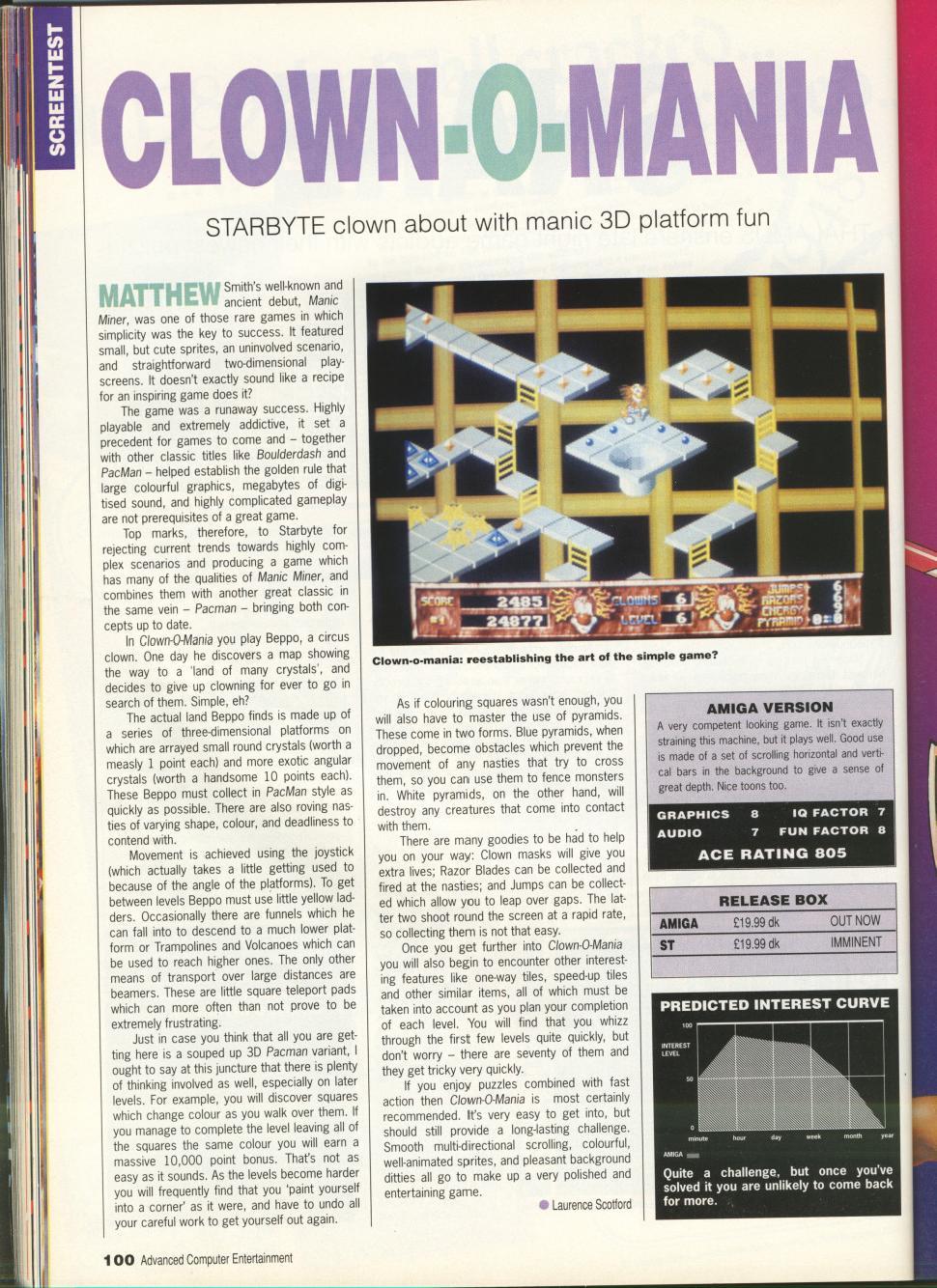
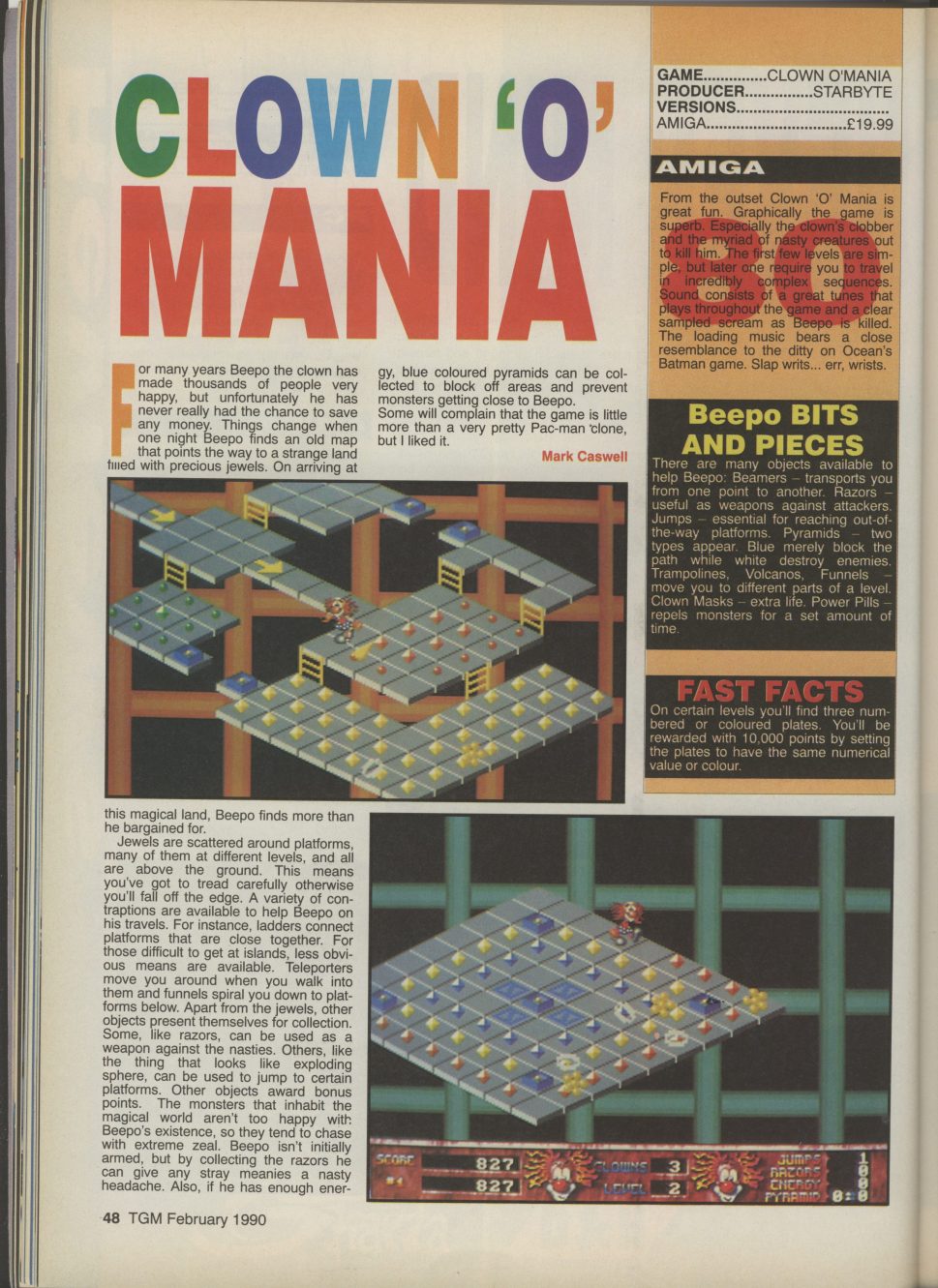
Many game magazine reviews gave the Amiga original Clown-o-Mania a score of 80% and more: "Clown-o-Mania is well thought out and beautiful. Give us more games like this!", celebrates Amiga Joker in the 12/89 edition. Appreciated were especially the superbe 3D graphics and the outstanding sound, but also the compelling gameplay and concept. ASM gave a lower rating, mocking that the idea stemmed from Atari's Crystal Castle from 1983. In that isometric arcade game, the main character Bentley Bear collects gemstones while exploring 16 levels, chased by trees and bees.
In Clown-o-Mania it is Beppo, a circus clown who found a mysterious map that “shows a strange land full of valuable crystals. From that moment on, Beppo gives up clowning and goes in search of the crystals.” (Clown-o-mania Manual, p.3) On that search, he runs through 70 many galactic plateaus, climbs ladders and teleports from field to field. It is especially the sound design which made milestones: a ast-paced melody that fits the gameplay and captivates the player, which was celebrated by players and player magazines alike.
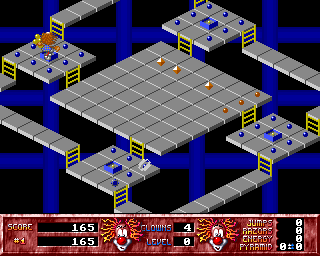
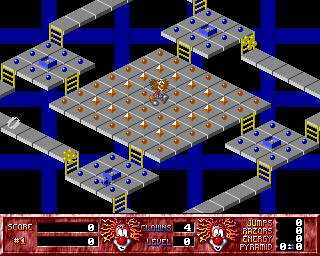
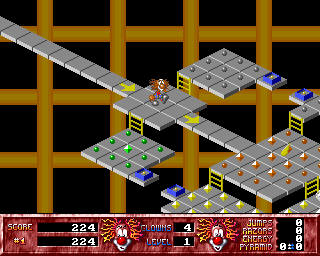
While the threedimensional playfield and the isometric perspective might be a copy of Crystle Castle, the meta mechanic of Clown-o-Mania is all Pac-Man: Beppo needs to clear all the gems in each level, while picking up a range of power-ups and evading enemies. The game items and mini mechanics are more elaborate though than the classical maze game. The player collects razor blades that serve as remote weapons. Pyramids can be replaced on the platforms to block or eliminate enemies, but each replacement costs energy. Also Clown-o-Mania employs jump’n’run elements, so you need to collect scarce yellow bubbles to be able to jump over holes between the platforms, when there is no connecting ladder. Specific booster-tiles, when moved across, speed up Beppo, and also enemies, providing a complex chase mechanic!
As an additional feature, players can increase their level score by stepping over color-changing tiles multiple times to arrange them all in the same color by the end of the level. So, rather than relying on traditional invincibility power-ups (such as in Pac-Man), Clown-o-Mania is more about managing resources such as jumps, weapons, and energy.
As the game progresses, the level of difficulty and complexity increases steadily, providing a very challenging gameplay. For example, in the beginning, the player encounters no enemies; later, the enemies follow pre-defined paths; and by the end of the game, the enemies are actively pursuing Beppo. Other gameplay elements are also gradually introduced, such as one-way tiles, teleport tiles, funnels, speed-up tiles or death tiles. Together with the color-tiled puzzle element, it proves a compelling set of mechanics. The driving, playful sound design and bizarre, colorful graphics are definitely adding to the game’s charm.
The Atari ST version of Clown-O-Mania was ported by German developers Carsten Mohr, Matthias Krenzel and Adrian Dalecki. What are the differences between the original Amiga, which was launched by the German publishing company Starbyte and developed by Swiss developers and artists, and the ported German Atari ST versions? For starters, the fluent scrolling of the Amiga game was changed into a flip-screen scrolling in the ported version, which seemed to make an overview strategy of the levels more difficult. The Amiga version shows a grid-like background graphic which changes colors with every new level and gives it a psychedelic flair; the Atari’s background, on the contrary, is just black. Furthermore, the joystick control seemed to be much more precise than the trackball of the 1983 Atari inspiration Crystal Castle (see the comparison and critical let’s play on
https://www.youtube.com/watch?v=l6huLREVwVA ).