Kaiser
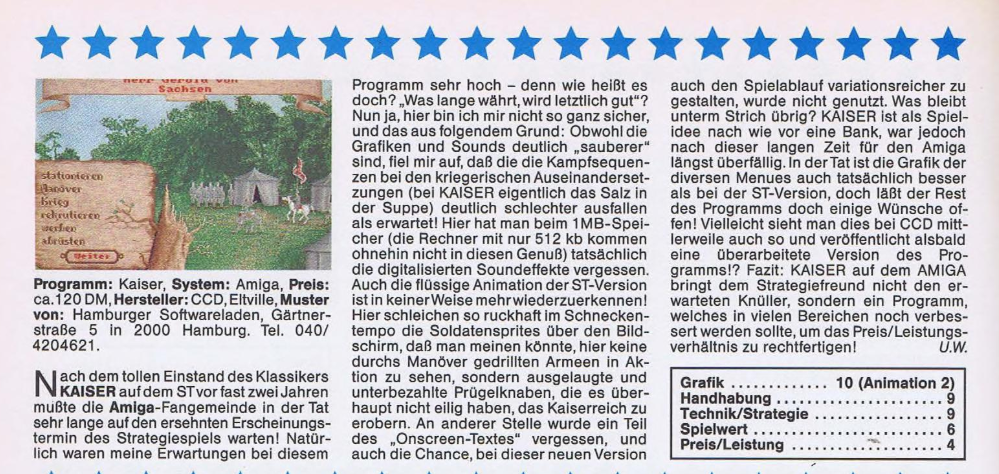
Kaiser is a remake of a popular strategy game on C64 and Atari 400/800, developed by Dirk Beyelstein, Markus Mergard, and Claudio Kronmüller of CCD in 1984 in Germany. In 1988, Beyelstein started a remake for Atari ST with his own company CCD. Swiss Publisher LINEL ported the Amiga version. Markus Grimmer as producer, assigned the task to Guido Henkel and Hans-Jürgen Brändle while he had young developers in Appenzell working on other LINEL games. Henkel did it, but it was not easy; the code of the Atari ST version, he was working from, was “completely undocumented” and therefore difficult and time-consuming to convert.
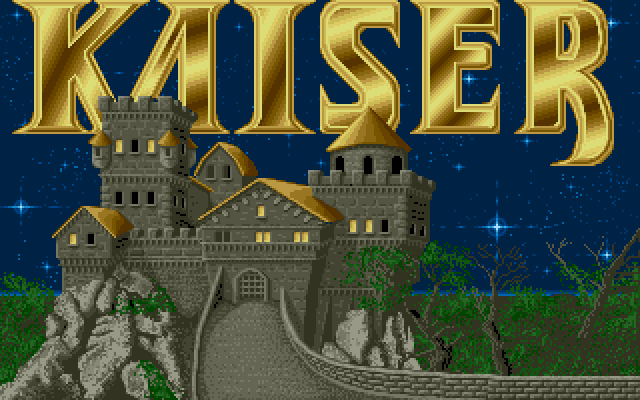
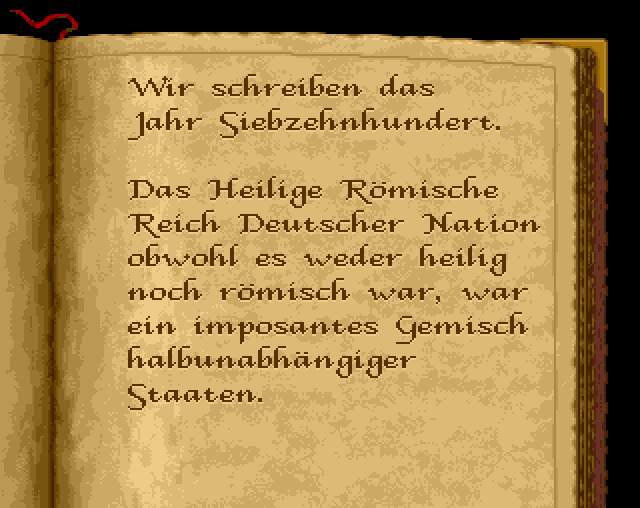
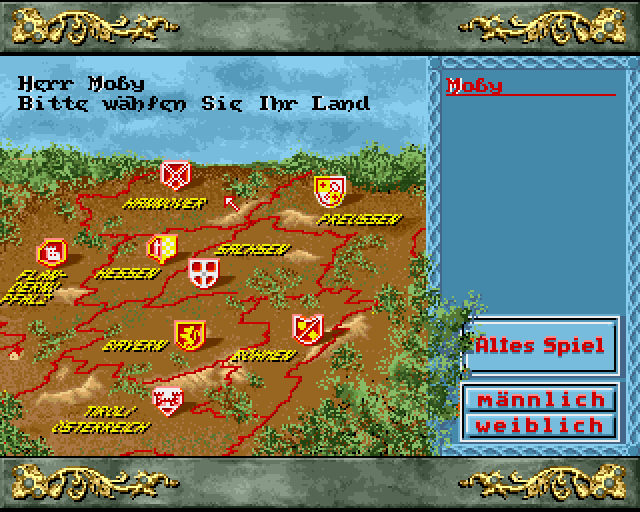
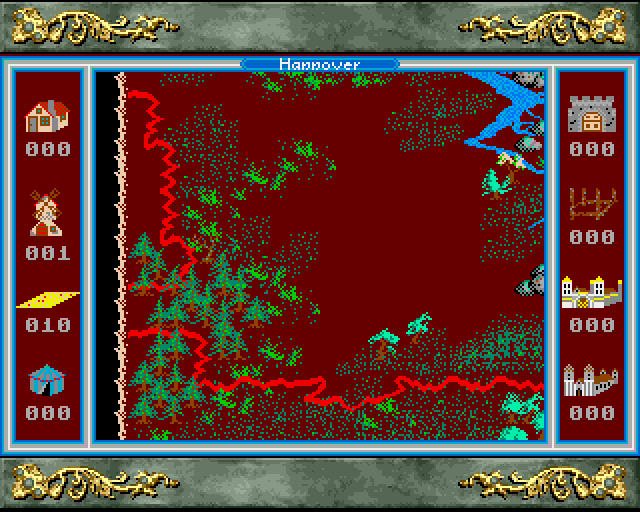
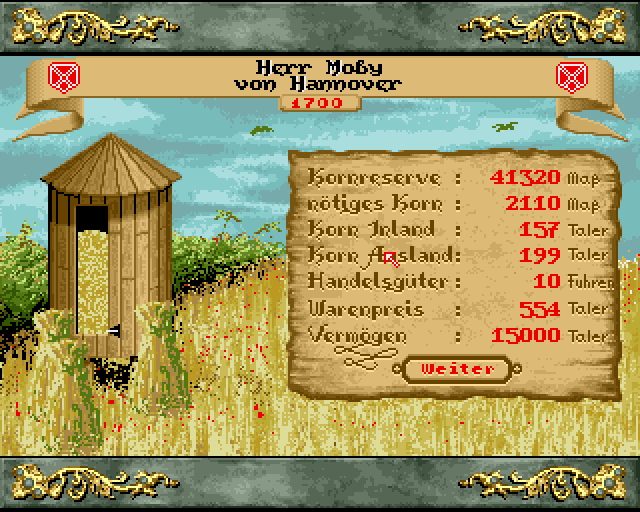
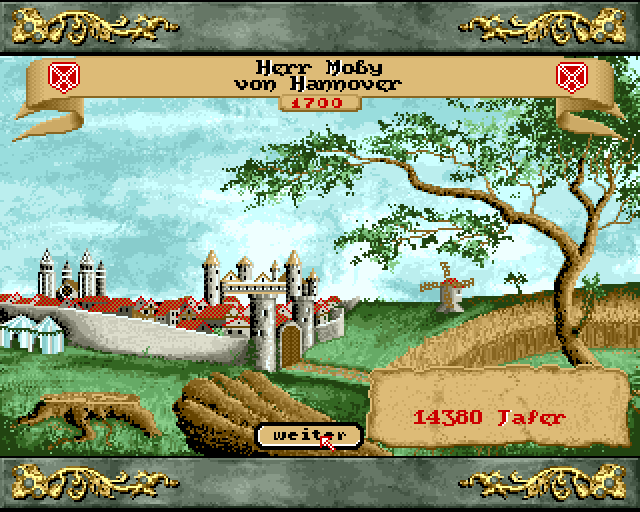
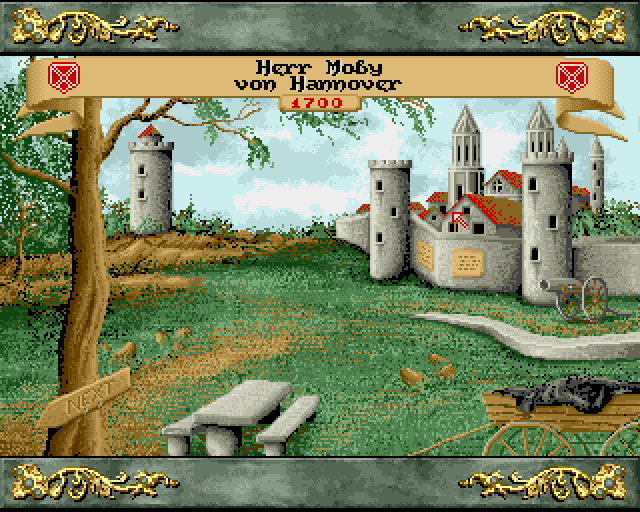
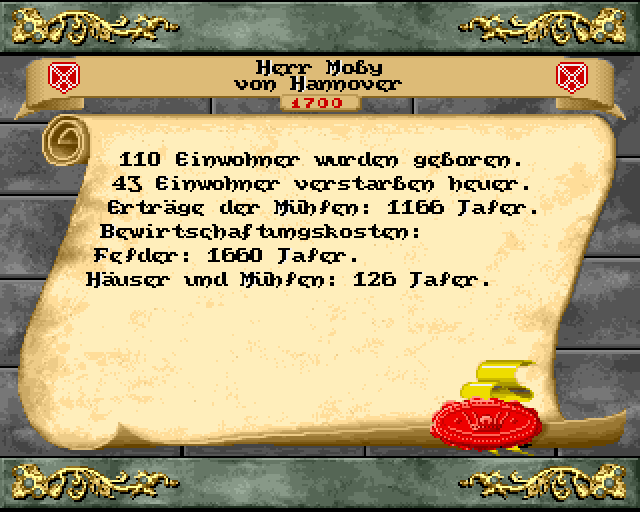
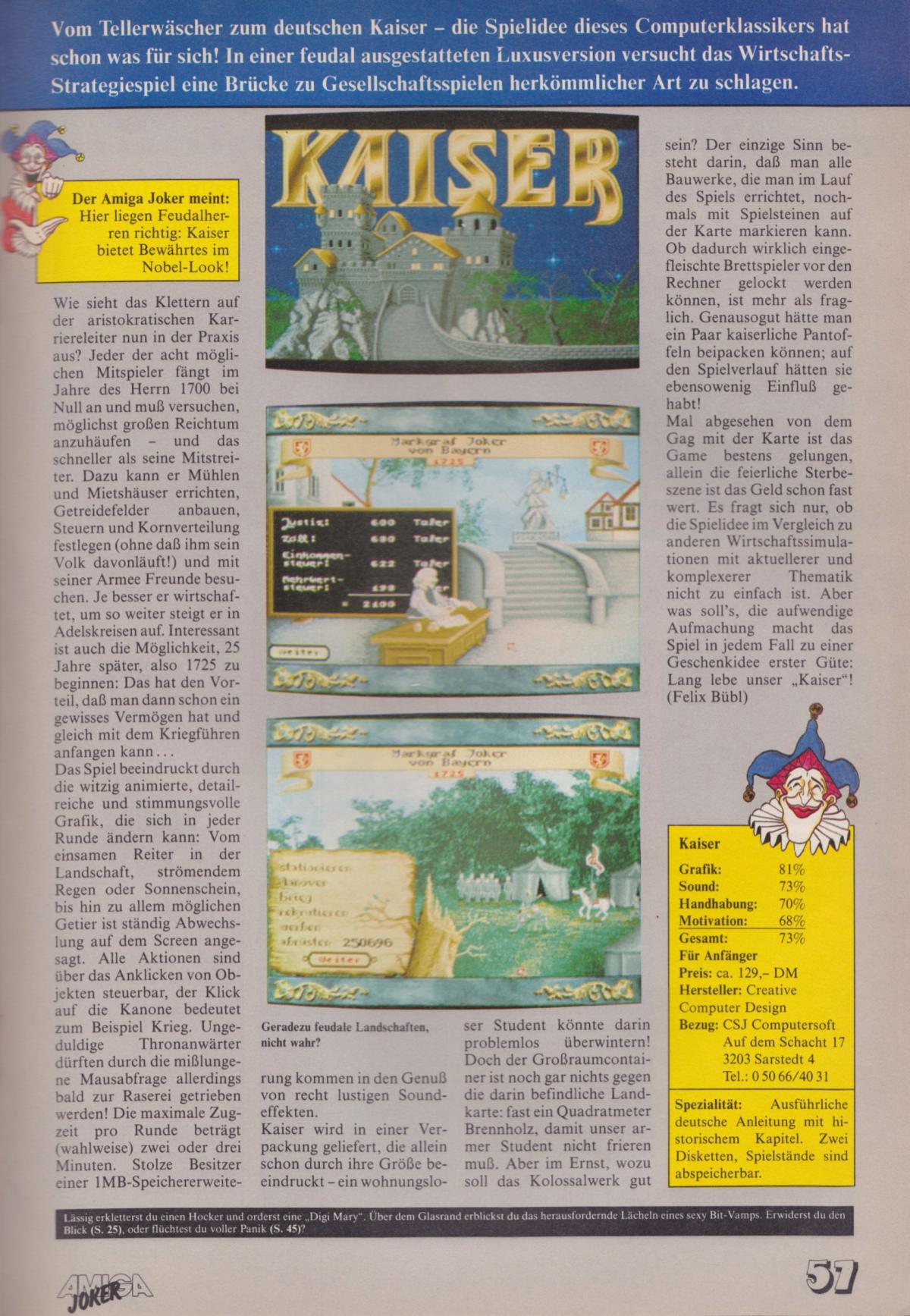
The Kaiser game from 1989 is an updated and enhanced version of the 8-bit game of the same name from 1984. The most obvious addition is the graphics: whereas the original consisted almost entirely of text, this version has drawn background images on all screens, and most of them include animations too. By clicking on interactive elements — such as the city for city development — players can access other screens and further settings. While the basic principle of the game remains unchanged, a number of new features have been added. For instance, city development has been extended to include purchasing houses and military tents, and there are now two starting conditions: 1700 as a noble or 1725 as a margrave, who has more advanced funds and possessions. There are also a number of smaller additions, such as the ability to trade goods as well as grain.
A Review in Amiga Joker (Feb. 1990, p.51) praises it highly: “The game impresses with its witty animations, detailed and atmospheric graphics, which can change in every round: from a lone rider in the countryside, pouring rain or sunshine, to all kinds of creatures, there is constant variety on the screen.”
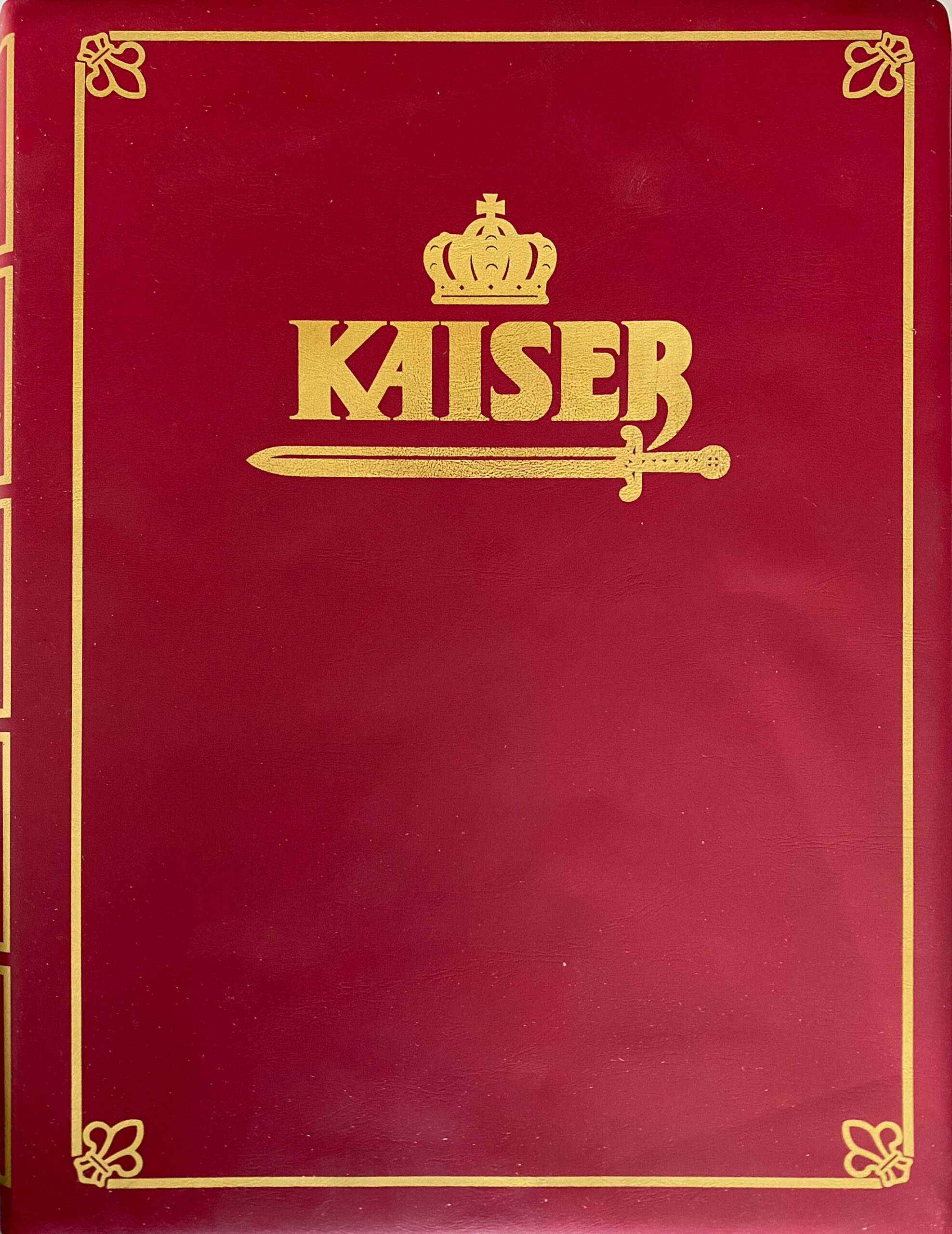
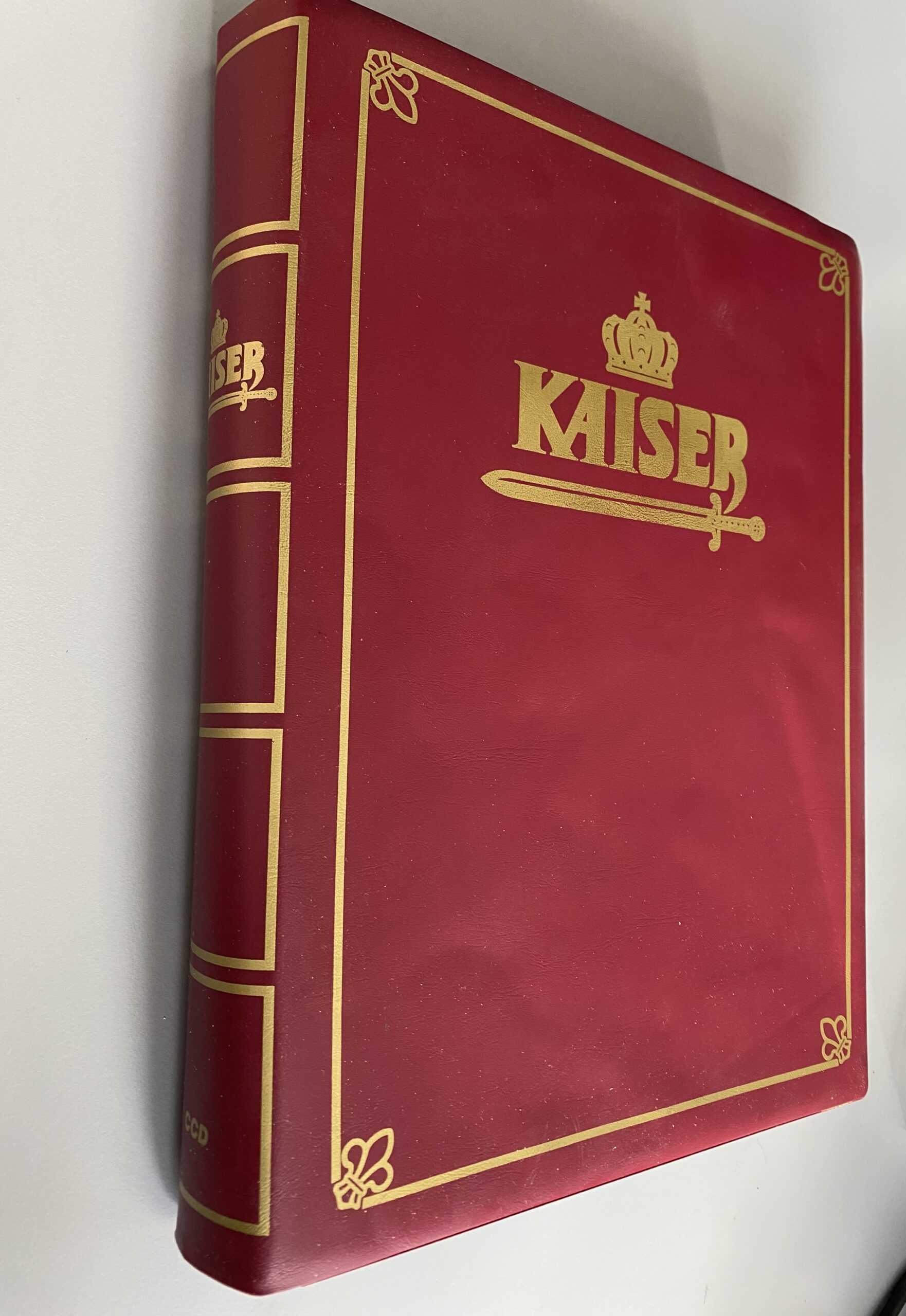
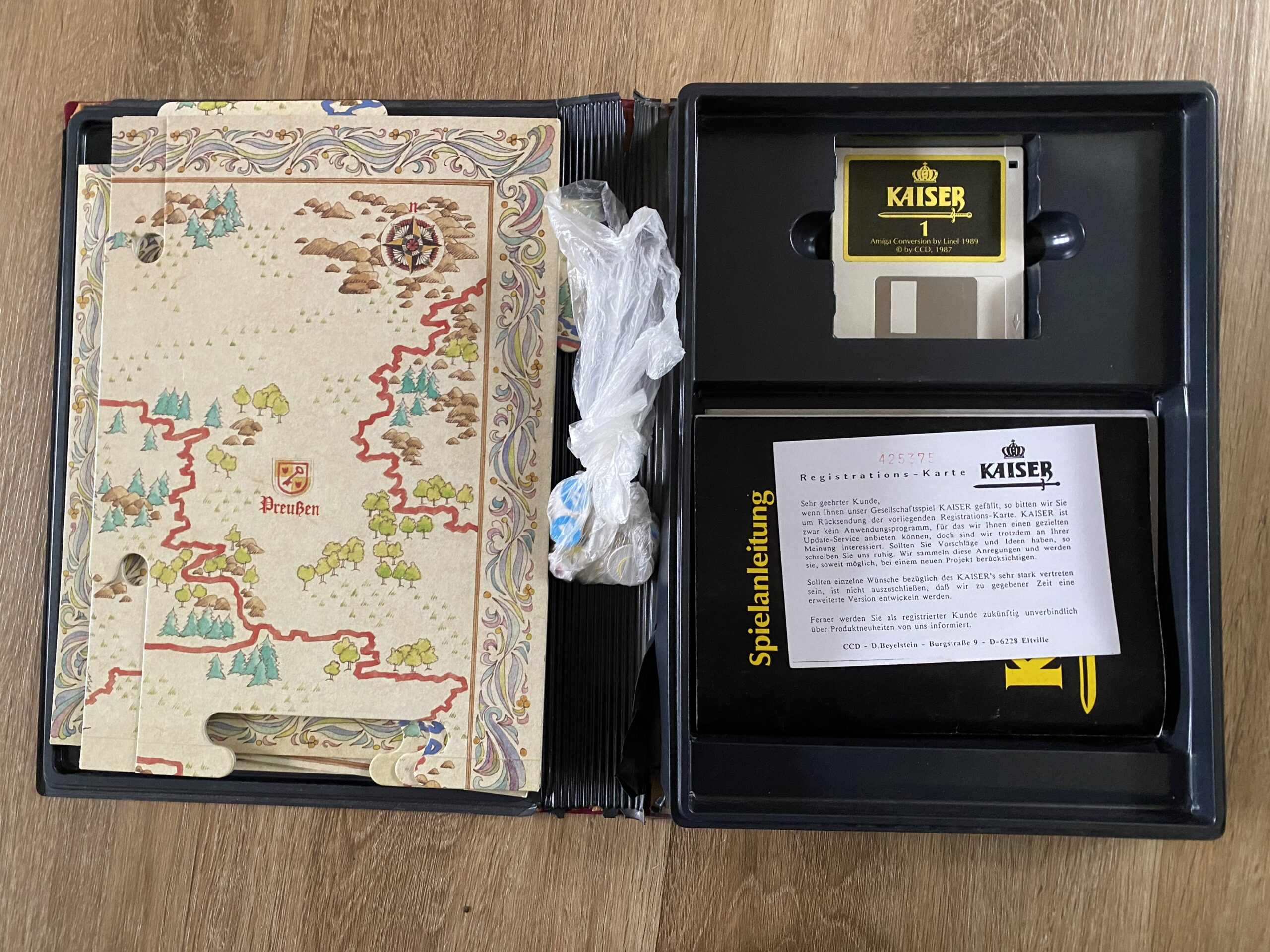
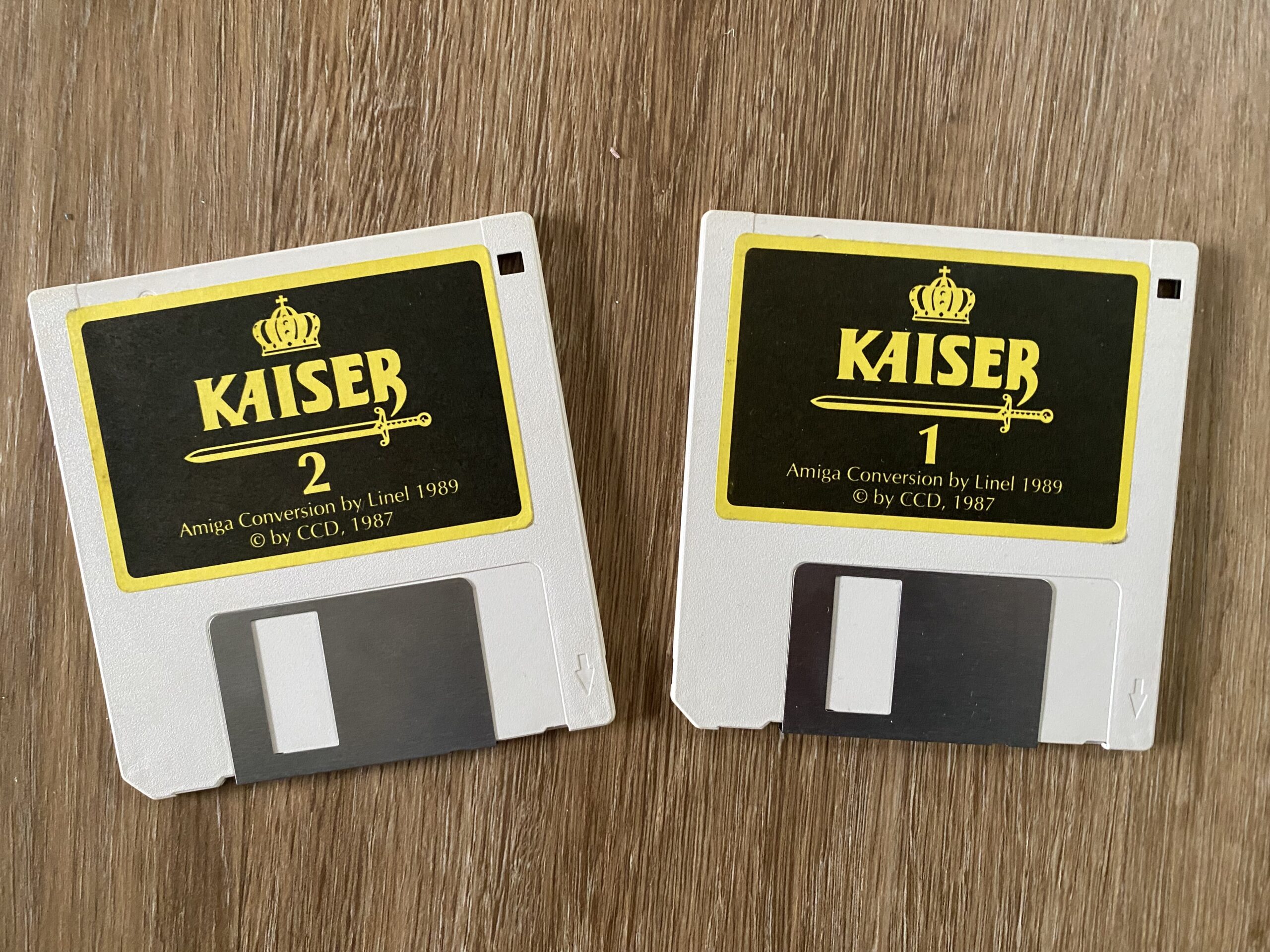
Kaiser comes in packaging that is impressive simply because of its size. Markus Grimmer went beyond the usual in packaging and presenting Kaiser. He produced an oversized plastic box that looked and opened like a book, and also contained an entire board game that could be played alongside the computer game. The board was a six-piece medieval map of Germany. The video game itself came on two floppy disks, accompanied by the note “Amiga conversion by LINEL 1989.” Also included was a manual and a leaflet with some important hints for the Amiga version. Relatively few copies of this big box were sold in England. LINEL publisher Markus Grimmer had a hard time convincing retailers to put this oversized box on their shelves. In Germany, the unusual product sold a little better despite its physical size. In the USA, the game was only released in a normal box.
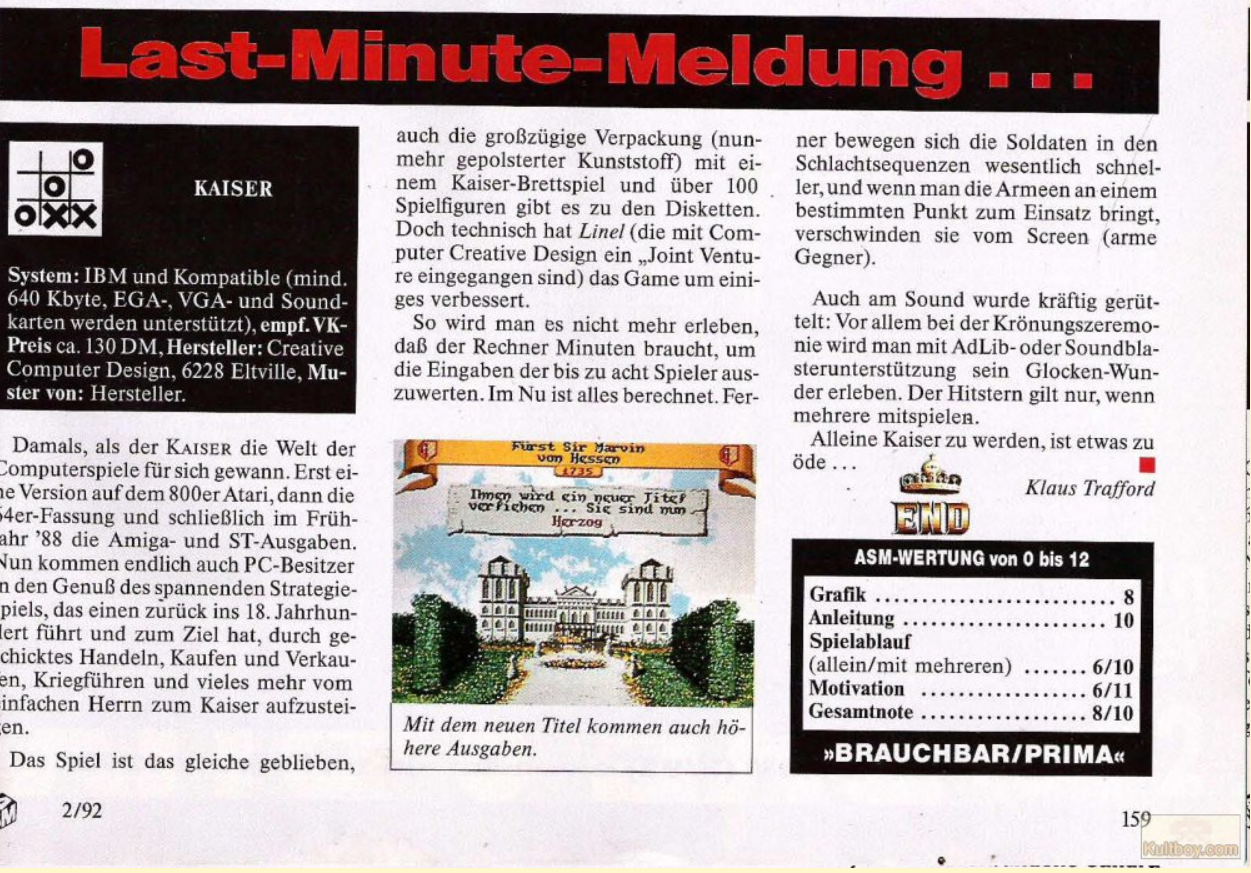
In 1992, a PC version was released, which was also ported by LINEL. Markus Grimmer chose the same generous, large, and cushioned packaging that included the boardgame. A review in ASM (2/92) states that LINEL has made some major technical improvements to the PC version of the game. You will no longer have to wait minutes for the computer to evaluate the inputs of up to eight players. Now everything is calculated instantly. Furthermore, the soldiers move much faster in the battle scenes. And a lot of work has also gone into improving the sound.