Cashtown
The game Cashtown was released in 1998 by the Swiss Bankers Association (ASB). It was fully developed in Switzerland and was available in French and German and ran on PC. The game is considered as educational game and aimes to teach young players (target group between 16 and 24) financial and business skills in an entertaining way.
Narrative Setting and Core Gameplay Mechanics
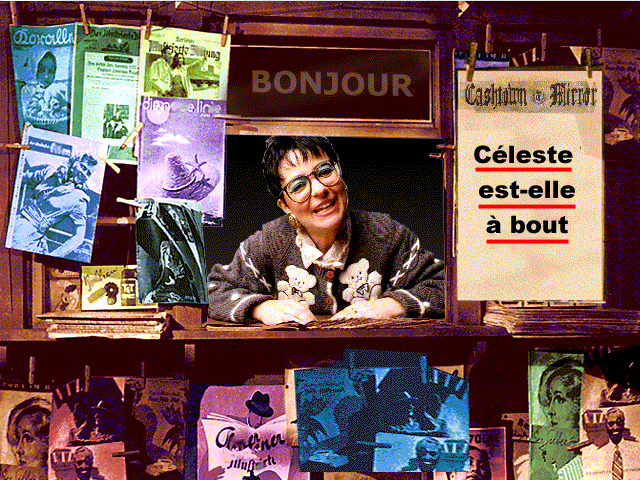
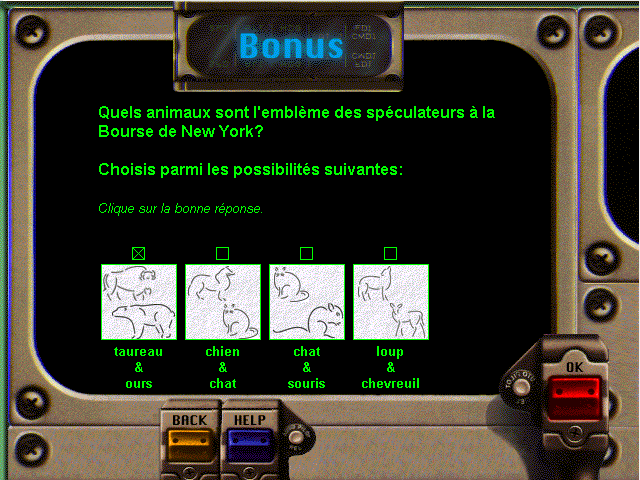
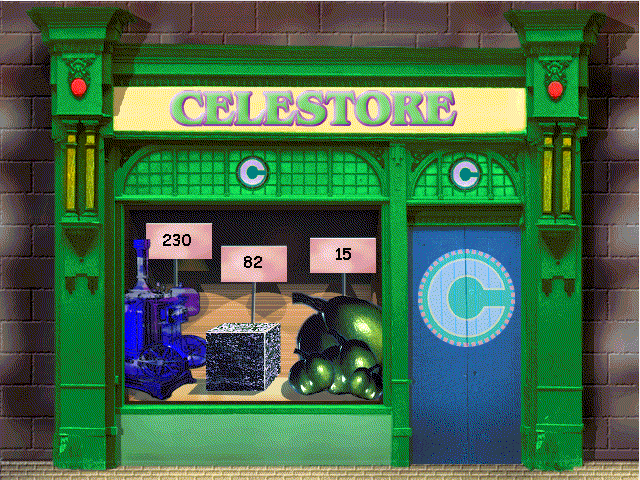
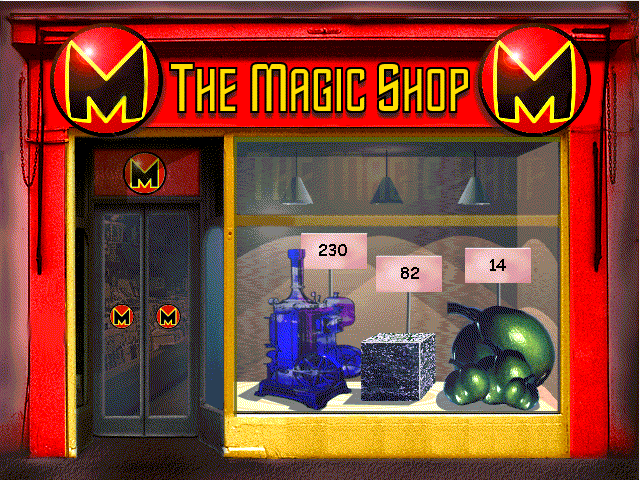
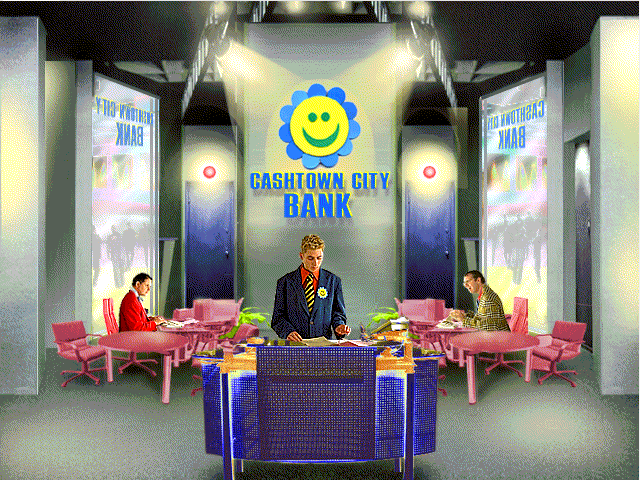
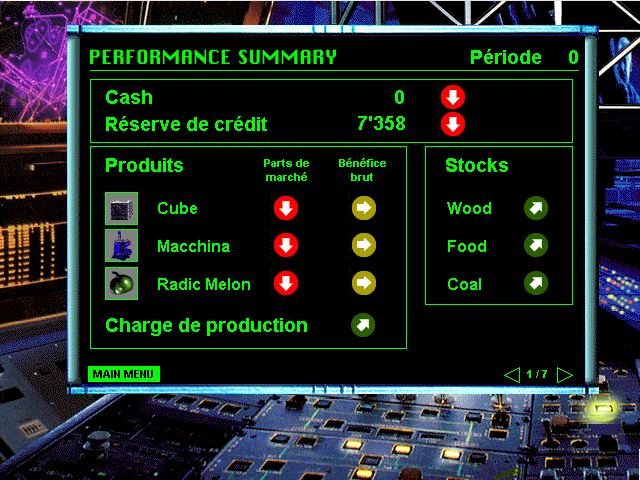
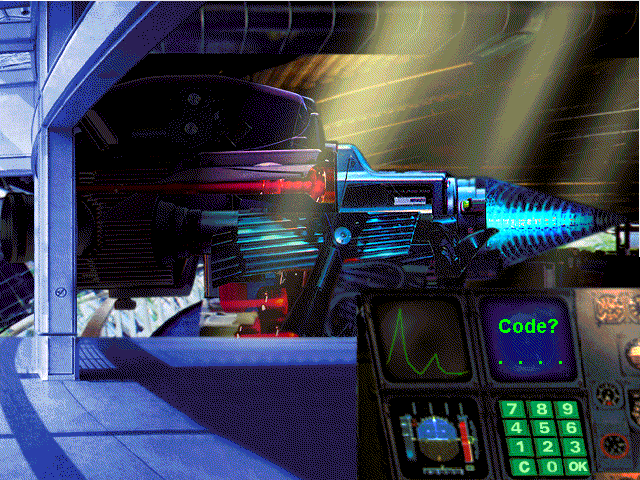
The story takes place in a fictional intergalactic Switzerland known as the “Galaxies Unies,” where the company Master Magic threatens to take over the economy using dishonest but real methods. As the player, your task is to solve the financial problems of Céleste Inc. and defeat Master Magic’s empire. At the start, you choose a character and enter your office, which has multiple doors leading to different areas: the library (a glossary of financial terms), the control room (reports and documents), the street (bank, shops, bar), and a spaceship for traveling between planets. The game world includes five planets, where you can set product prices, hire or fire staff, and negotiate with representatives, while quiz challenges along the way allow you to obtain codes or cash prizes.
Multidisciplinary Collaboration
The game was developed by several companies. Peter Bohny led the project through Falcomedia. Polytrop worked on the animation and graphics, while a working group from ASB, composed of several bankers, ensured the coherence of the content.
Financial Scope and Reception
The ASB invested one million Swiss francs in this project, which required nearly two years of work. A big part of ASBs communication budget went into the game. Despite its historical significance, Cashtown is relatively unknown today, but it remains a notable part of Swiss video game heritage.
Tension between Educational Intent and Economic Ideology
From a contemporary perspective, the game appears particularly noteworthy, as it raises the question under which conditions such a product could be conceived as an educational medium for a young audience. The worldview it conveys is strongly oriented toward the financial sector, placing economic success and profit maximization at the forefront without critically reflecting on them. This orientation is evident not only at the narrative level but is also reinforced through its aesthetic design: shrill, eclectic graphics depict ostentatious, cigar-smoking businessmen, urban high-rise landscapes, and luxurious hotel lobbies. The subtitle, “a galactic adventure about money and success,” further condenses this thematic focus. In-game prompts likewise contribute to stabilizing this logic, for instance by advising the player to dismiss a committed employee on account of her initiative.
Against this backdrop, the institutional motivation of the Swiss Bankers Association (ASB) to develop such a game for a youth audience also calls for closer examination—particularly in light of the considerable investment of around one million Swiss francs, which can be regarded as exceptional within the Swiss digital game production landscape of the time. A possible explanation is offered by Silvia Matile-Steiner, spokesperson for the ASB, who stated in an interview with Le Temps: “It was necessary to break with outdated textbooks.”