Züri
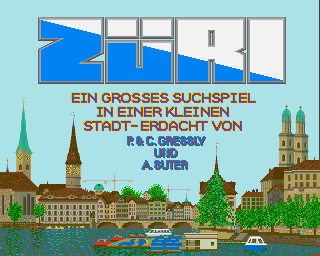
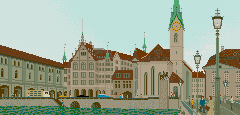
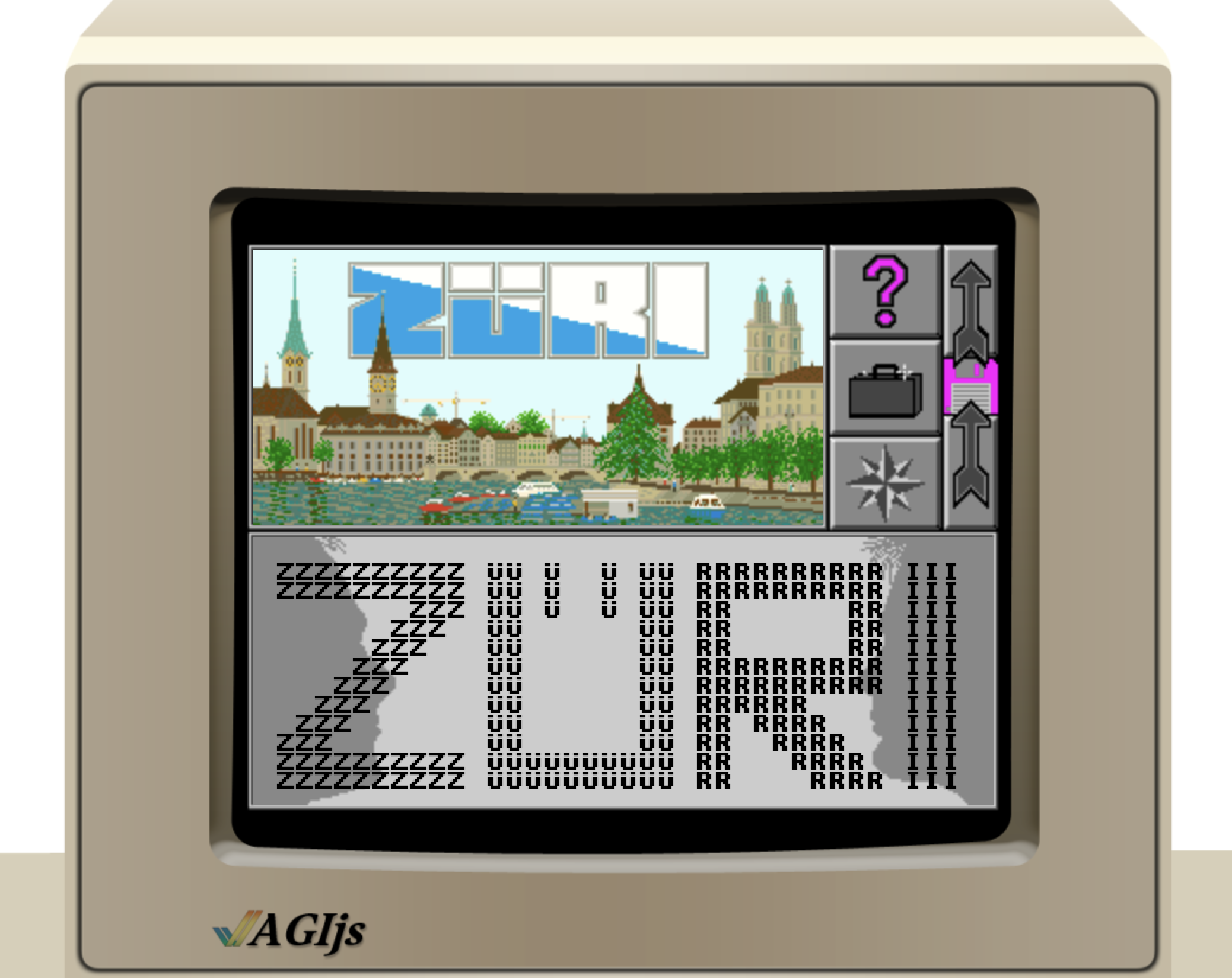
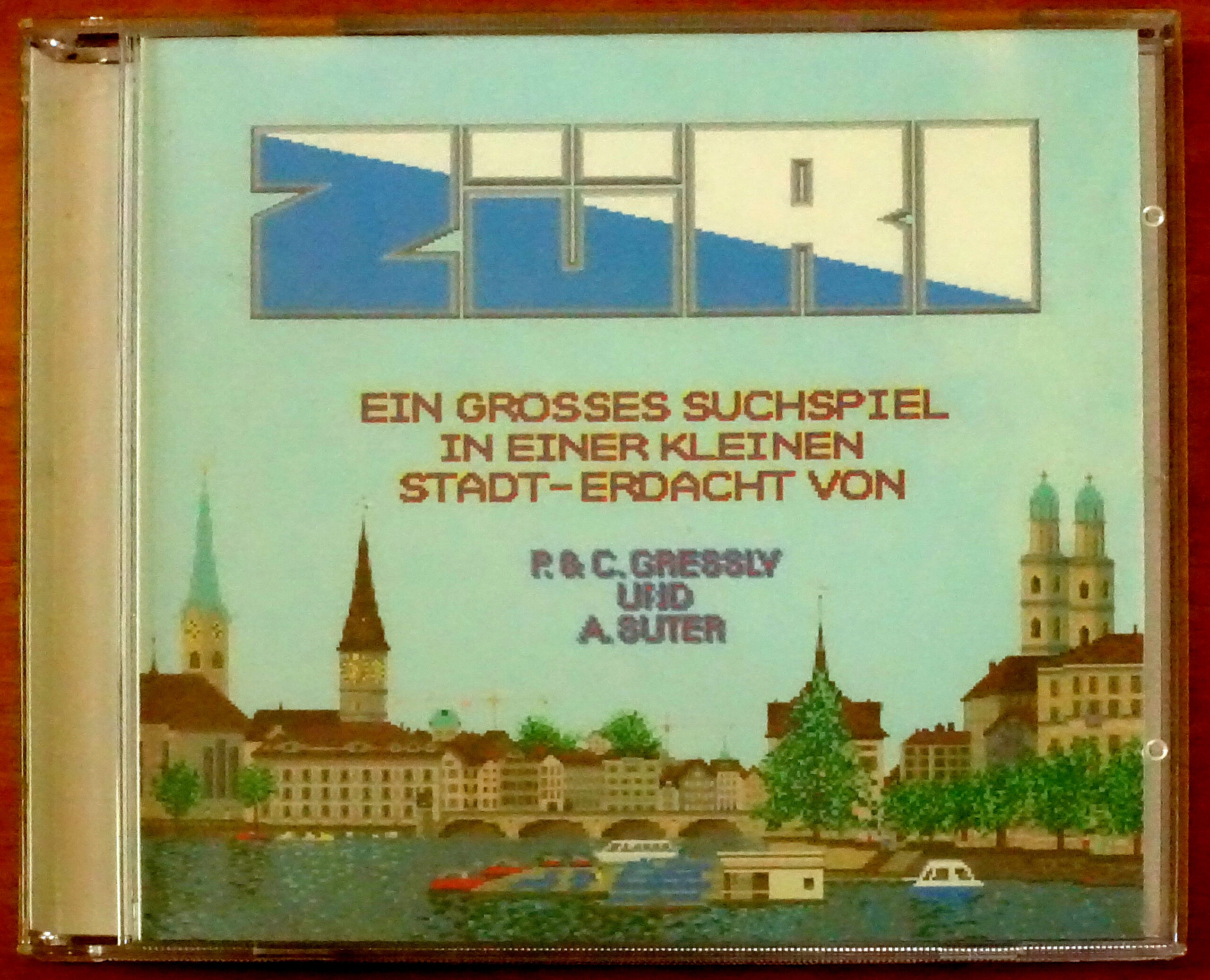
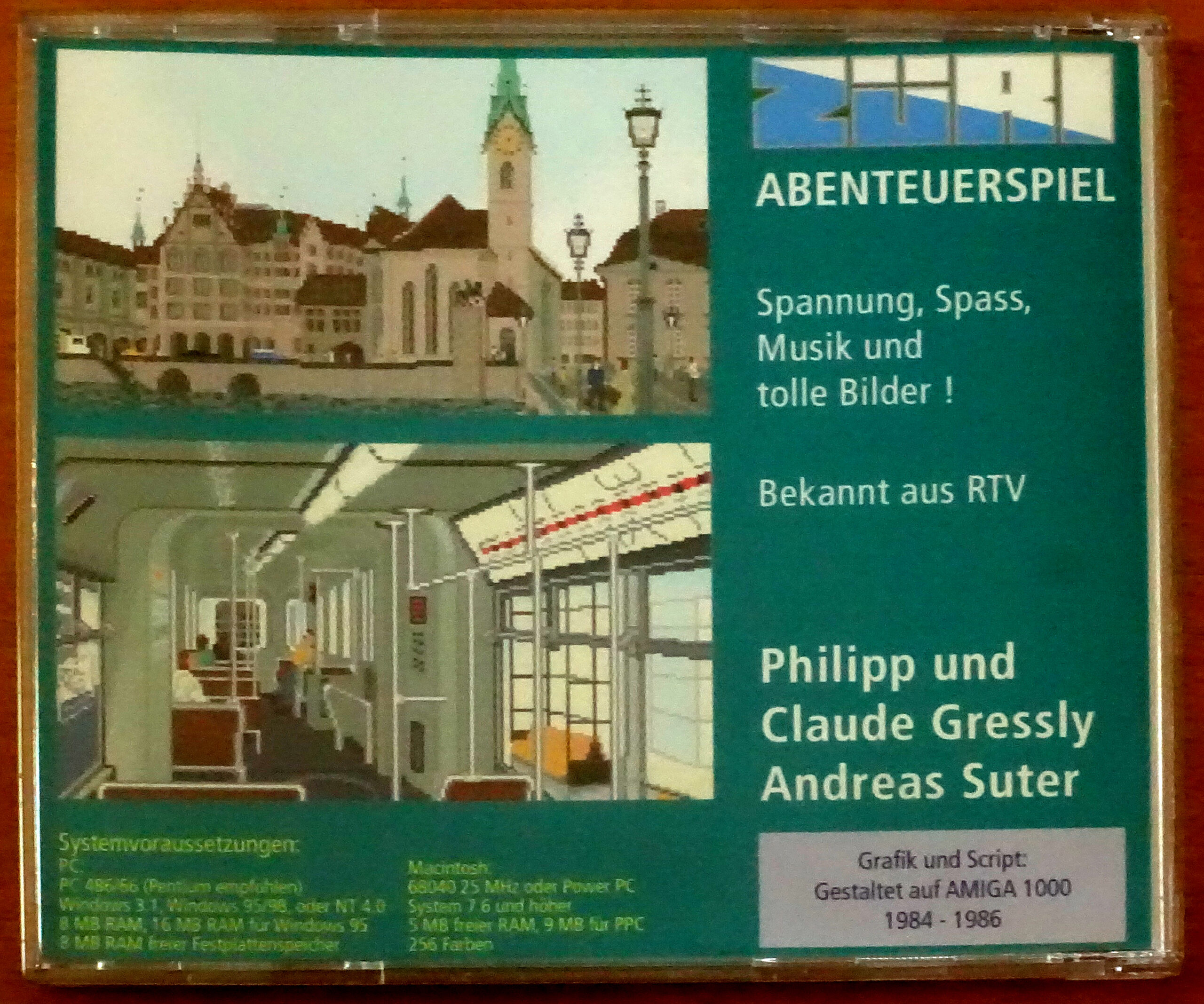
Züri is a point-and-click adventure created by Philipp Gressly, Claude Gressly, and Andreas Suter, which describes itself in its title screens as a "grand search game through a small city" and "the other kind of adventure." Within the corpus of Swiss games, titles with a local connection are virtually nonexistent. Zueri is a major exception. Almost in its entirety, it is devoted to the city on the Limmat, which is immediately recognizable in the title screen images: while a large "Züri" in the blue and white of the city's coat of arms dominates the sky, the iconic postcard motif is equally unmistakable — the three great Zurich churches, the Fraumünster, St. Peter (home to the largest clock face in Europe), and the Grossmünster, lining the banks of the Limmat with the Gemüsebrücke between them, exactly as a tourist might photograph them from the Quaibrücke with Lake Zurich behind them.
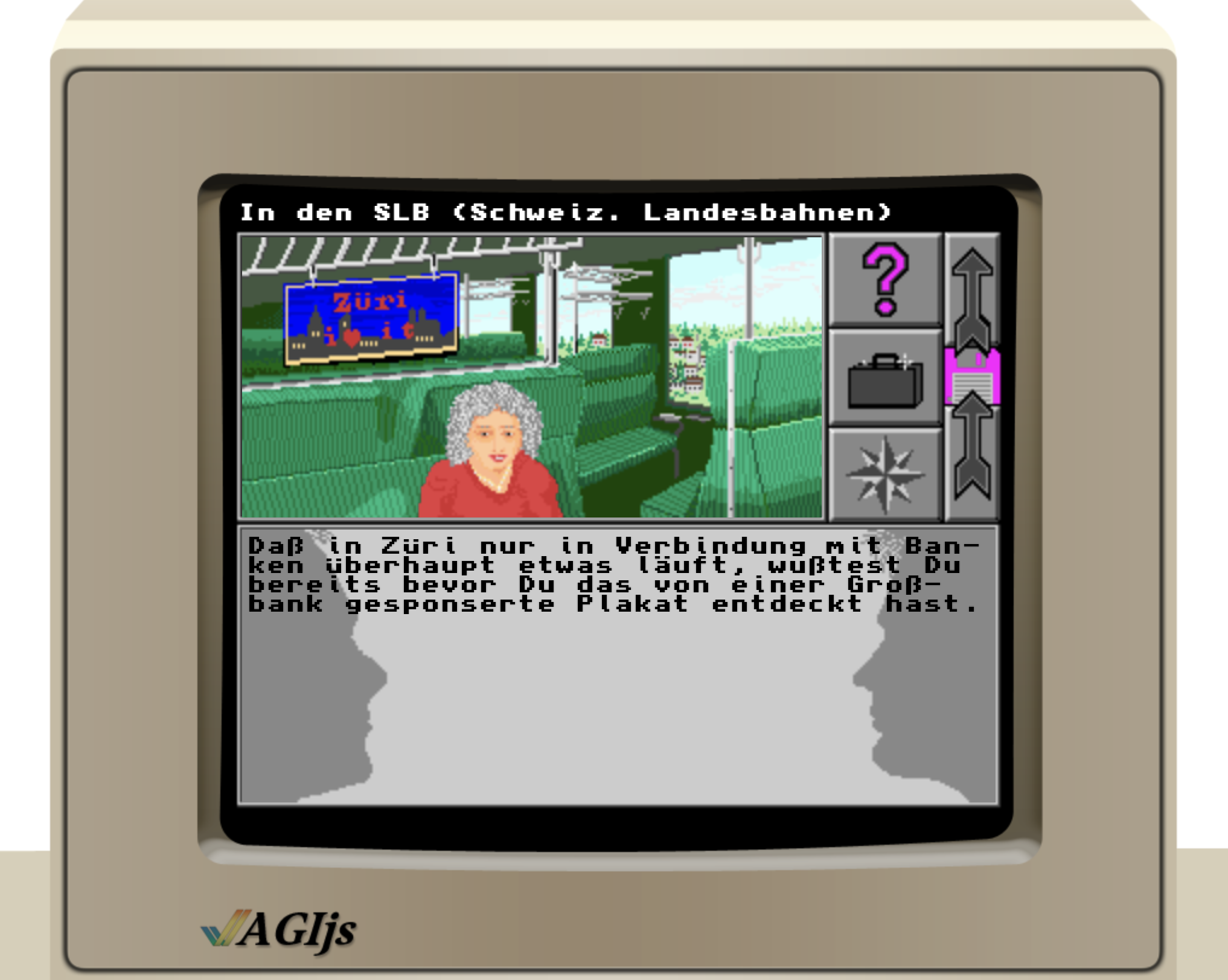
The player is indeed a tourist from Austria who, at the start of the game, meets a fascinating, rugged man named Dietrich in a Salzburg café (Uschi's Kaffeehaus) — "A Swiss! A proper mountain hermit (“Almöhi”) straight out of the storybooks" — who invites him/her to Zurich. This surprising opening in Salzburg has the advantage of necessitating a journey on the Swiss Federal Railways (SBB) — complete with the green leather seats of the non-smoking compartments as they were in service from the 1970s through the late 1980s — which contributes significantly to the local atmosphere. Arriving at Zurich's main train station, a veritable odyssey through the city begins, which develops into a genuine thriller when Dietrich is apparently kidnapped.
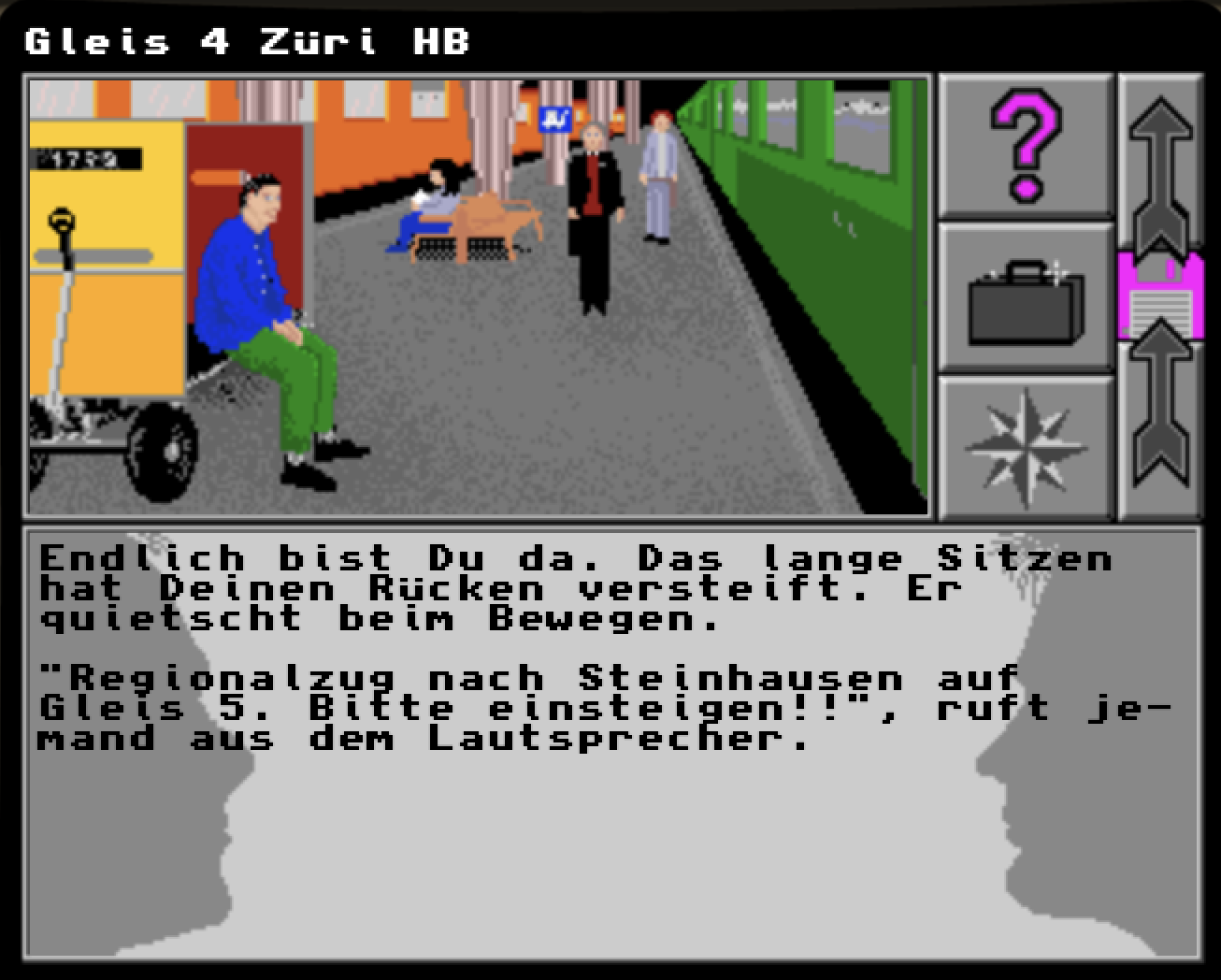
The screen is divided into three areas. The upper section is split in two: the larger left half is reserved for the image, which not only shows the current scene in colour but also serves as a search image in which certain elements (such as the buttons on a ticket machine) can be clicked. The dark grey right half functions as a menu with several elements: on the far right, the save/load option, represented by a pink floppy disk with two arrows above and below it; a panel with a pink question mark for the classic point-and-click actions such as "Look," "Open," and "Take." Depending on the situation, the available actions adjust accordingly, and they are often amusingly absurd — as are the responses they trigger (for example, in the Salzburg café: Take > Spittoon > "Yuck!! Not that!!!!"). A further menu element is a suitcase for the inventory, which can contain entirely pointless items such as a toggle switch. The third and final menu element covers directional actions, which remain essentially the same throughout even when they make little sense — alongside North, East, etc., there are also Up, Down, In, and Out. The lower half of the screen is reserved in its full width for text, with shadowy silhouettes of two men visible against the background, presumably representing the dialogic nature of the game.
The game was originally created by Philipp Gressly using the AGI (Adventure Game Interpreter) engine for the Amiga, developed between 1991 and 1994. The direct inspirations cited are Déjà Vu, Uninvited, and Holiday Maker. While Pamehta (1989), Gressly's first game, created together with Elisabeth Freimann (and which, unlike Züri, has nothing Swiss about it), was distributed as shareware on a donation basis, Züri was sold at a price of CHF 30.- at the now-defunct AmigaLand in Wollishofen, a shop specializing in Commodore personal computers. A surviving customer list from 1995 records at least 27 buyers. Marketing relied on word of mouth and reviews in gaming magazines, to which Gressly sent copies of the game. Unfortunately, no magazine reviews have been preserved, but the developers recall that one German magazine ran the headline "From Switzerland, but no cheese: Züri," and that a regional TV channel aired a short segment on the game.
Thanks to a port using the JavaScript interpreter AGIjs — developed as part of Raphael Schweikert's bachelor's thesis — Züri (and Pametha) can still be played in a web browser today (https://agijs.ra-phi.ch/zueri). Particular attention was paid to converting the original sound data to MIDI, ogg, or mp3, though compromises had to be made as the original music samples were no longer accessible. Noteworthy is the game's presentation on the screen of a so-called AGIjs home computer, modeled after the common CRT monitors of the 1980s that were typically used with a Commodore personal computer.
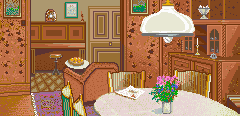
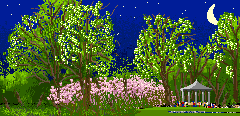
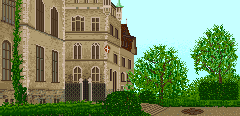
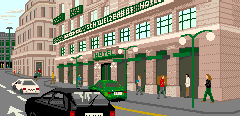
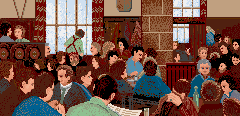
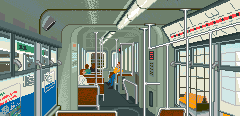
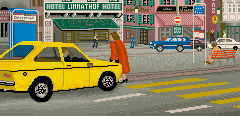
Züri forgoes animation but brings the Swiss city to life through 60 carefully staged images. They are based on photographs taken specially for the game and subsequently digitized by Philipp's father, Claude Gressly, who redrew them with great care by hand on the computer. The resulting presentation of Zurich of the early 1990s with its characteristics, local flair and representation of the residents with more than a hint of critical undertone — the developers themselves describe it as "biting humour" — is a major part of the game's charm. To say that the puzzles are "not entirely trivial to crack" would be something of an understatement. One example: in classic adventure fashion, the player can move in all compass directions as well as up and down. But who would think, standing in front of a kiosk at the train station, to climb "up" onto the roof, catch a pigeon there, train it seven times until it becomes a carrier pigeon, and then put it to good use later in the game? Money management, too, is no small matter — even if one has acquired a larger sum by dubious but unpunished means, it can easily and entirely disappear, making essential phone calls and tram rides impossible. Saving regularly is therefore critical.
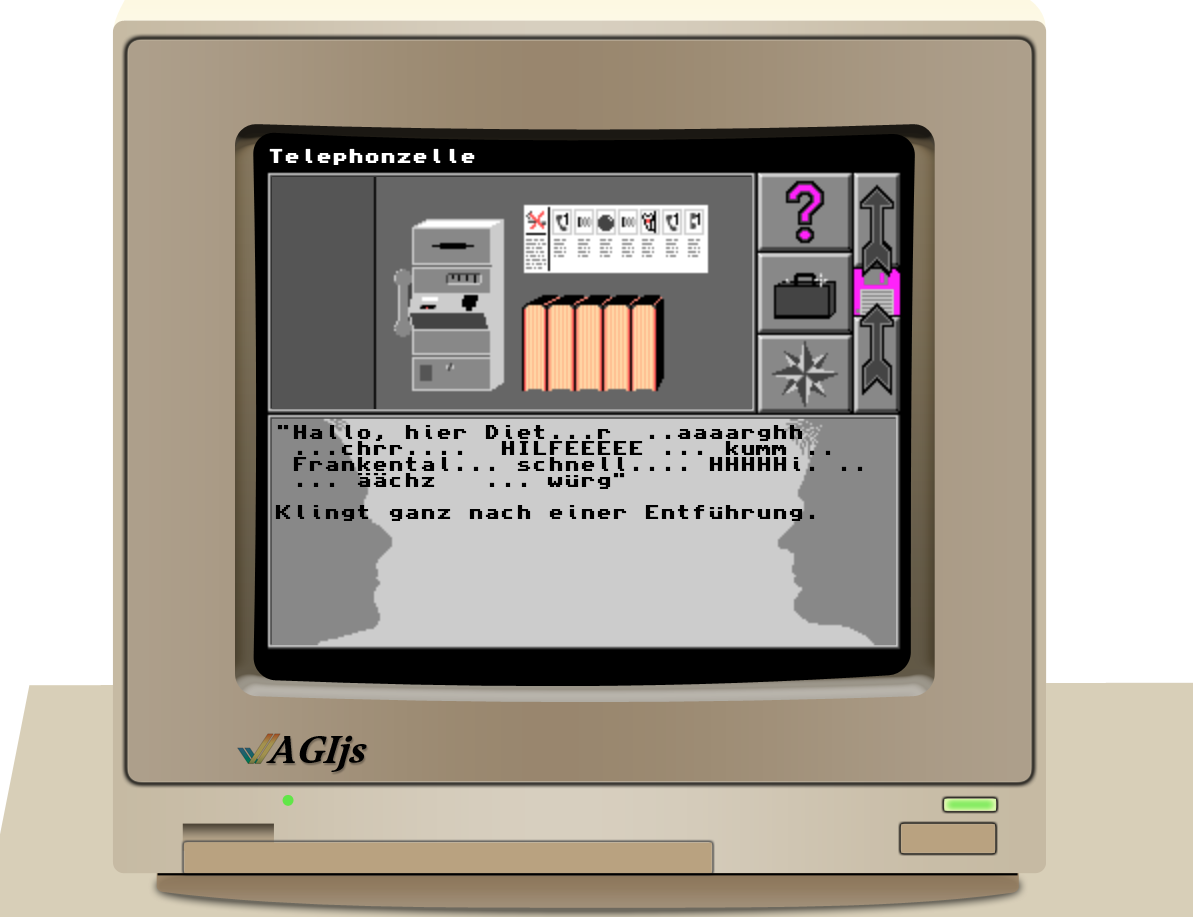
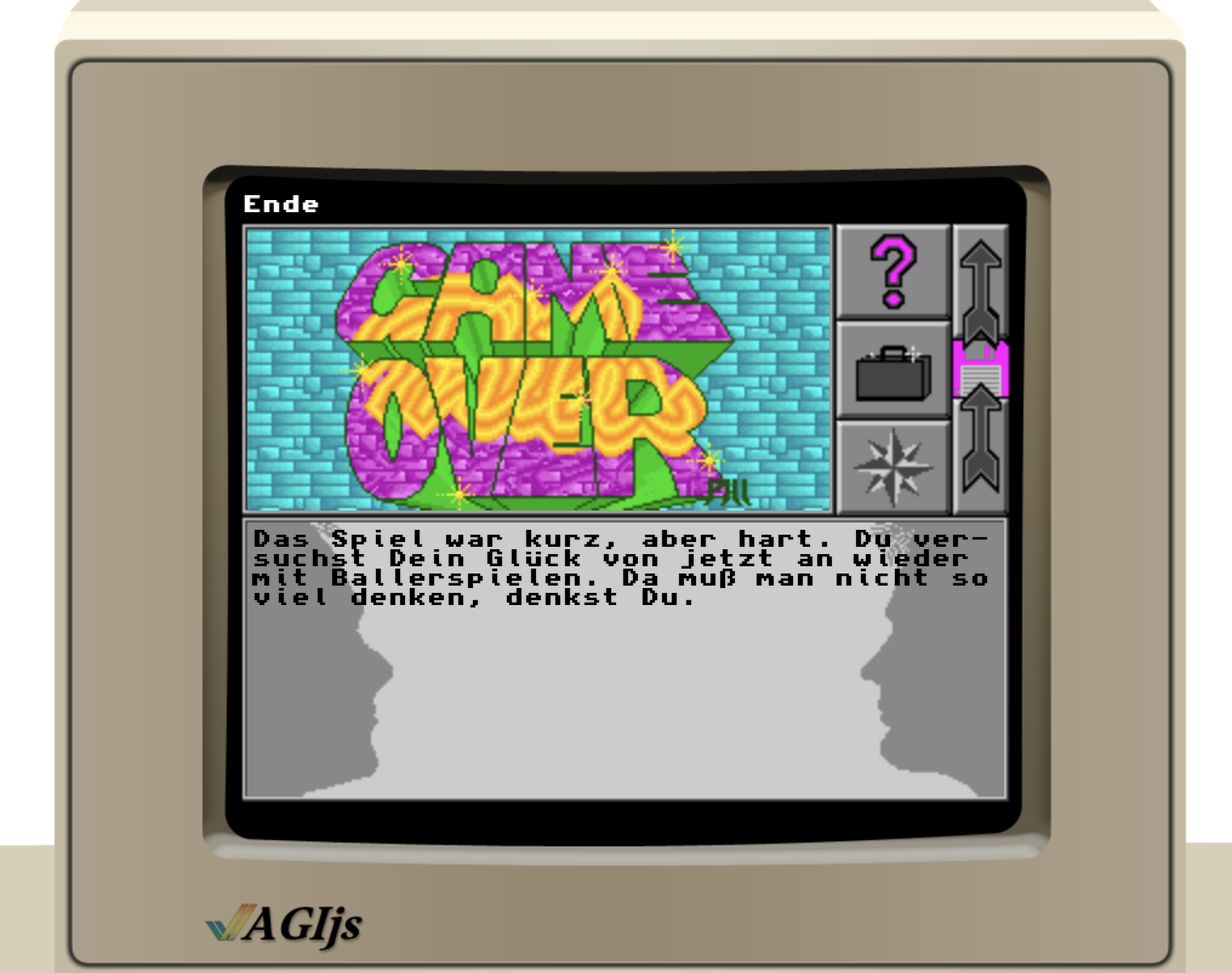
And yet Züri is not necessarily designed for seasoned point-and-click veterans. This is clear from the very beginning, when a tutorial is offered: "If this is your first time playing an adventure game, click on 'How to play'." For anyone familiar with Zurich, it is in any case a fascinating journey back in time, full of insider references and allusions that go beyond mere nostalgia (such as buying a ticket at the machine using three colored buttons or as flipping through a telephone directory in which the game's designers have immortalized themselves and other notable figures of that time) to include pointed commentary and contemporary observations — for instance on a hypocritical Swiss bank (which in the game publishes the tourist guide to the city) or on the drug addicts making their way from the Platzspitz park (from 1986 until its closure in February 1992, the largest open drug scene in Europe) to the Lettenareal (closed 1995). Or indeed on the player's own shortcomings: an unexpected game over is met with the message: "The game was short, but hard. From now on you'll stick to shooters. Less thinking required, you tell yourself."