Nimmer
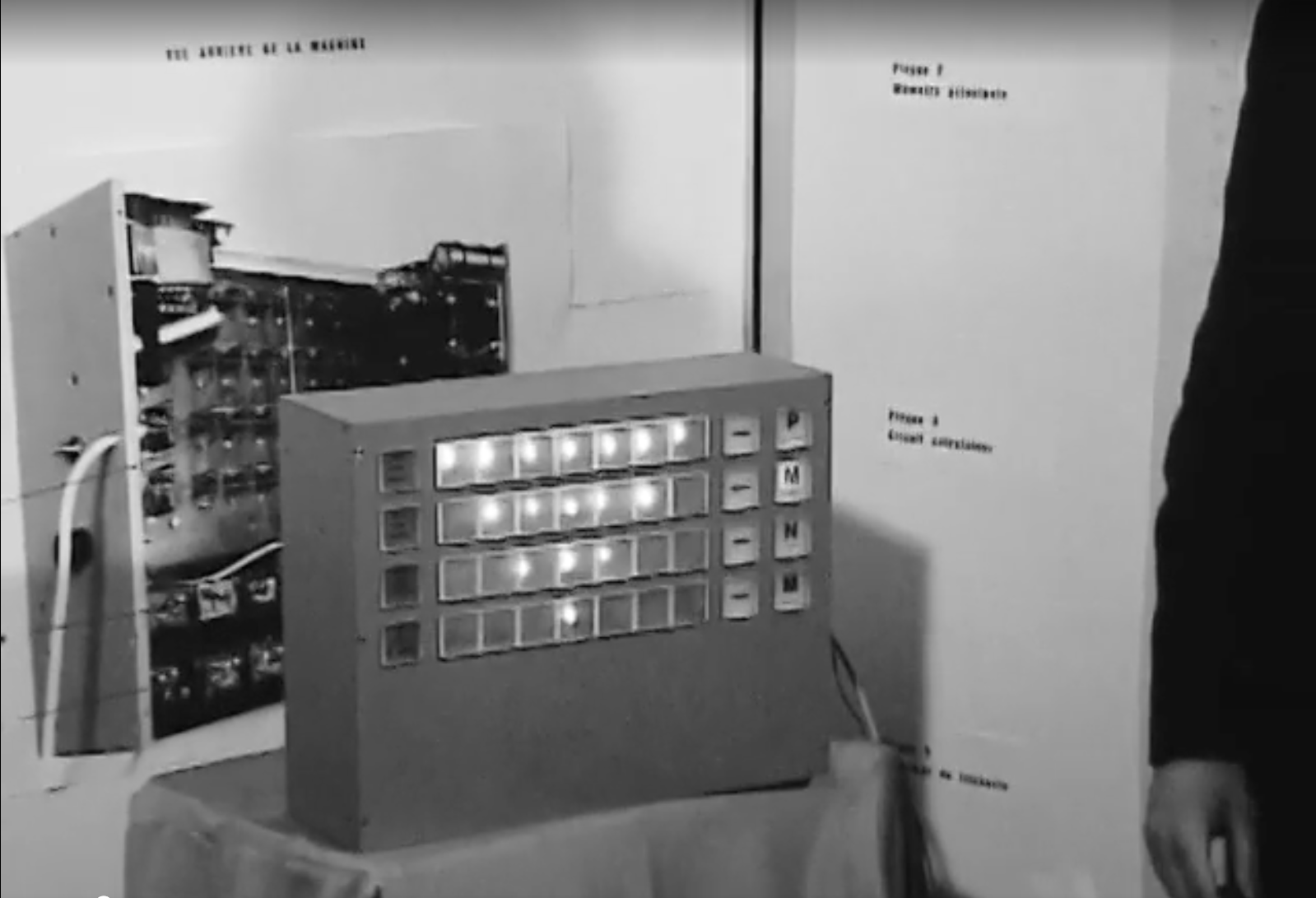
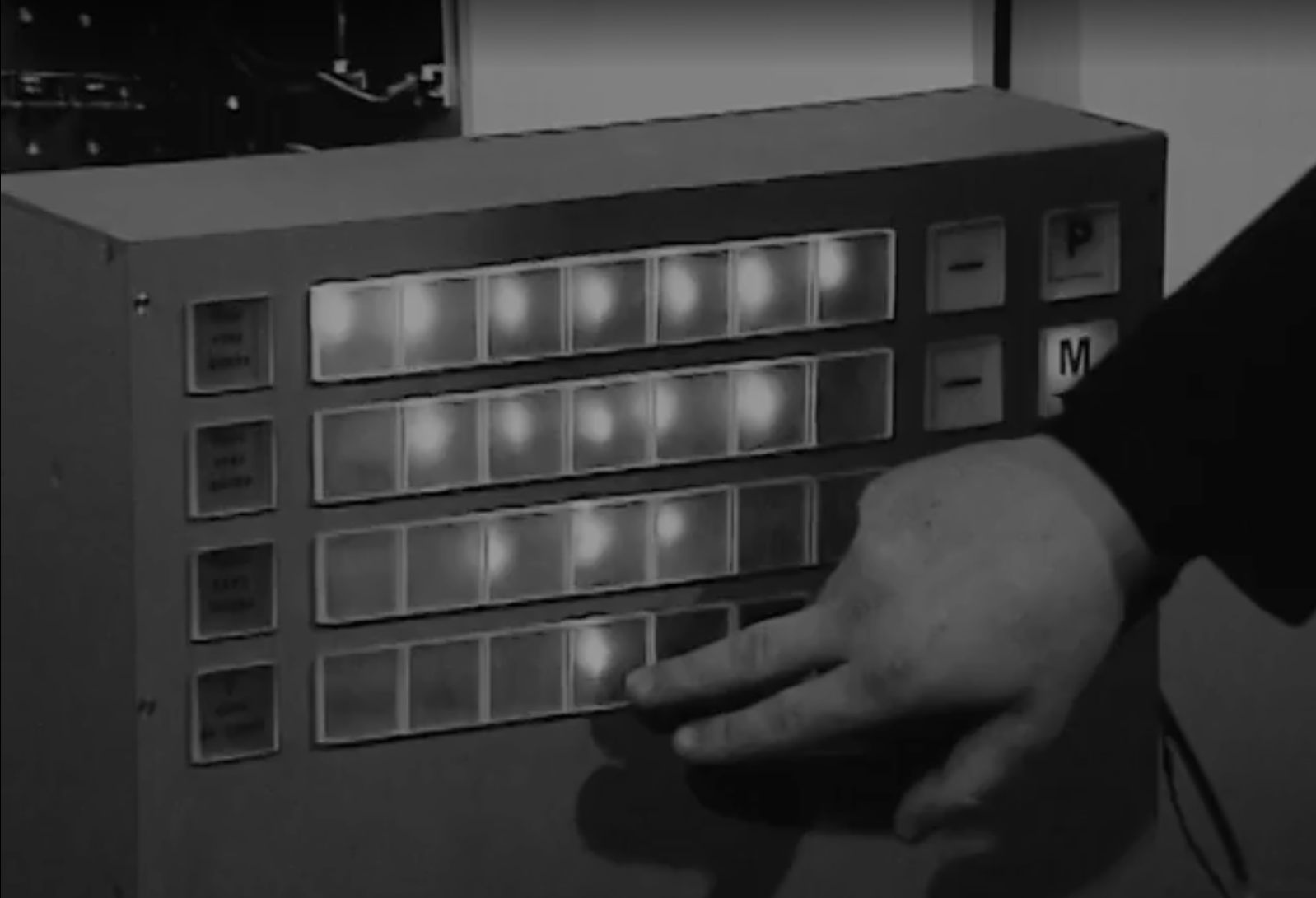
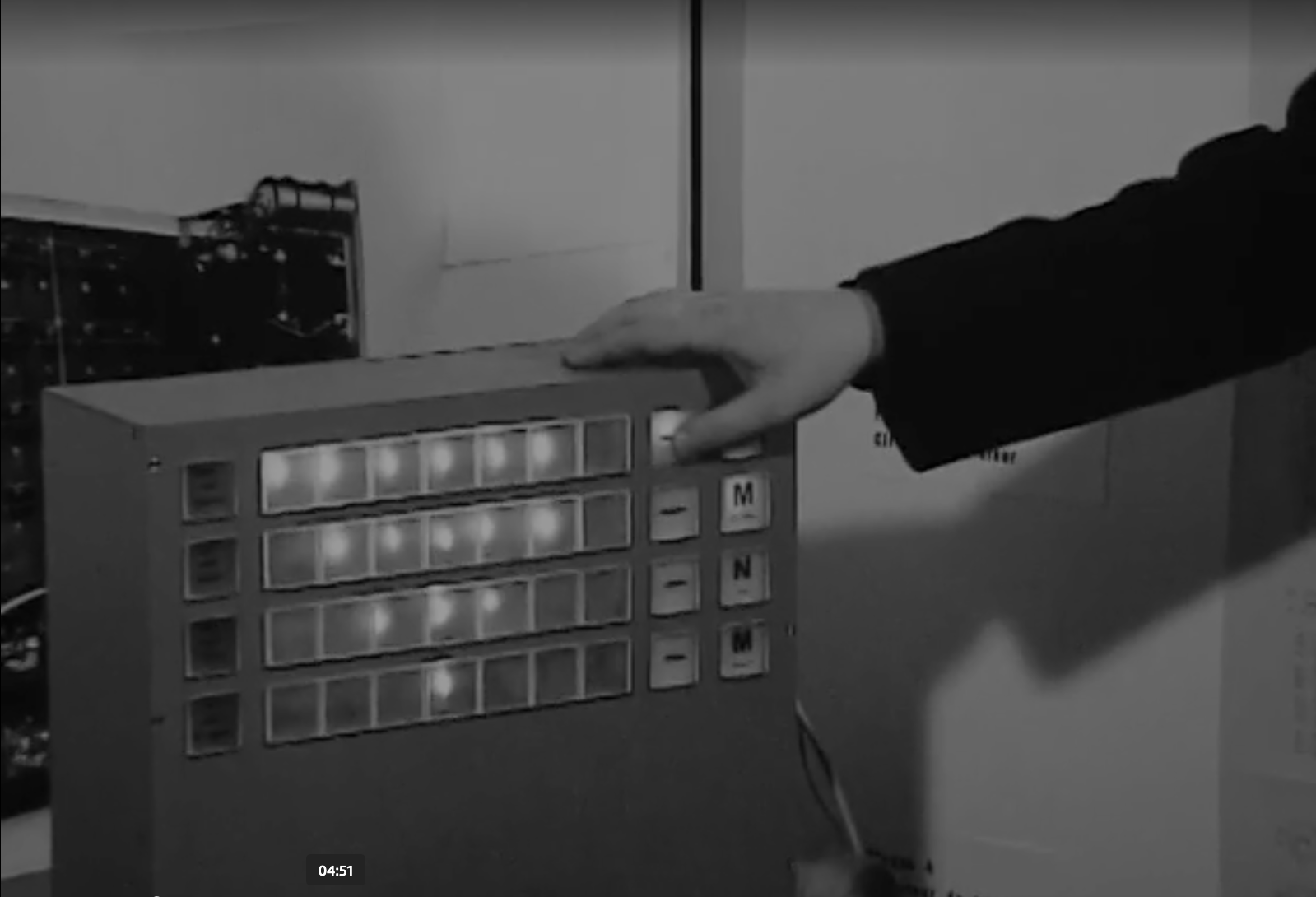
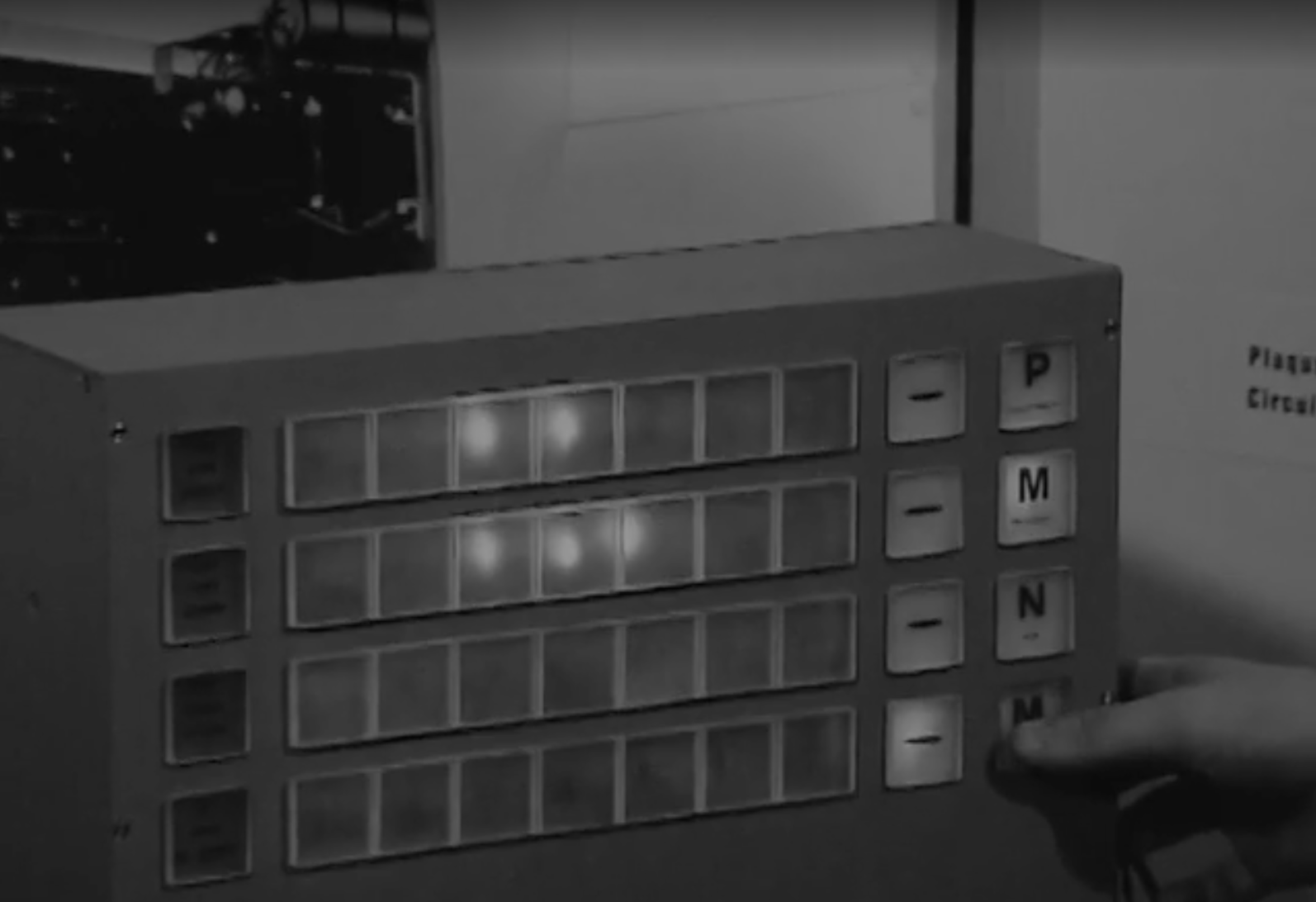
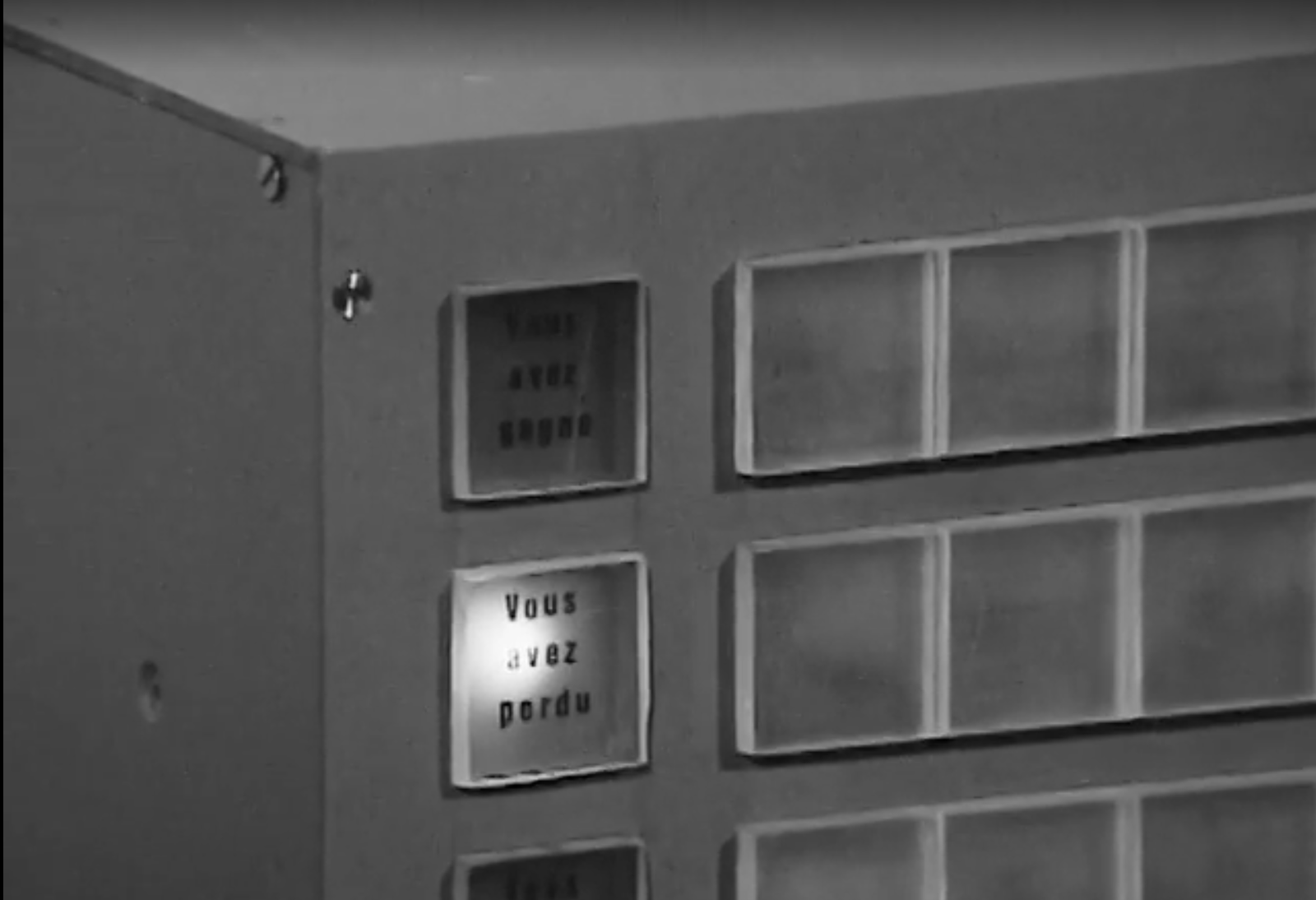
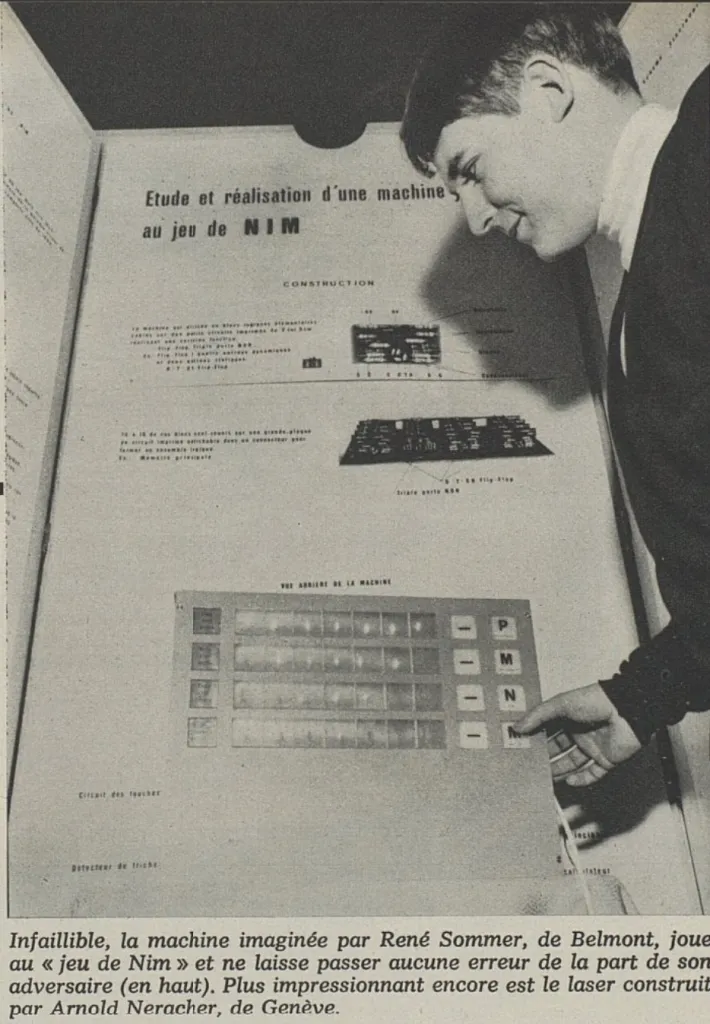
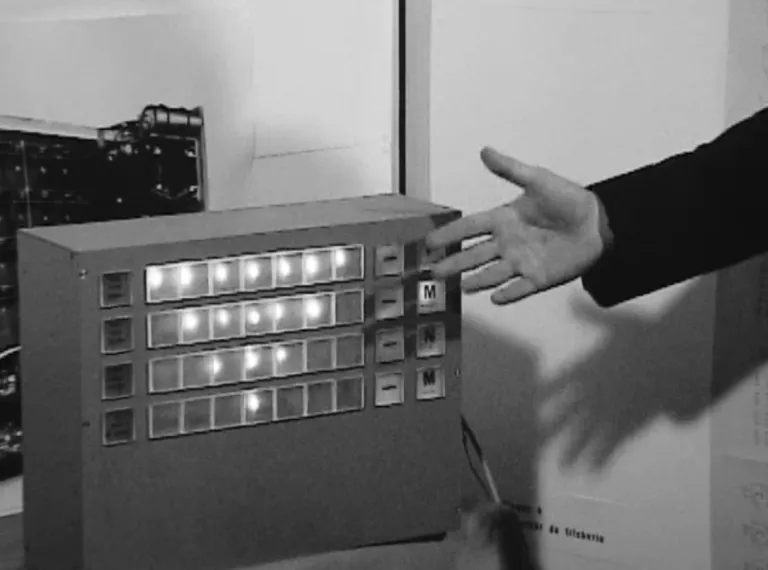
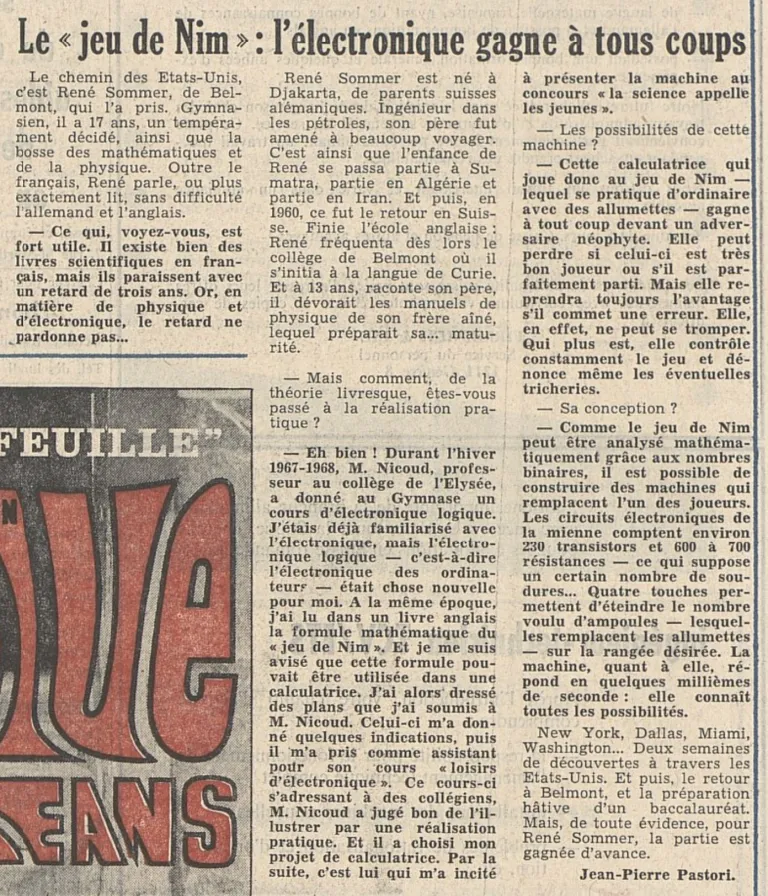
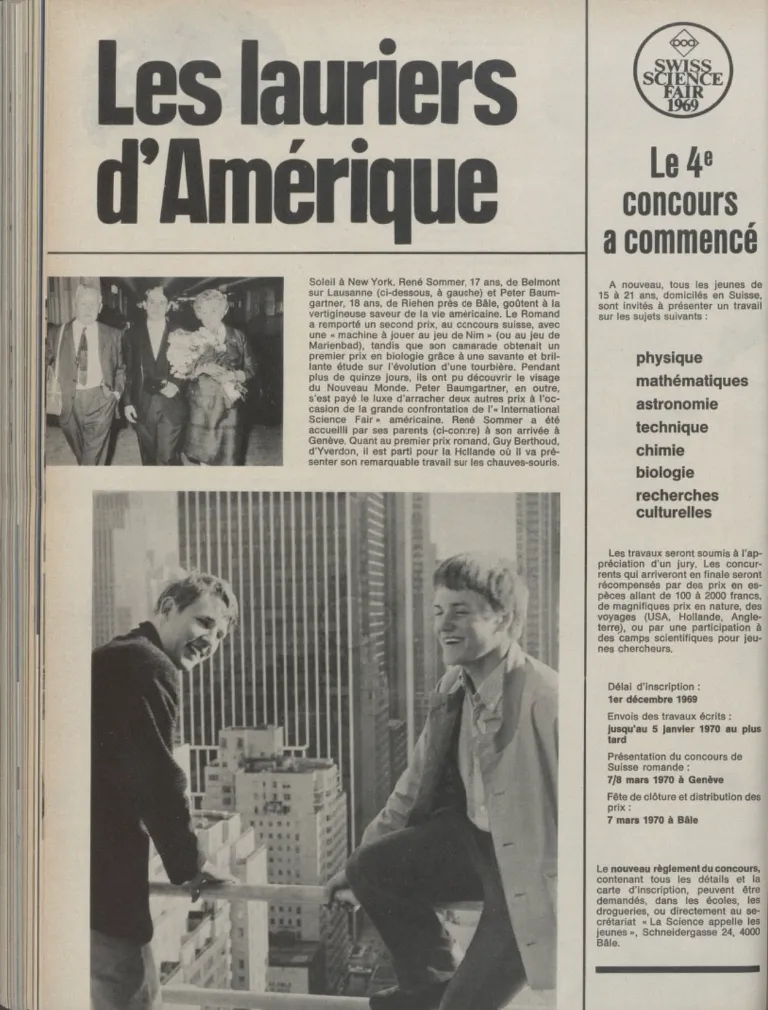
Nimmer is a strategy game based on the game Nim, also known as the Marienbad Game. It pits the player against the machine. The game is turn-based and consists of switching off any number of lights on a given row per turn using the buttons on the metal box. The aim of the player is not to be the last to switch off a light. Nimmer was created by René Sommer over the course of a year and was exhibited at the third " La Science appelle les Jeunes" (english: Science calls the Young) competition in 1969. The game's title is a combination of "Nim" and "Sommer".
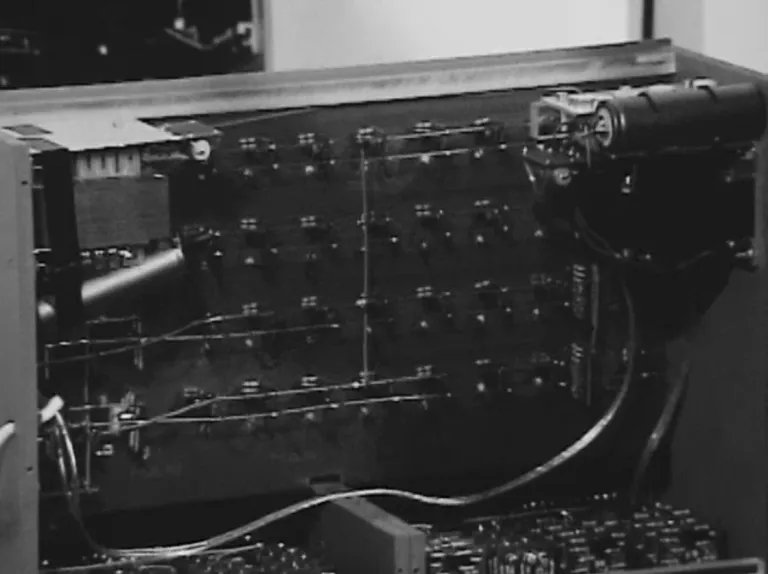
As Nimmer was created in 1968, it is one of the earliest Swiss electro-mechanical games in the Confoederatio Ludens database. It is not a video or digital game as we know it today: Nimmer comes in a PVC box measuring 40.5 cm x 30.5 cm x 13 cm, which can be transported in a suitcase. It has a number of separate logic blocks, such as the control circuit, the main memory, the calculation circuit, the input-output circuit (machine-player, player-machine communication), and the cheating detector.
Yannick Rochat wrote a first blog post on it in 2020. He describes the Nimmer as consisting of a metal box with a number of lights on its front panel and a few buttons. „Inside, there are 230 transistors and 600 to 700 resistors connected in a network that allows players to interact with the machine. Dating back to 1968, it is one of the pioneers in the history of video game development in Switzerland.” He also states that the game of Nim itself had already been adapted similarly as far back as 1940 (Nimatron, by Edward Condon). A report by the Swiss-French TV RTS, which consists of an interview with creator René Sommer in 1968, shows perfectly how it works.
Further, Rochat describes the base game: „The game of Nim involves taking turns removing sticks […] and the player who removes the last stick wins. As these various machines demonstrate, the game of Nim was used to demonstrate the workings of computing machines. The game is relatively simple, which made it possible to conduct these demonstrations at a time when computers did not have screens. Several computing machines featuring the game of Nim were designed at a time when computing was not yet intended for the general public. Examples include the Nimatron in New York (1940), the Nimrod in Great Britain (1951), and the Marienbad in Poland (1962). The latter version takes its name from Alain Resnais’s film Last Year at Marienbad (1961), in which a variation of the game appears.” (Rochat 2020)
After studying physics at EPFL, René Sommer worked as an assistant at EPFL before joining Logitech, where he went on to have a distinguished career, according to Daniel Borel, Logitech’s co-founder. He began collaborating with Logitech as early as 1982, as the company recognized the full potential of the first ‘smart’ mouse he had developed. Sommer significantly improved the original mouse by adding a small microprocessor, which turned it into a standalone device, requiring far less attention from the computer to which it was connected. This paved the way for the mouse’s adoption by the mass market. Sommer died in 2009, at the age of 58.