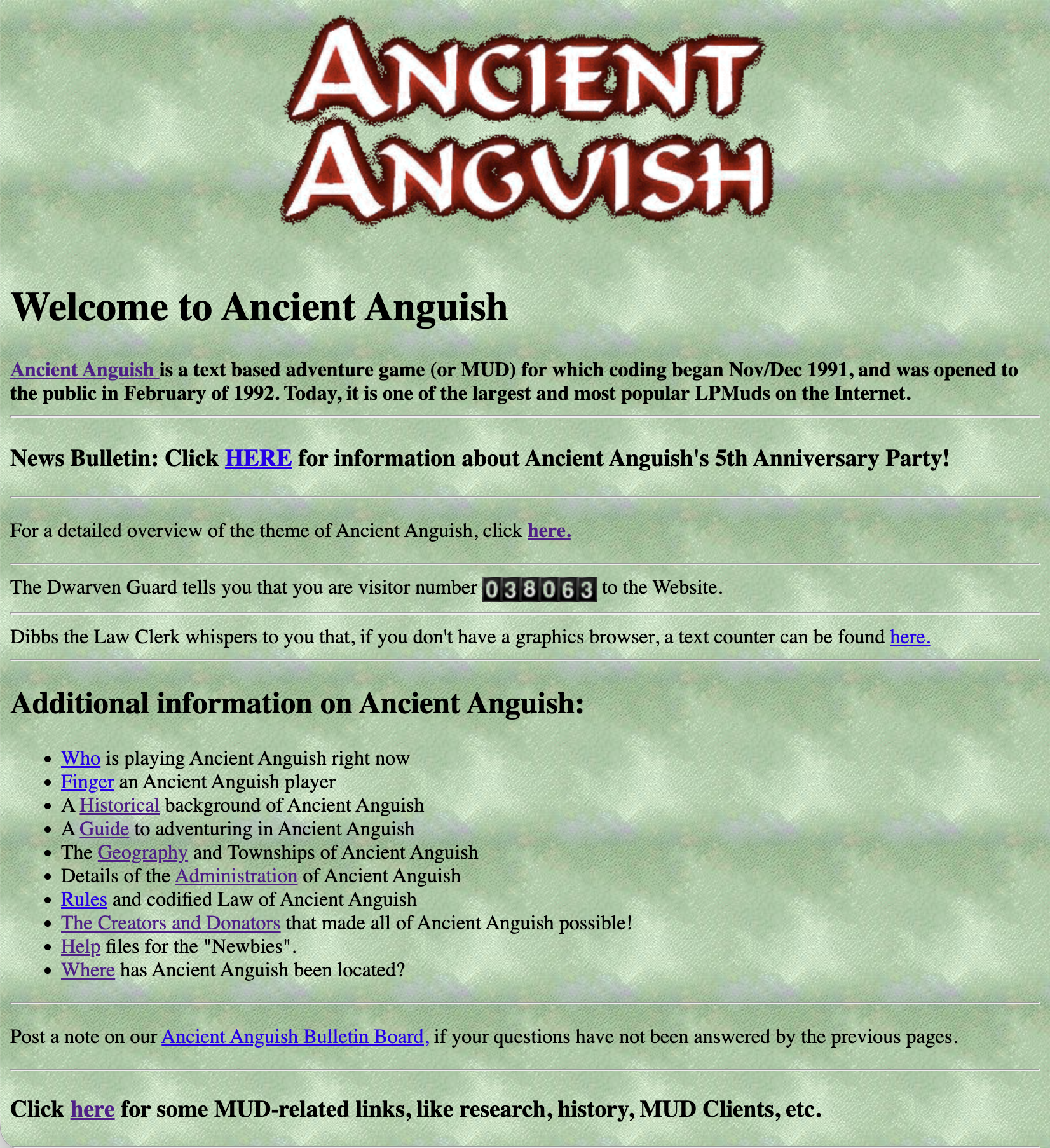
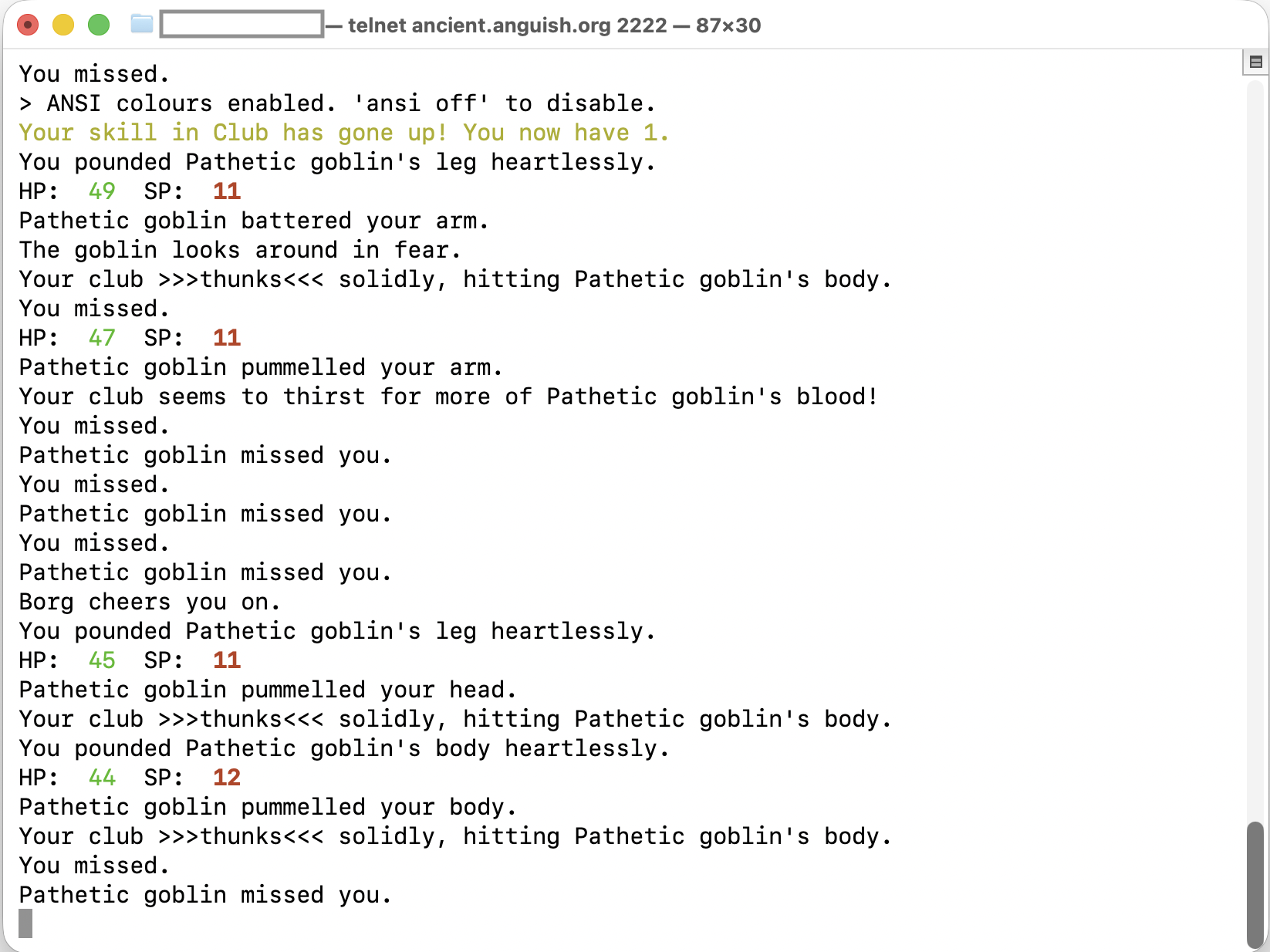
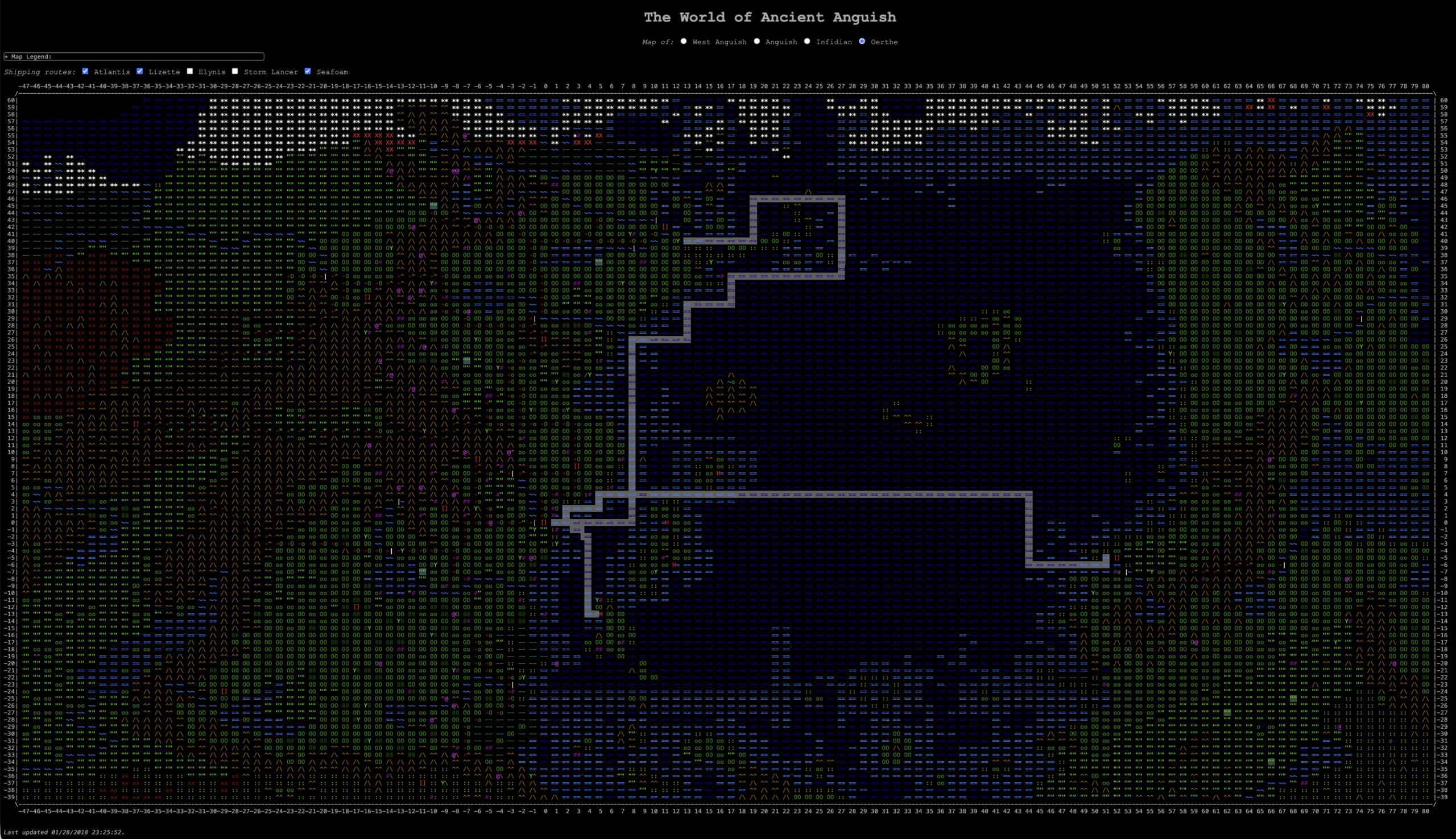
The two ETH students Balz "Zor" Meierhans and Olivier "Drake" Maquelin developed and released Ancient Anguish in 1992. Ancient Anguish is a MUD, or multi-user dungeon, set in a fantasy world. It is still being developed and played by a group of volunteers today, 34 years later.
Ancient Anguish belongs to the genre of MUDs, the precursor of the later graphical online role-playing games (MMORPGs) such as World of Warcraft. MUDs emerged in 1978 with the appearance of
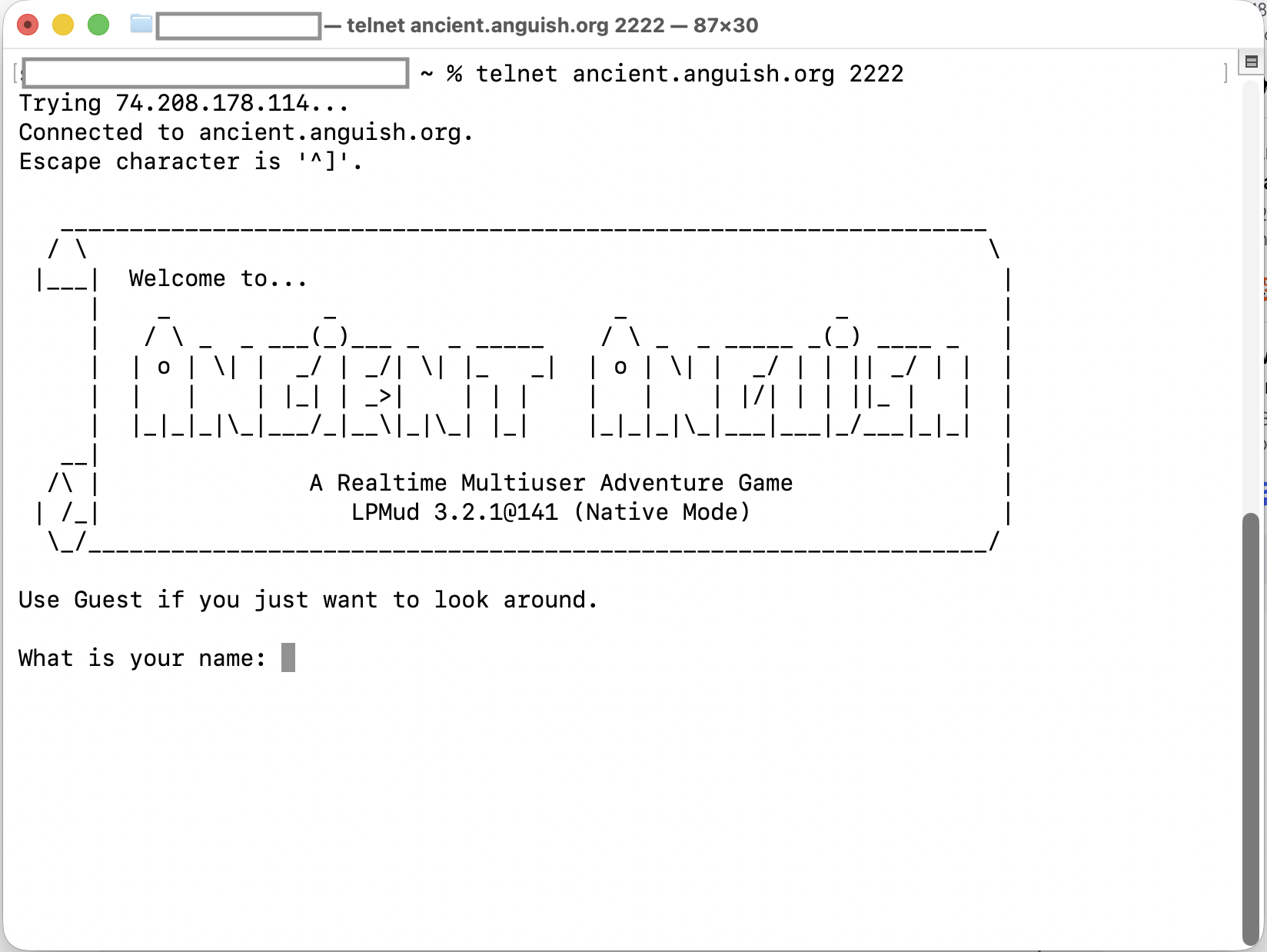
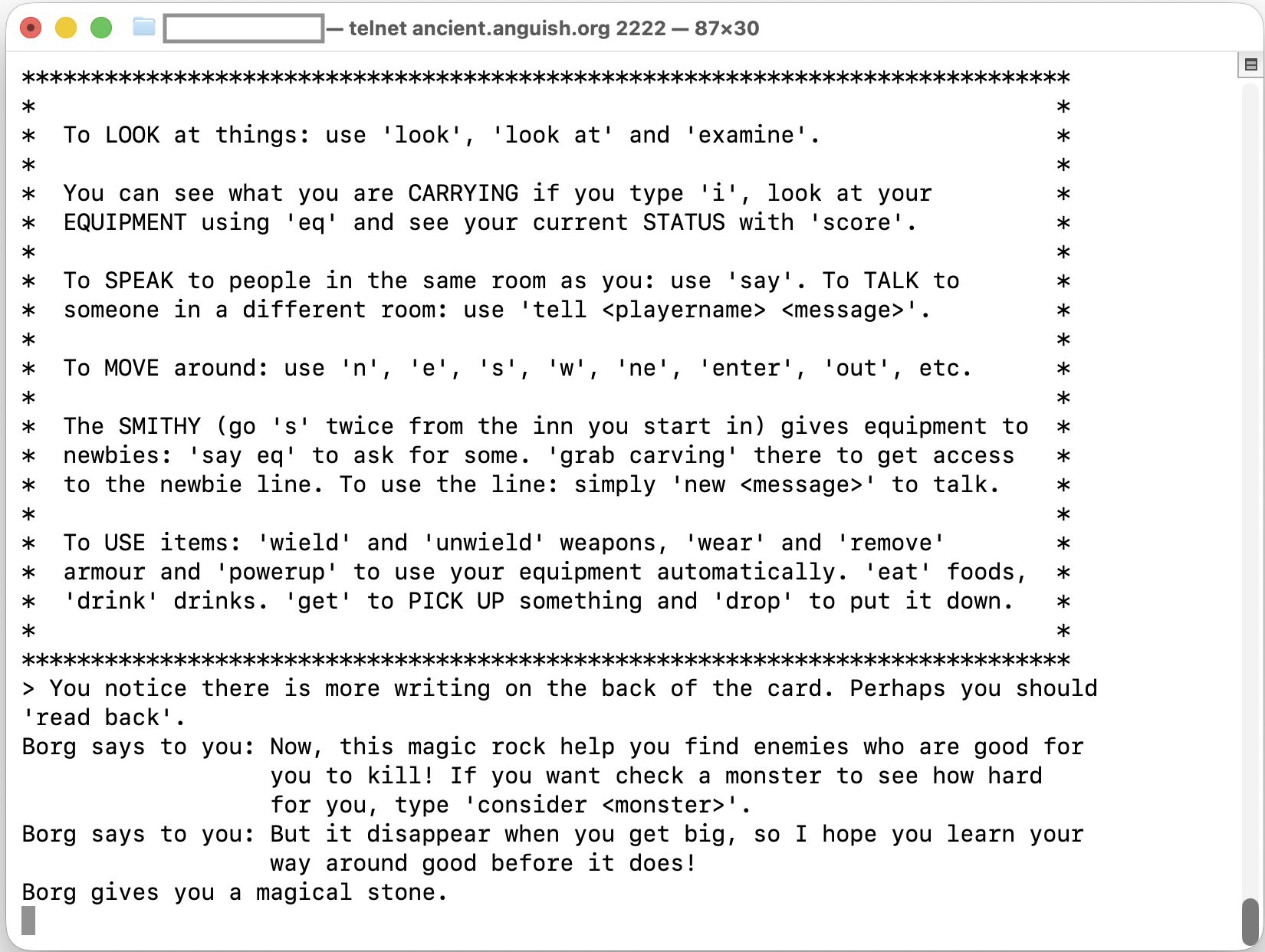
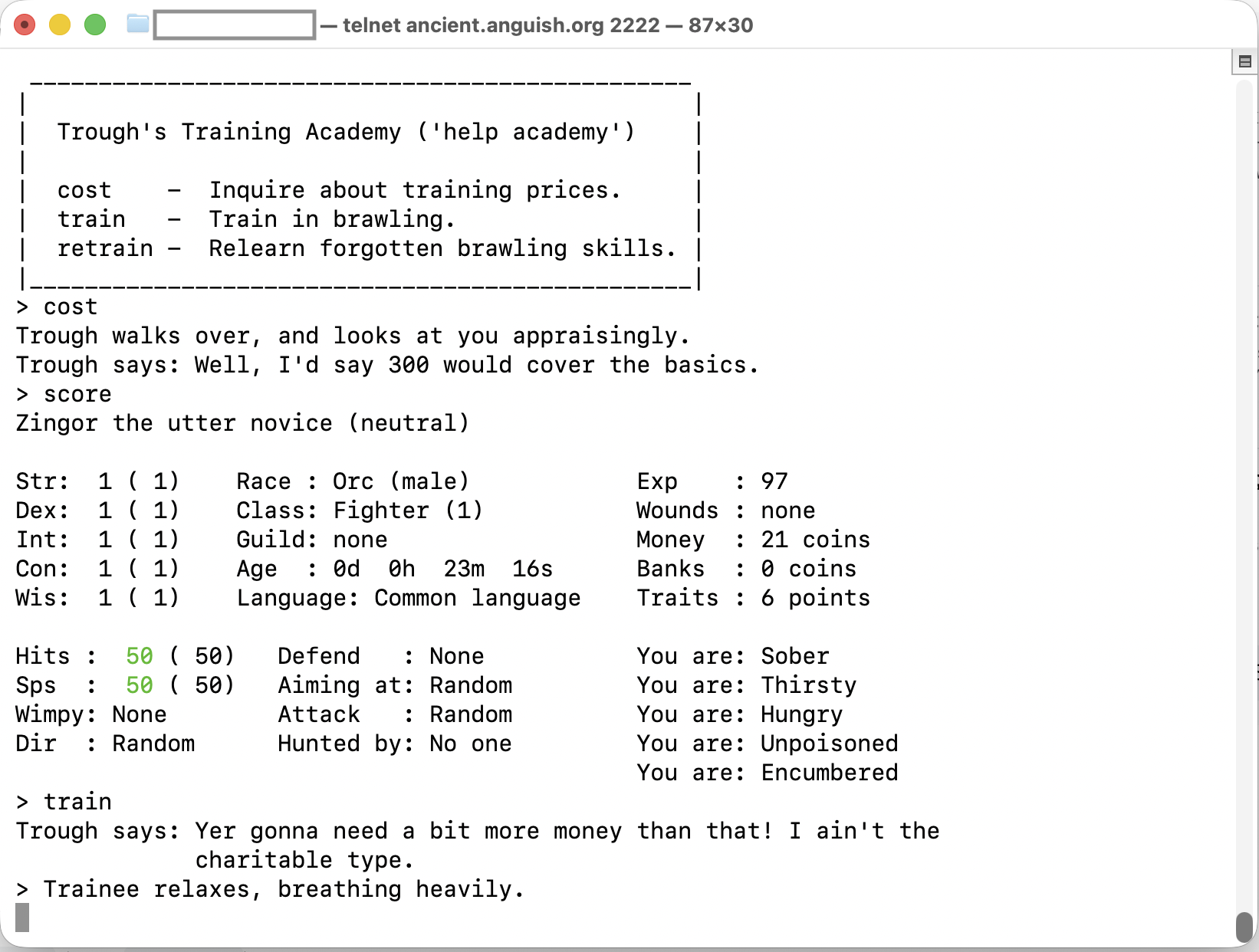
MUD1 in the UK. Several families of MUD software grew out of it, among them the LPMud family, on which Ancient Anguish is based. What is special about MUDs is that they are purely text-based and – in keeping with the acronym –played by many players at the same time. The players share a single game world, which is simulated on a central server that they connect to over a network.
At the time of Ancient Anguish's release on 2 February 1992, there was as yet no developed network infrastructure outside the universities. In Switzerland the internet could only be reached over the telephone line and was therefore very expensive. It is no surprise, then, that the developers first set up their MUD on the server dancer.ethz.ch at ETH Zurich – presumably without ever having asked permission – which made it accessible from all over the world. Only a year later, however,
ETH Zurich evicted Ancient Anguish from its servers on account of its heavy network traffic. As a consequence, the player community raised more than 7000 dollars, bought a SparcStation 2 and
kept the game running – from then on in the USA.
The game's development history is quickly told: according to Meierhans, it was developed
within a single month so that it could be released before he had to go into military service. Meierhans did not build the mudlib — the game world and the game system — from scratch: instead he was given the one from Loch Ness, an earlier LPMud also based in Zurich, and modified it heavily until it became the world of Oerthe in which Ancient Anguish is set. Maquelin, by contrast, was not really interested in running a MUD and concentrated on system administration and a map system. The latter was unusual for MUDs, as it divided the world into zones, each of which could accommodate entire settlements of up to 25×25 rooms.
Technically, the LPMud system underlying Ancient Anguish is particularly noteworthy. Its developer Lars Pensjö believed that he could not write good adventures himself, and therefore wanted to enable players to do it better. He consequently developed the scripting language LPC, with which experienced players could develop game content and game mechanics themselves without having to touch the technically far more demanding server code. This separation into world and rules (the mudlib) and engine (the driver) is a principle that is still used in game development today.
Thanks to the LPMud system, Meierhans could focus on game and world design. With the move to the USA, he handed over control of the game to a senate, a group of players who from then on took over both its operation and further development. Players who reached level 20 were allowed to develop new game content themselves. Many new zones were built over the following years, and in 2006 an entirely new continent was opened. To this day Ancient Anguish remains a game that is free as a matter of principle and administered solely by its players, reachable at
https://ancient.anguish.org/.