Leonardo
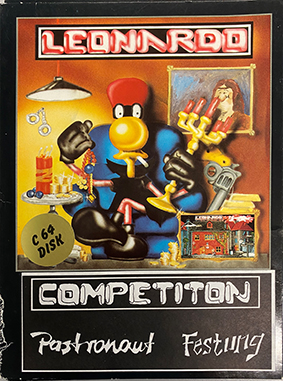
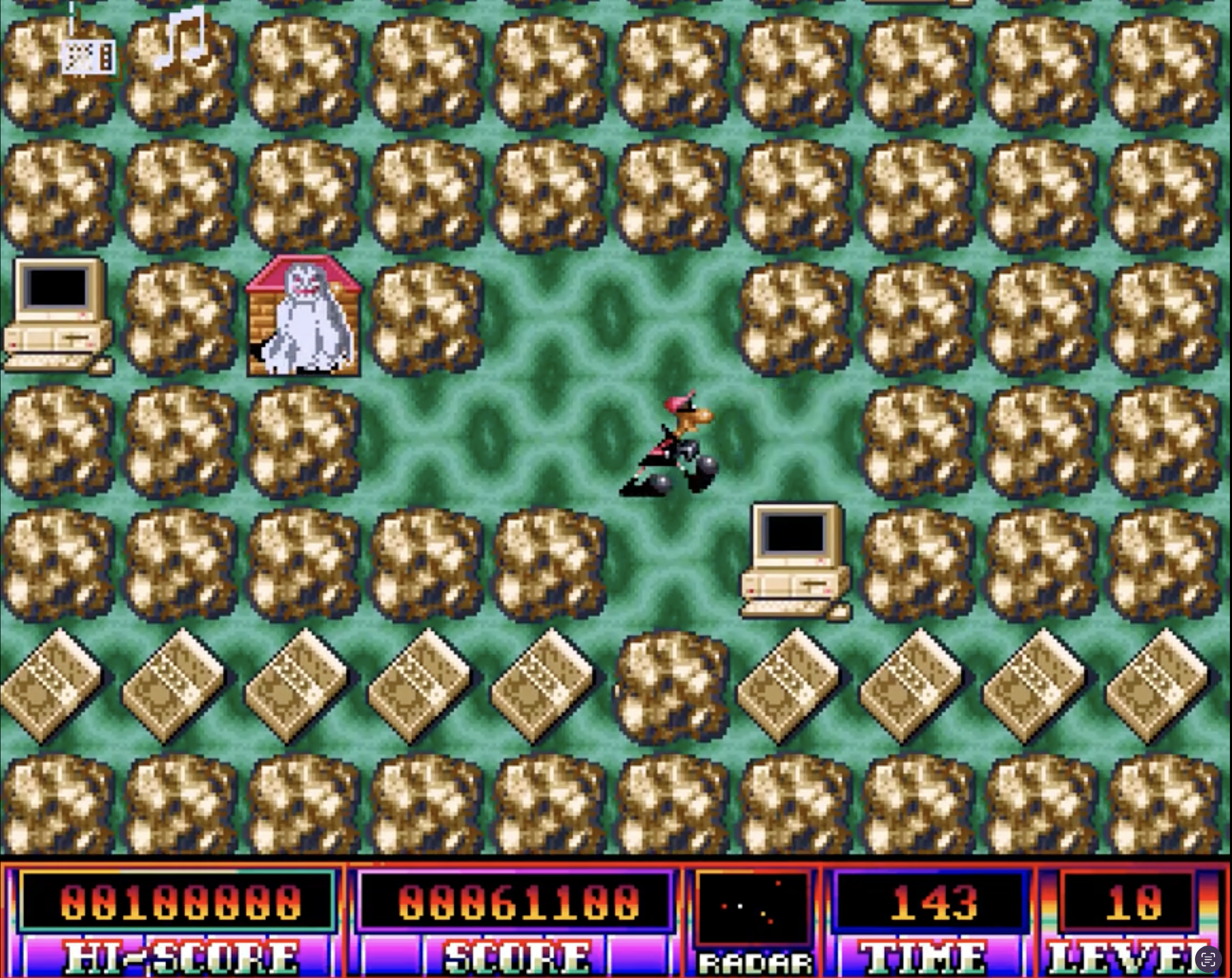
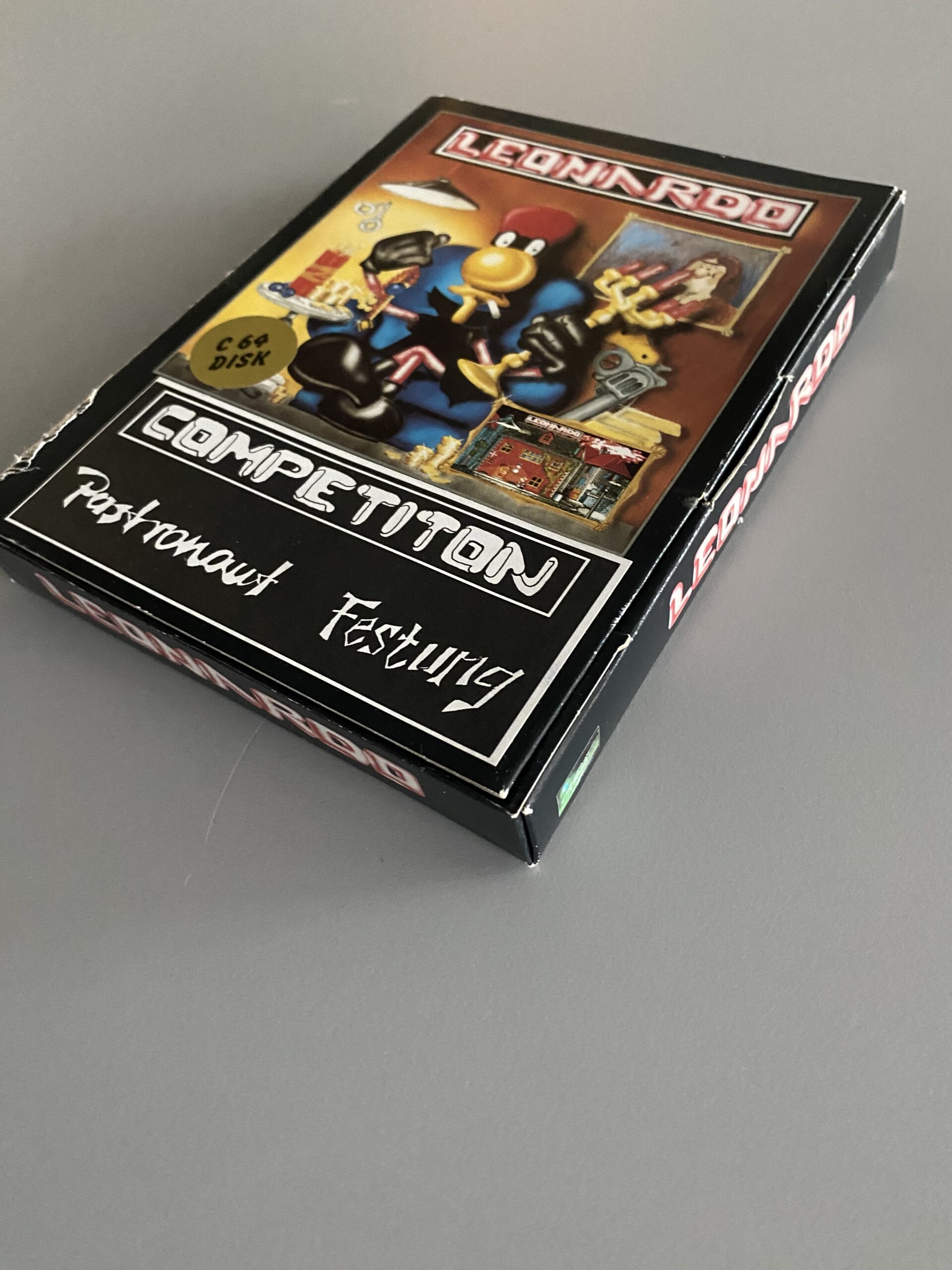
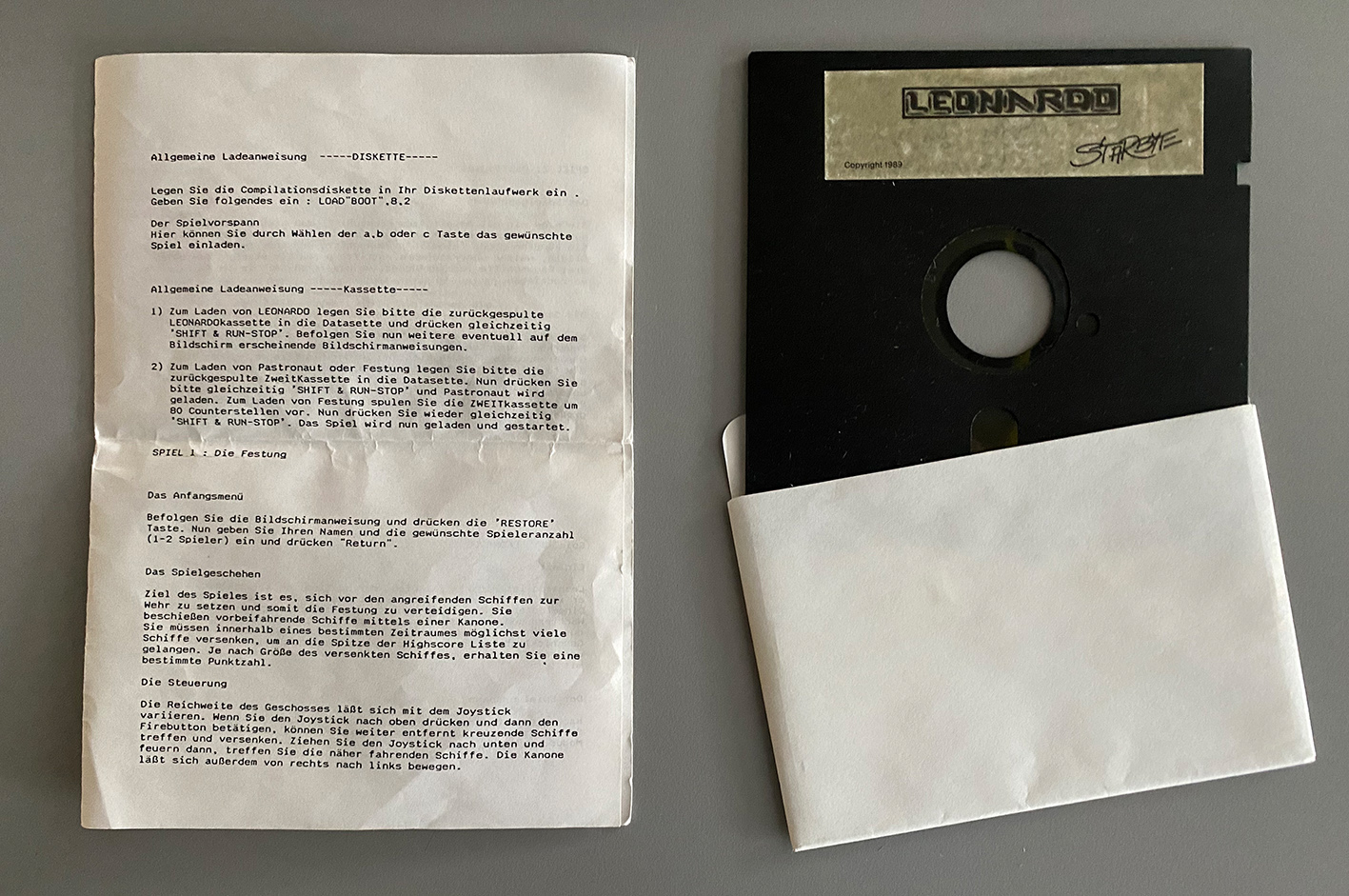
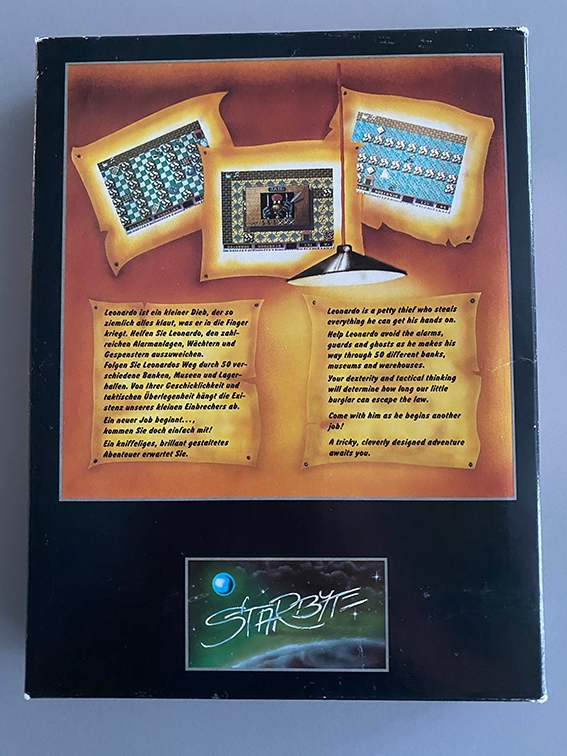
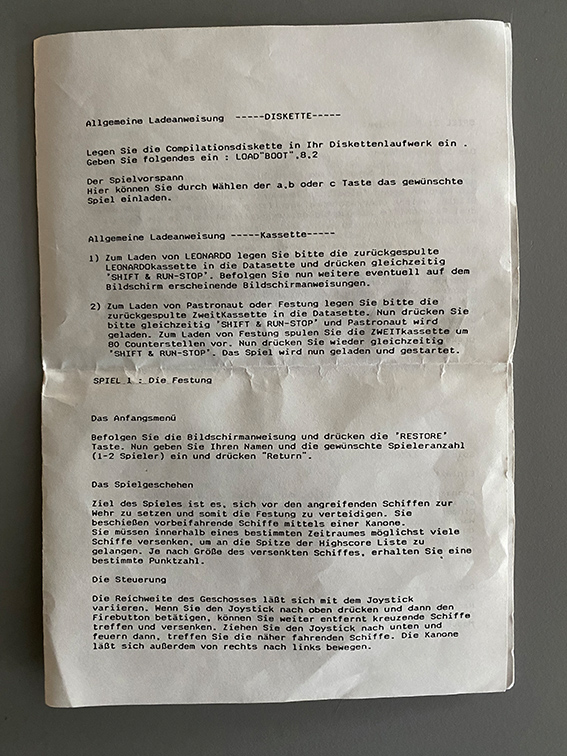
Leonardo is a puzzle game created by the Golden Gate Crew consisting of René Straub (programming), Orlando Peterman (graphics), Roman Werner (sound effects), Christian Haller, Christian A. Weber (additional programming), Reto Straub (level design) and published by Starbyte (with Heinz Luem as producer). It first appeared in 1989 for the Amiga and was also ported to the C64 and Atari. Leonardo's core mechanic is based on the arcade classic Pengo. In a labyrinth, stone blocks can be either pushed or destroyed by using the joystick fire button. When pushed, blocks slide until they hit an obstacle. In Pengo, this mechanic is used to crush enemy ice bees or destroy their nests in an arctic ice maze. Leonardo's setting is far more urban: Leo is an anti-hero and a petty thief making his way through “50 different banks, museums and warehouses” (booklet of the C64 version) under cover of night. The floors of the buildings are strewn on one hand with boulders and hazardous objects like handcuffs and traps (borrowed from Pengo and rather out of place in an indoor setting — "but this is a computer game, so authenticity isn't at a premium", Amiga Computing, October 1989) and scattered on the other with enticing collectibles such as jewellery or — in a tongue-in-cheek touch — an Amiga computer. The floors of the buildings are strewn, on one hand, with hazardous objects like handcuffs and traps or useful boulders (the blocks from Pengo and quite out of the ordinary for the indoor setting, “but this is a computer game, so authenticity isn't at a premium”, Amiga Computing October 1989) and scattered with enticing items such as jewellery or—in a tongue-in-cheek-manner—an Amiga computer on the other.
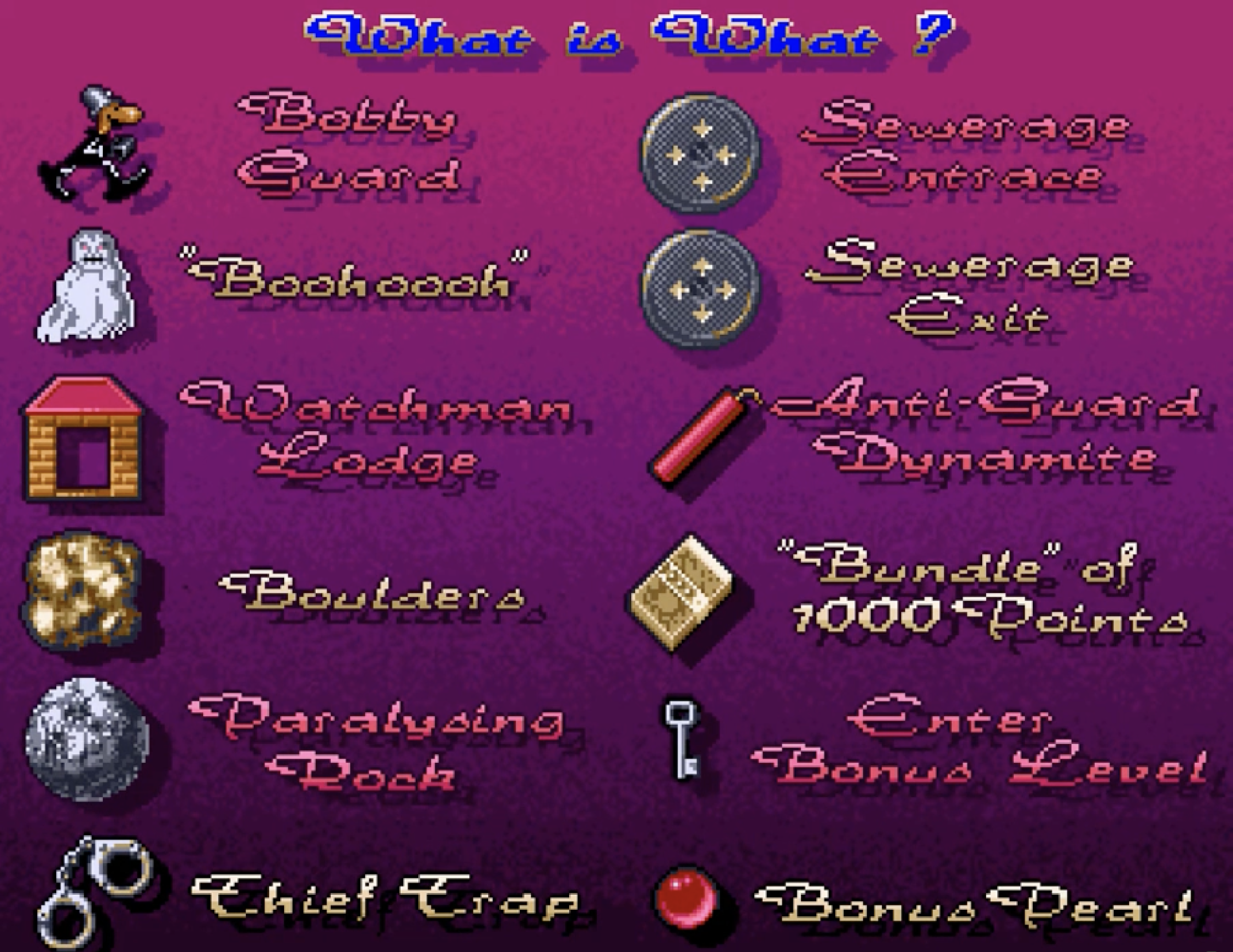
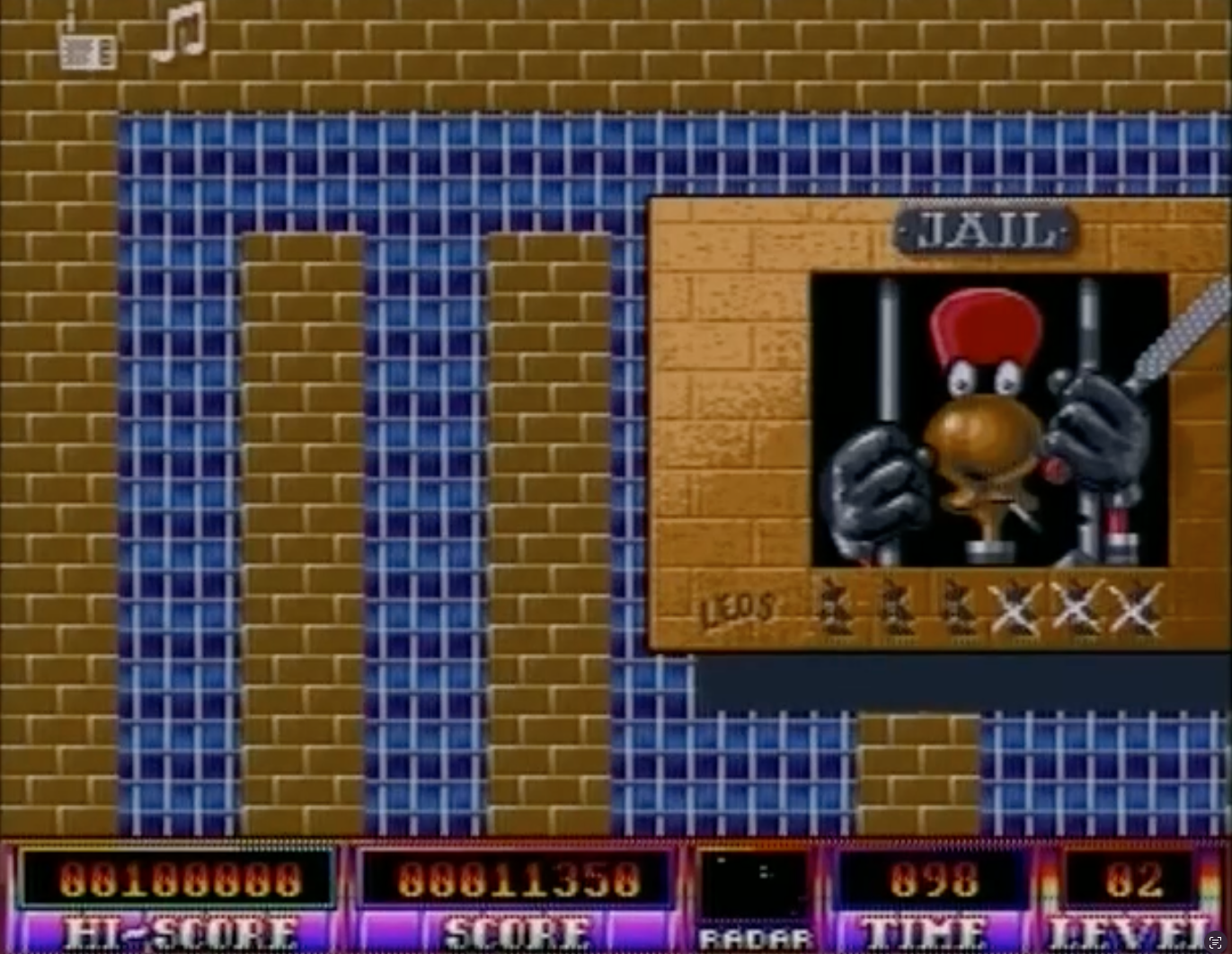
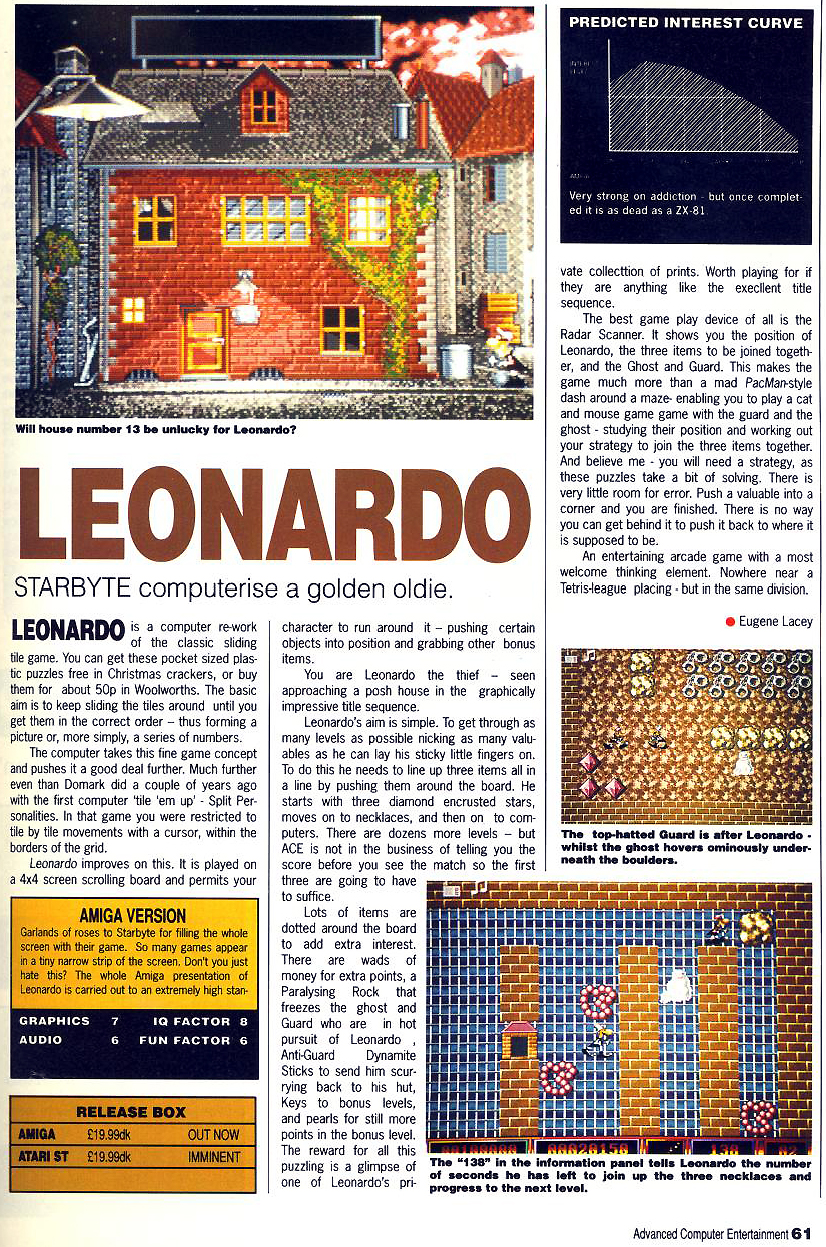
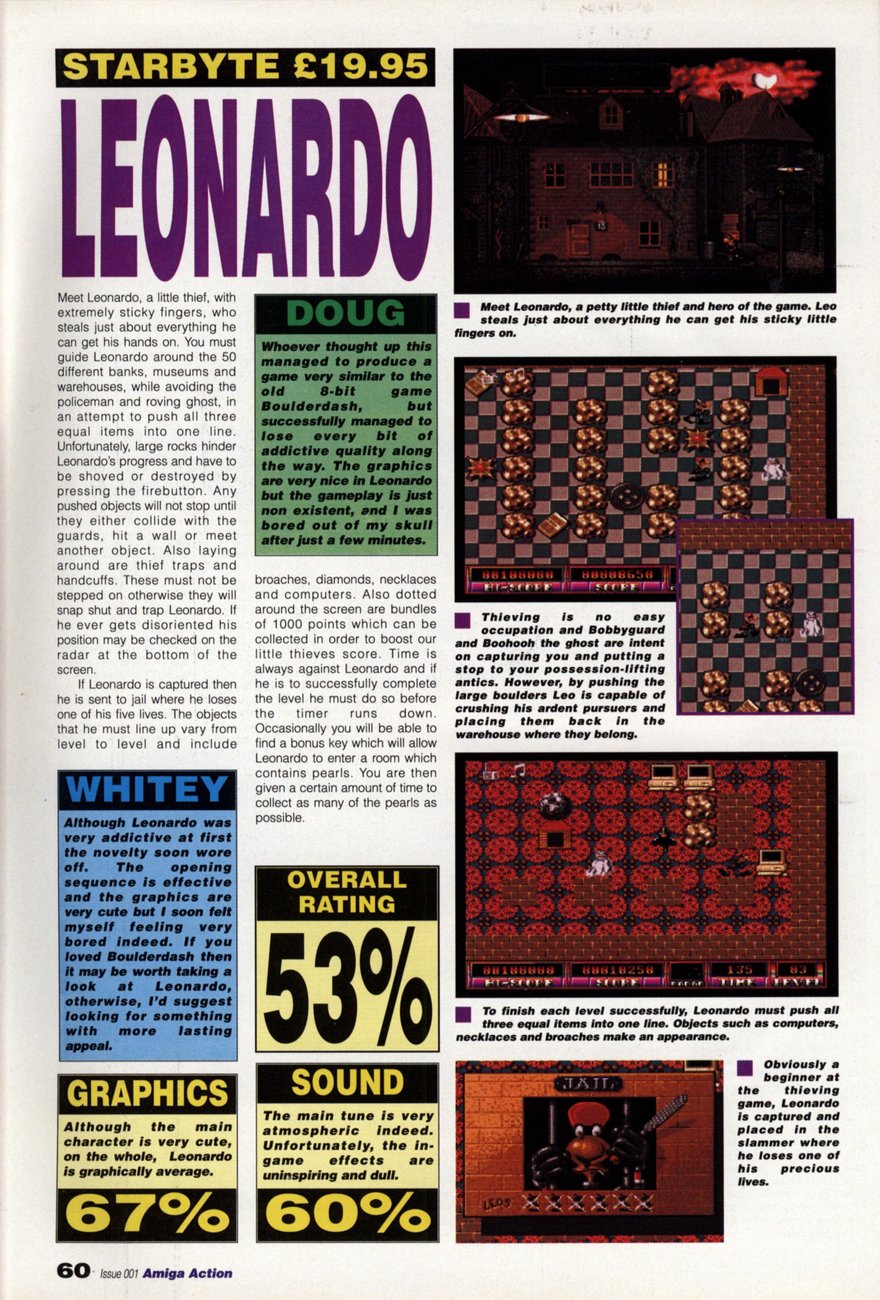
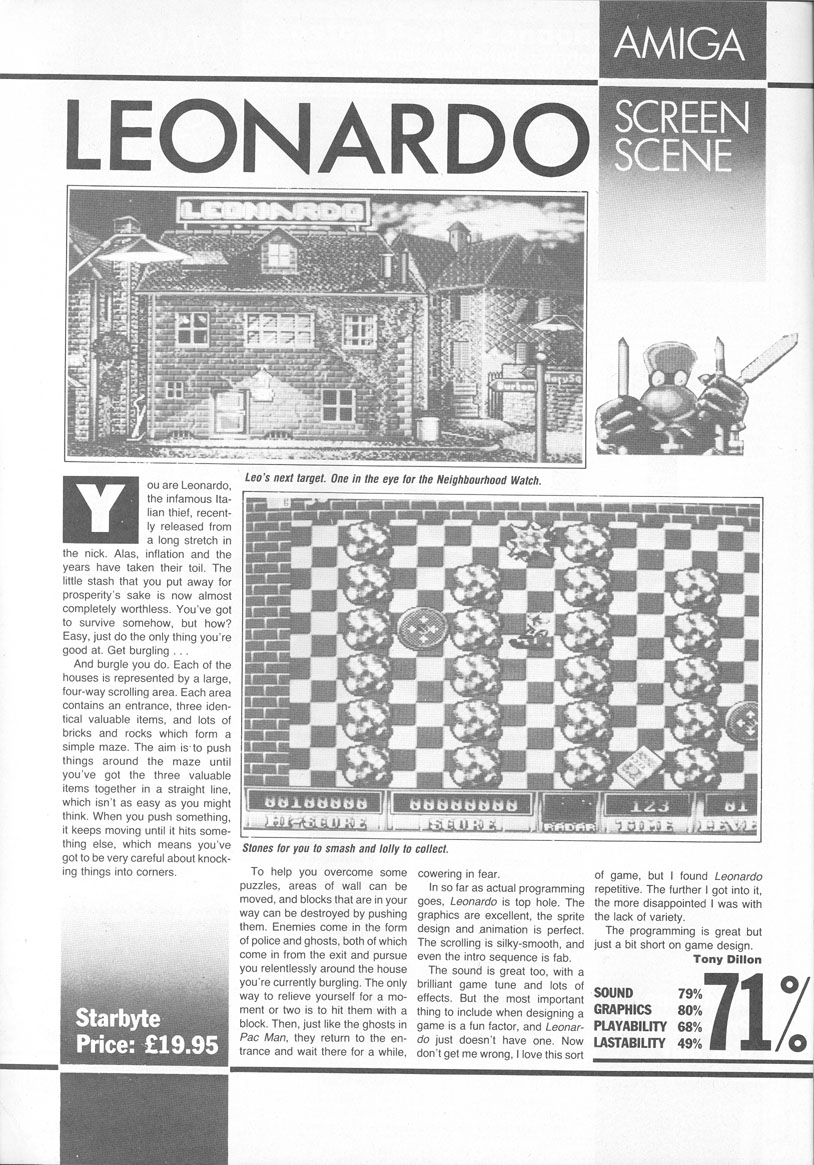
Whether the diamond blocks from Pengo—which awarded up to 10,000 bonus points when correctly arranged—served as inspiration is hard to say, but in Leonardo a level is completed when the player skillfully maneuvers the three precious objects scattered throughout the labyrinth into a vertical or horizontal line. The boulders have to be moved around or destroyed strategically to either make way for the treasure pieces or to stun or trap the two enemies: a police officer ("Bobby") and a ghost ("Boohoooh"), both of whom emerge from their guard posts to give chase. Additional thrill and difficulty come with a strict time limit for solving the levels. But Leo is not without resources: dynamite sticks, for example, can send Bobby and Boohoooh back to their posts, while manhole covers allow point-to-point teleportation in tight spots or particularly tricky mazes. Banknotes and bonus levels — in which pearls must be collected — offer additional points. One noteworthy feature is a mini map, where little dots in yellow and red indicate the position of the enemies and the treasures. If caught, Leo is sent to jail and loses one of his six lives (not five as mentioned everywhere). At the end—after 52 levels—Leo sits in an armchair surrounded by loot and famous cultural artefacts like Botticelli’s Venus and Tutankhamun’s golden mask, thanking the player: "Congratulations! Thanx for helping me thru this Game."
Interesting insights are to be found in interviews, conducted with some members of the Golden Gate Crew. Haller still remembers the game as the one with the killer sound (“geiler Sound”) and as the one mainly created by Straub. Haller contributed to the game with a special part of the code that creates the objects. Instead of relying on Amiga’s feature to create 8 sprites, Haller wrote a so called “bob routine” that generated as many ‘blitter objects’ (designed beforehand in the bob editor) as needed. He also wrote the part of the code that plays the sound. Petermann, who made the graphics, stated that comics such as Donald Duck, Spirou, Asterix, and Fix und Foxi were formative influences for his settings: “I often recombined and reinterpreted a wide variety of visual elements from these pictorial worlds in new ways”. The name for the crew was Luem’s idea, inspired by one of the first images that Petermann had created while working together. It should give publishers the impression that they were dealing with a larger and more professional team than just a handful of hobbyist developers. The crew members also recall their meetings, where games like Leonardo were created, debating the best way to do things over crisps and vast quantities of Coke.
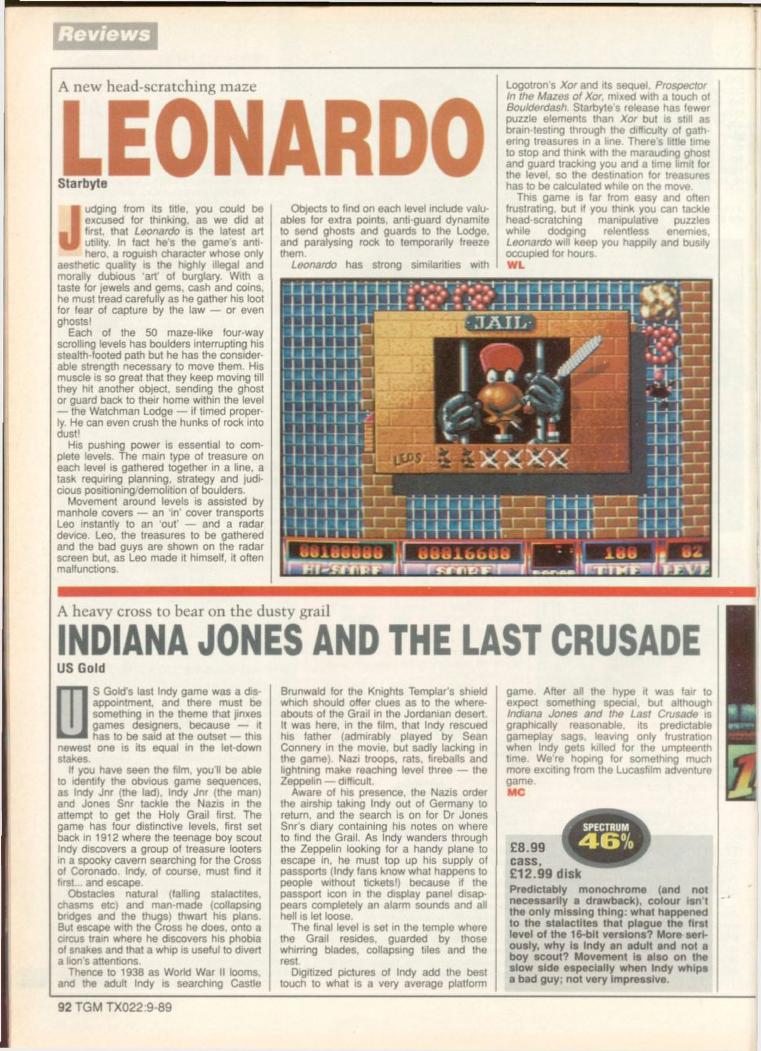
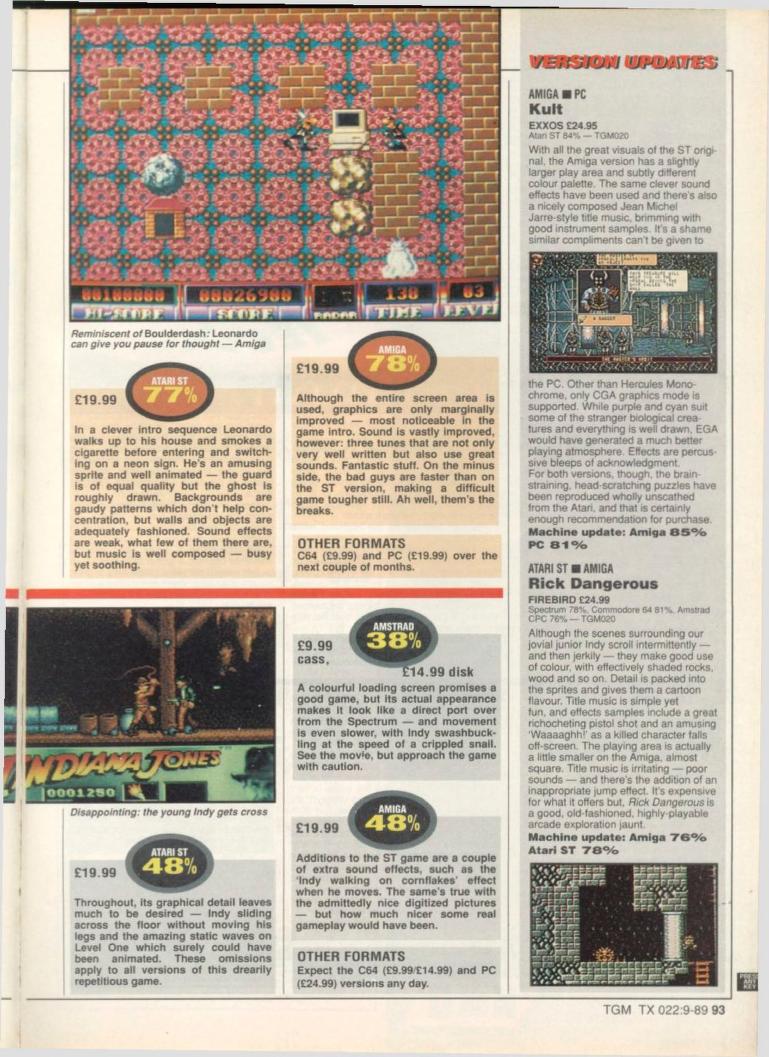
Leonardo was reviewed in several magazines (10 in total, 4 from UK, 4 from Germany and 2 from France), also due to the fact that it was ported to C64 and Atari (although rather poorly executed regarding the graphics and the sound).
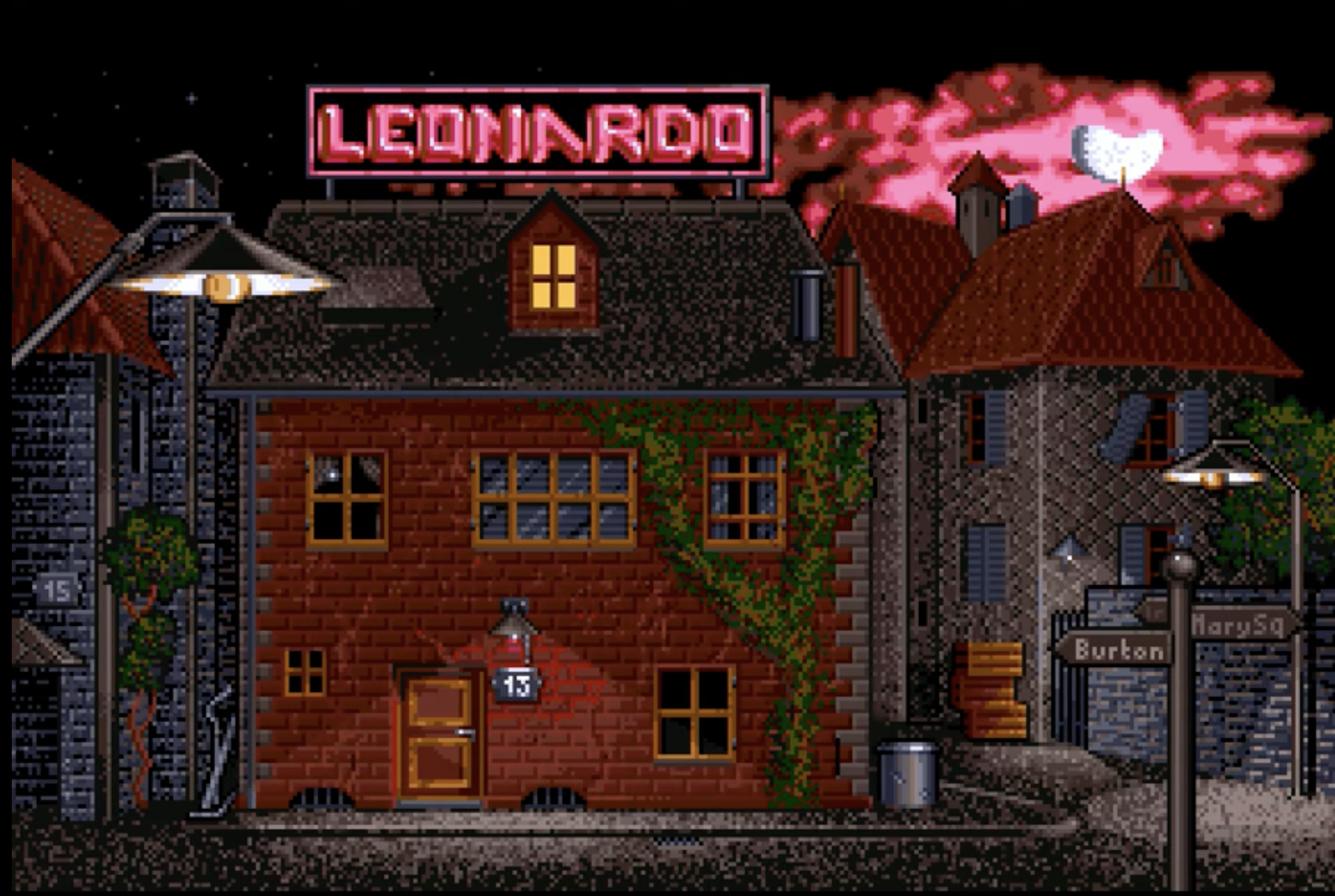
Interestingly, also the Amiga version received mixed assessments when it came to the puzzle gameplay itself (AMS Hitstern with a score of 82% versus a POWER score of 41). Especially the repetitive and monotonous character of the levels resulted in the unfavourable reviews (“the novelty soon wore off”, Amiga Action). In addition to Pengo, some compare it to other games like Logotron’s Xor ot Boulderdash, particularly recommending the last. The difficulty of the levels (especially in the beginning) also resulted in mixed reviews, some praising them (“Permettez moi de vous dire que ce jeu et INTELLIGENT”, Joystick Hebdo) and some calling the puzzles “often frustrating” and “head-scratching” (The Game Machine). The possibility of using passwords to directly access level 10, 20 and 30 is mentioned. What all reviewers consistently praise, however, are the appealing graphics of the Amiga version, the excellent music, the “perfect” sprite design and animation, and the “silky-smooth” scrolling (Amiga Screen Scene in Commodore User, with a score of 71%). Especially the intro scene, where Leo is seen waiting for the residents of a house to go to bed, is mentioned favourably, one review even claiming it features the first toilet flush sound in the history of games (although the sound itself is not considered very realistic).
Interestingly, one of the magazines mentions the Swiss origin of the game, revealing a noteworthy take on Swiss games: “Considering Leonardo was written by a Swiss cracking crew, the effects are remarkably understated and the gameplay far deeper than would be expected. […] Worth a long, hard look” (Amiga Computing).