Supaplex
Philip Jespersen (coding, levels) and Michael Stopp (graphics, levels++)—both from the Basel area and in close contact with Christian Haller (AG/ZH scene)—had just developed a game on the Amiga for the Swiss publisher Linel. It was never completed due to contractual disputes; instead, they launched ThinkWare Development and began developing a game in the tradition of BoulderDash (1984) (Atari 400). The first home computer game to become an arcade hit. It followed in the tradition of DigDug (1982) as an action-puzzle game set in a mine with trenches, gems, falling rocks, and monsters. Upon closer inspection, the top-down view likely turns out to be a slanted plane on which the stones “roll down.” Other examples of this BoulderDash genre included Rockford (1987) and Emerald Mine (1988).
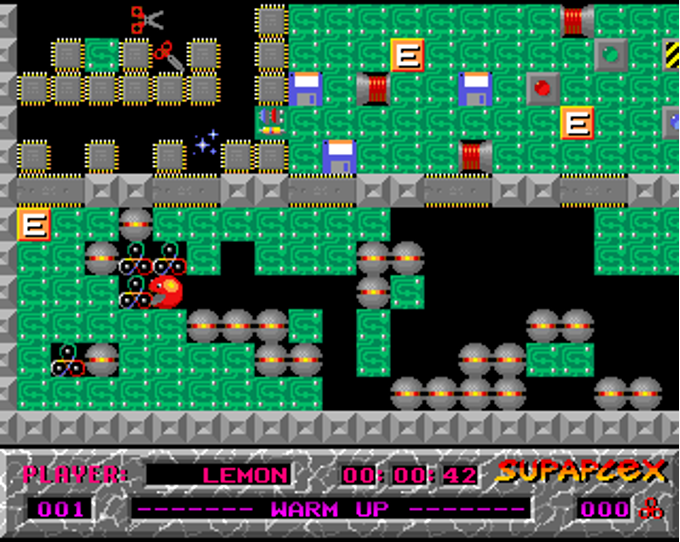
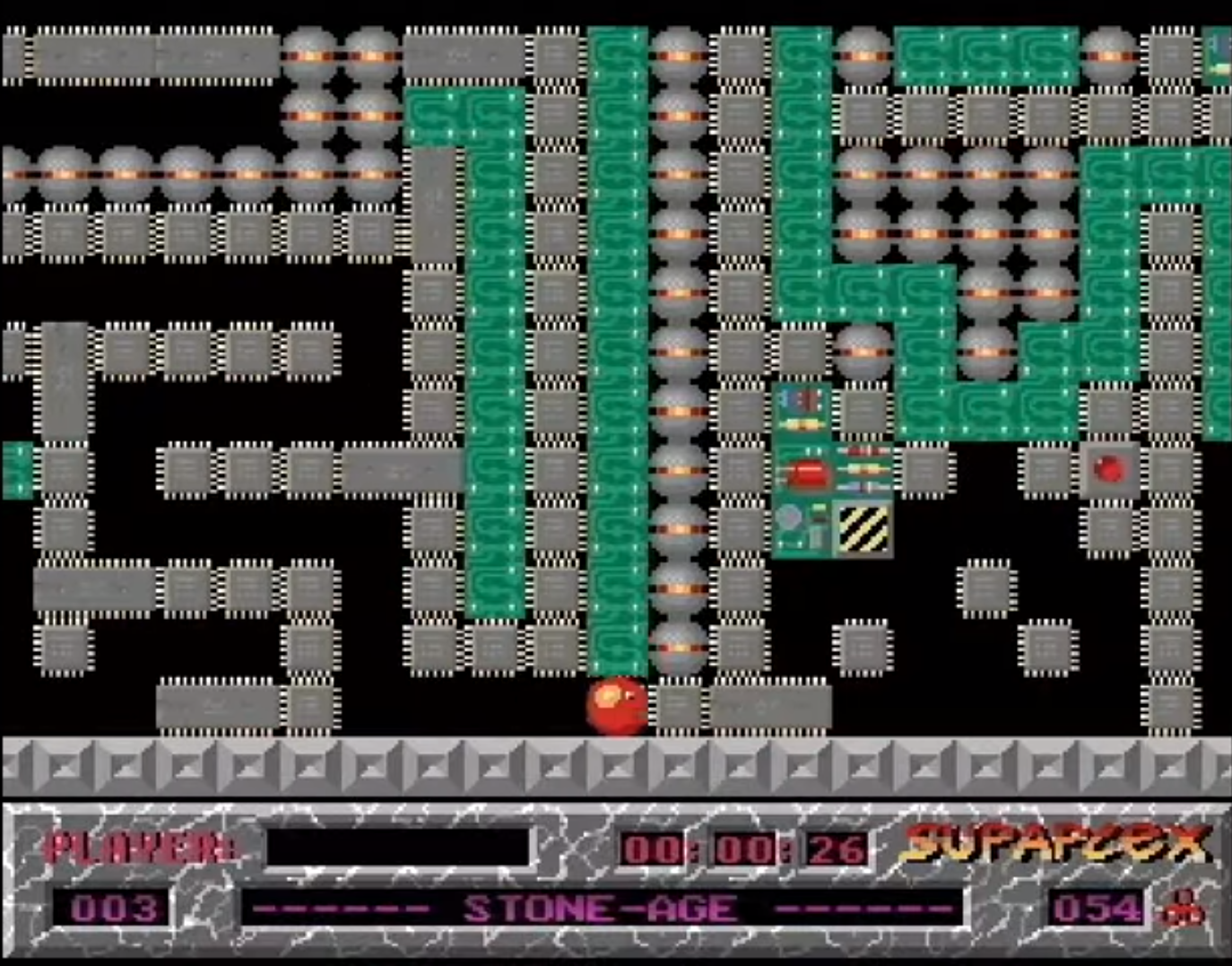
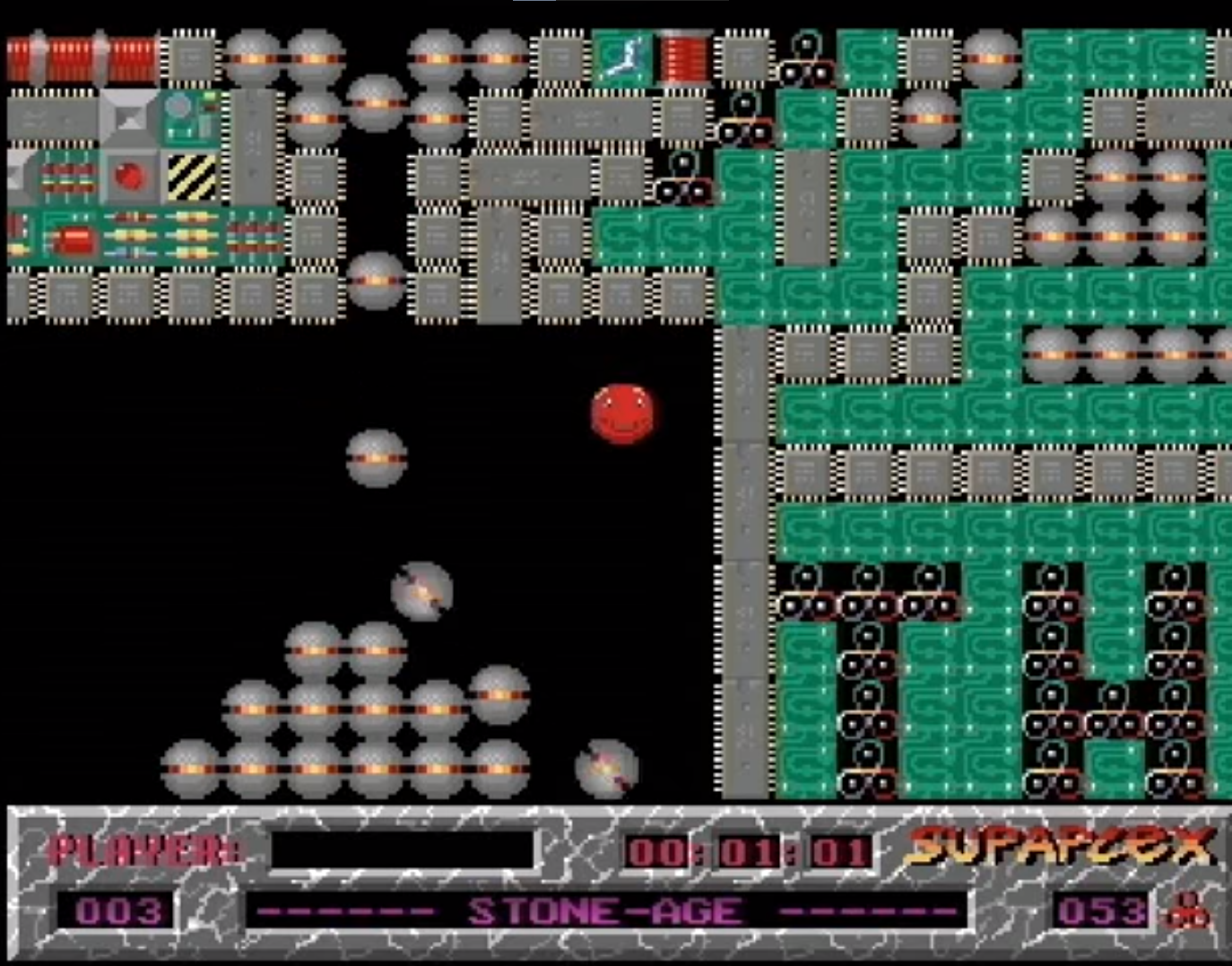
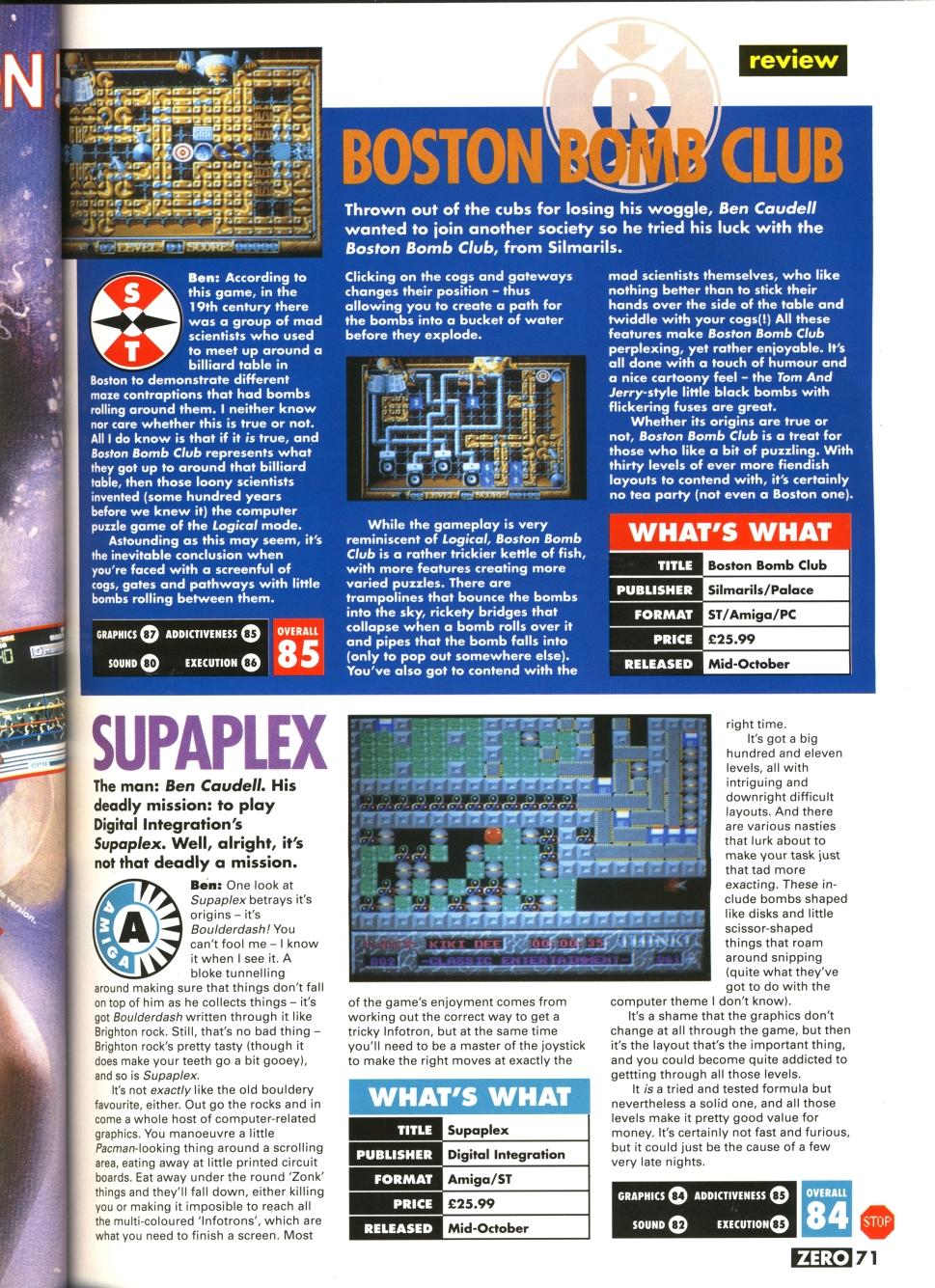
Supaplex replaced the very artisanal, industrial setting with a digital (home) computer board setting—from the title screen through the menu to the in-game world—similar to Chips Challenge (1989). The digital music by the renowned David Whittaker reinforces this. The game brings its own hardware and limitations onto the playable stage. The gameplay is tile-based; you can eat your way through circuit boards or destroy them around you, and must ensure that the rolling bombs (which glide past each other) do not fall on the avatar (a red digital Pac-Man with legs) and explode. The game gains dynamism from the slowly rolling bombs and scissor-like enemies. But there are also resistors, floppy disks, control panels, and ports. With its flat, easily navigable circuit boards, Supaplex also solves the lack of overview that plagued its predecessor.
The game expands the core gameplay concept and achieves a new level of complexity through tile-based design, level layout, and new elements (such as a gridless layout), resulting in 111 digital levels. There’s a lot of variety in the levels; for example, the second level is a pure maze—find the exit. The game seems simple in smaller sections, but becomes quite difficult due to the size of the levels. Many mistakes are fatal. Players can be opened, allowing you to take turns playing with different players. Technically, the game pushes the limits of what’s possible on the Amiga with its many “sprites.” The game’s potential was recognized even back then, so Philip Jespersen traveled to England to meet with R. Haydon on behalf of the publisher Digital Integration. They ported the Amiga program line by line to DOS and released it. A little later, the publisher Digital Dreams/Digital Integration went “bankrupt,” and to this day, the rights to the game remain untraceable.
No wonder, the game itself was re-released many times—without the developers' knowledge—right up to the 2022 Switch version. Even the SUPAPLEXLUBE oil was named after Supaplex, according to Jespersen.
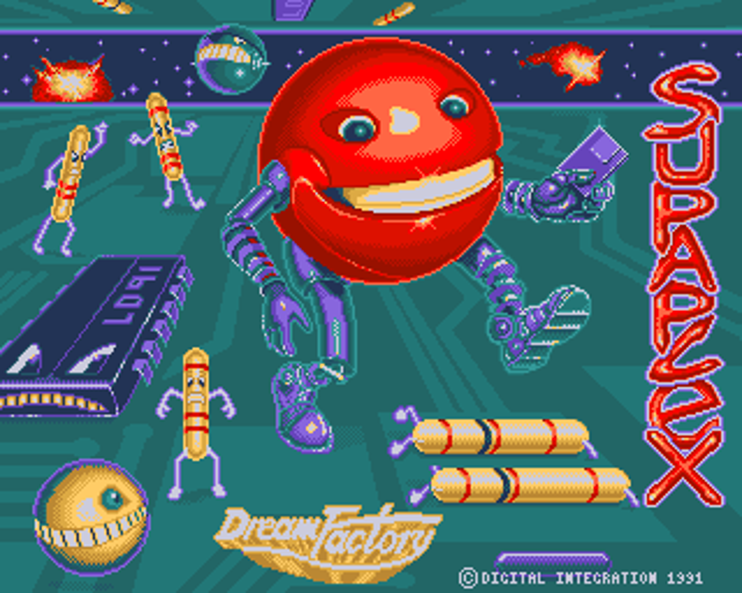
Title screen of SUPAPLEX. The avatar travels through the computer, battling enemies and analog-digital obstacles.
Image: https://www.lemonamiga.com/game/supaplex
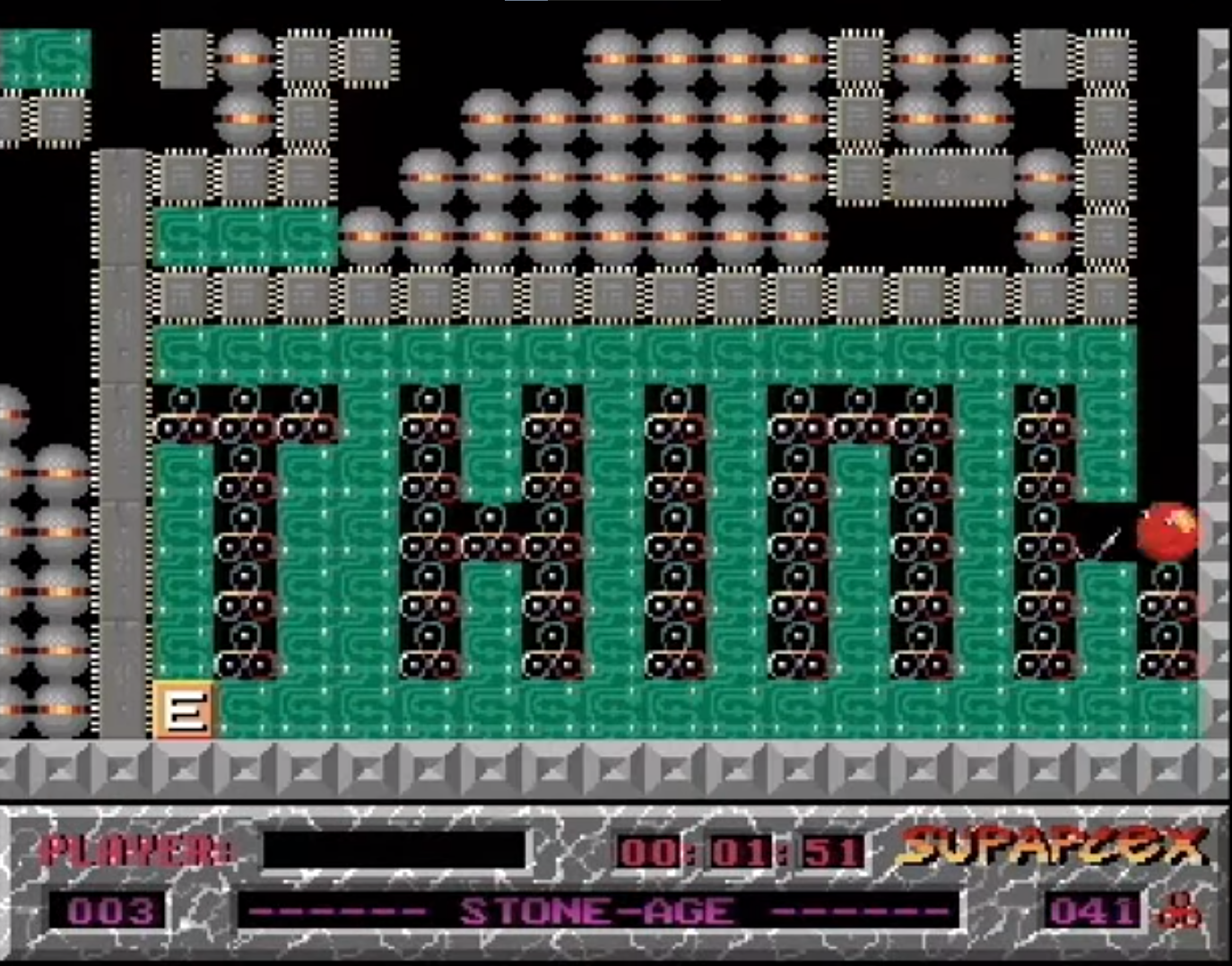
In-game screenshot. The avatar is currently eating an Infotron. You can only leave the level in E(xit) once you've collected all the Infotrons.
Image: https://www.lemonamiga.com/game/supaplex