1998
/
1st
/
Linux, MacOS, PC
GL Tron
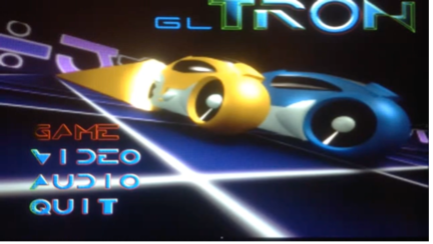
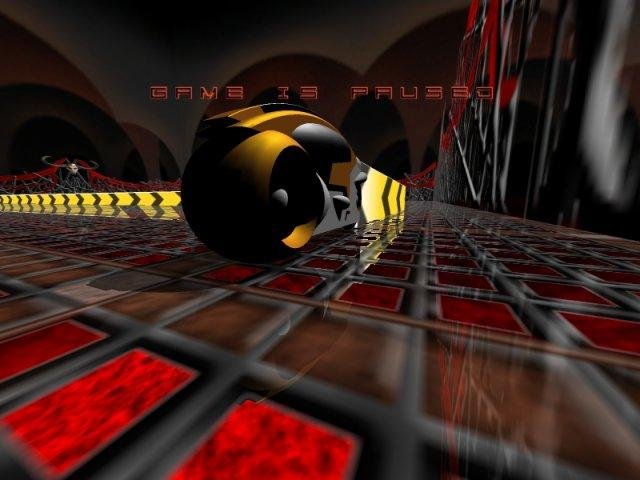
GLTron is a minimalist, yet visually distinctive 3D action snake game that emerged in 1998 from a small university project by Andreas Umbach. With striking simplicity, it captures the spirit of the thriving digital gaming culture of the late 1990ies. Developed using OpenGL, which is reflected in its name, and released as free and open-source software under the GNU General Public License, GLTron gained particular popularity within Linux and open-source communities, where it was widely distributed, modified, and maintained until today by enthusiast communities. The game has been downloaded by more than 1.5 million users online according the statistics on Sourceforge, where playable versions for Linux, Windows and Mac are provided.
Inspired less by the film Tron itself than by the wave of games it had sparked (only to name a few: Tron on Arcade [Bally Midway, 1982]; Adventures of Tron for the Atari 2600 [APh Technological Consulting, 1983]; Tron 2.0 for Windows and Mac [Monolith Productions, 2003]), GLTron revolves around a single, compelling rule: Don’t crash.
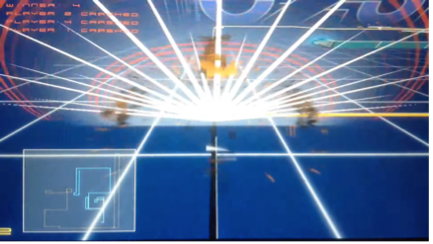
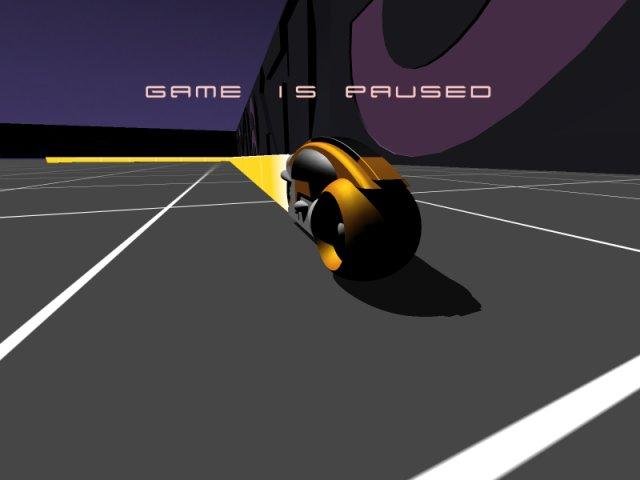
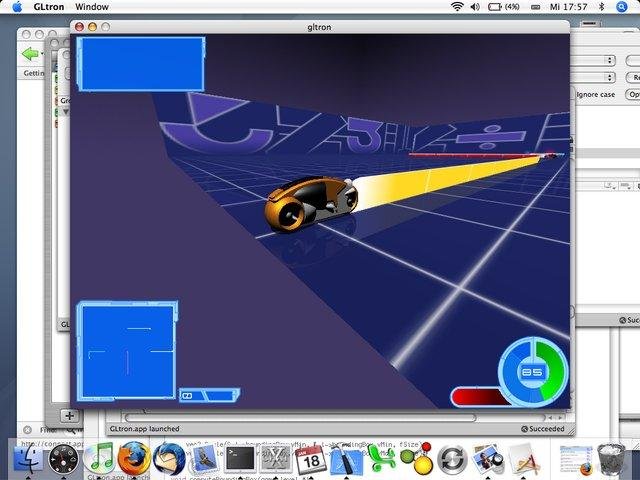
GLTron’s appeal lies in this simple rule, built around classic arcade-style mechanics that are immediately accessible. Players guide the iconic sleek, futuristic light cycle across a dark, neon-lit arena. Wherever the cycle moves, it leaves behind a glowing trail—intriguing and deadly. One wrong turn, one misjudged angle, and the game is over. What begins as open space quickly becomes a dense maze of light walls, transforming each match into a tense, strategic duel of reflexes and anticipation. Moreover, from the very first moment, the game unfolds as a strategic contest over space, in which players continuously compete to claim, control, and restrict territory within the arena. The competition is not only about survival but also about shaping the available space—cutting off opponents, enclosing areas, and forcing others into increasingly confined paths.
Following its initial release in 1998, GLTron underwent further development, which also led to the addition of a distinctive soundtrack. The notable track, Revenge of the Cats, was composed and performed by the Finnish musician Peter Hajba, better known in the demoscene as “Skaven.” Hajba would later contribute to well-known game titles such as Max Payne and Alan Wake, linking GLTron to a broader trajectory of professional game audio design.
GLTron's simple controls and straightforward gameplay allowed new players to engage with it immediately, while still offering enough freedom in adjustment (speed, arena size, number of players and AI opponents) and depth to remain challenging and engaging over time. The game’s reception reflected this appeal. In 2006, it was recommended by The Mac Observer, and it received strong user ratings on platforms such as SourceForge and Download.com, where it scored highly among freeware titles. Even though its popularity waned over time, as many games of the late 1990s did, GLTron endures as a kind of hidden relic and with still ongoing discussions in the Sourceforge forum—an artifact of an era when independent developers could shape digital play in direct and inventive ways.
*the credits list a number of additional contributors:
Programming: Darrell Walisser, Nicolas Deniaud, Tooo Kirby, Andy Howe, John Atkin,
Art: Nicolas Zimmermann, Charles Babbage, Tracy Brown
Music: Peter Hajba
Sound: Damon Law